
Last updated November 15, 2026
 Wrought iron
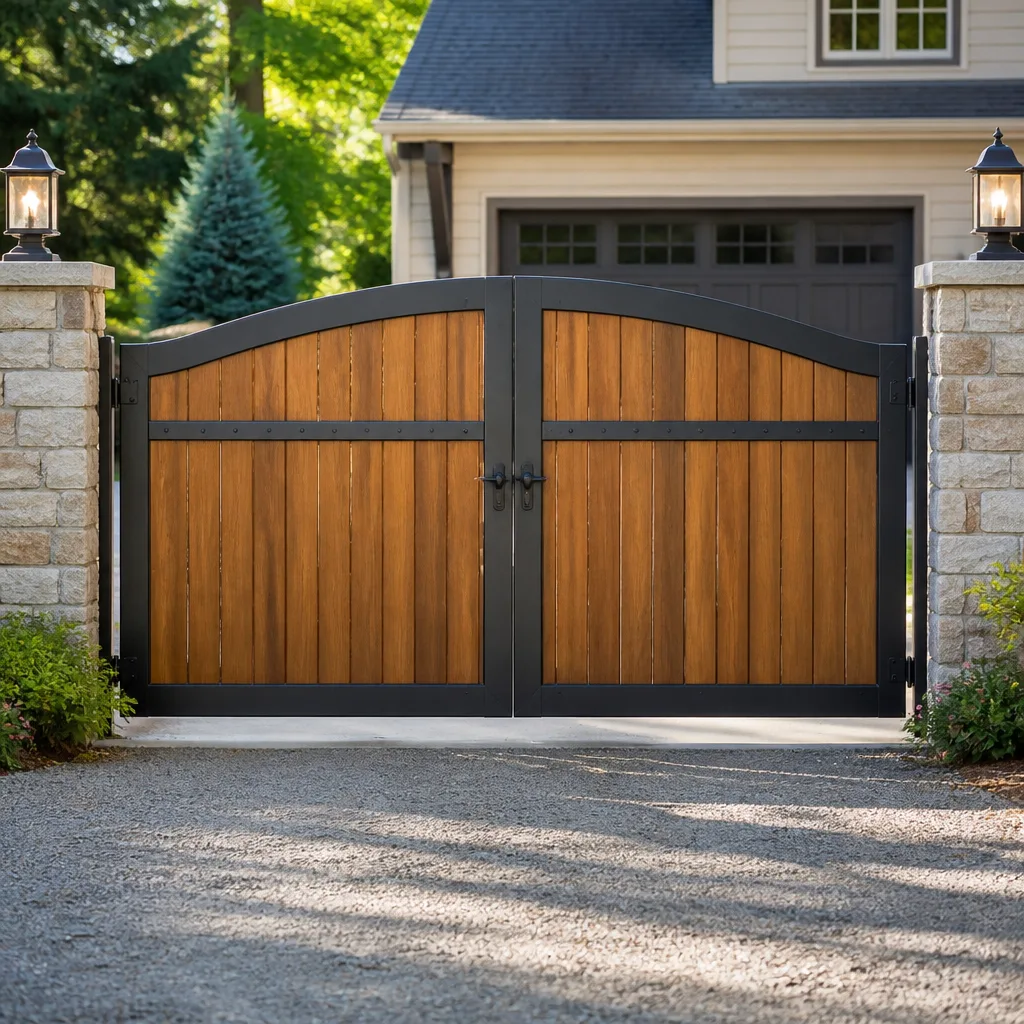 Wood & steel frame
 Farm & ranch
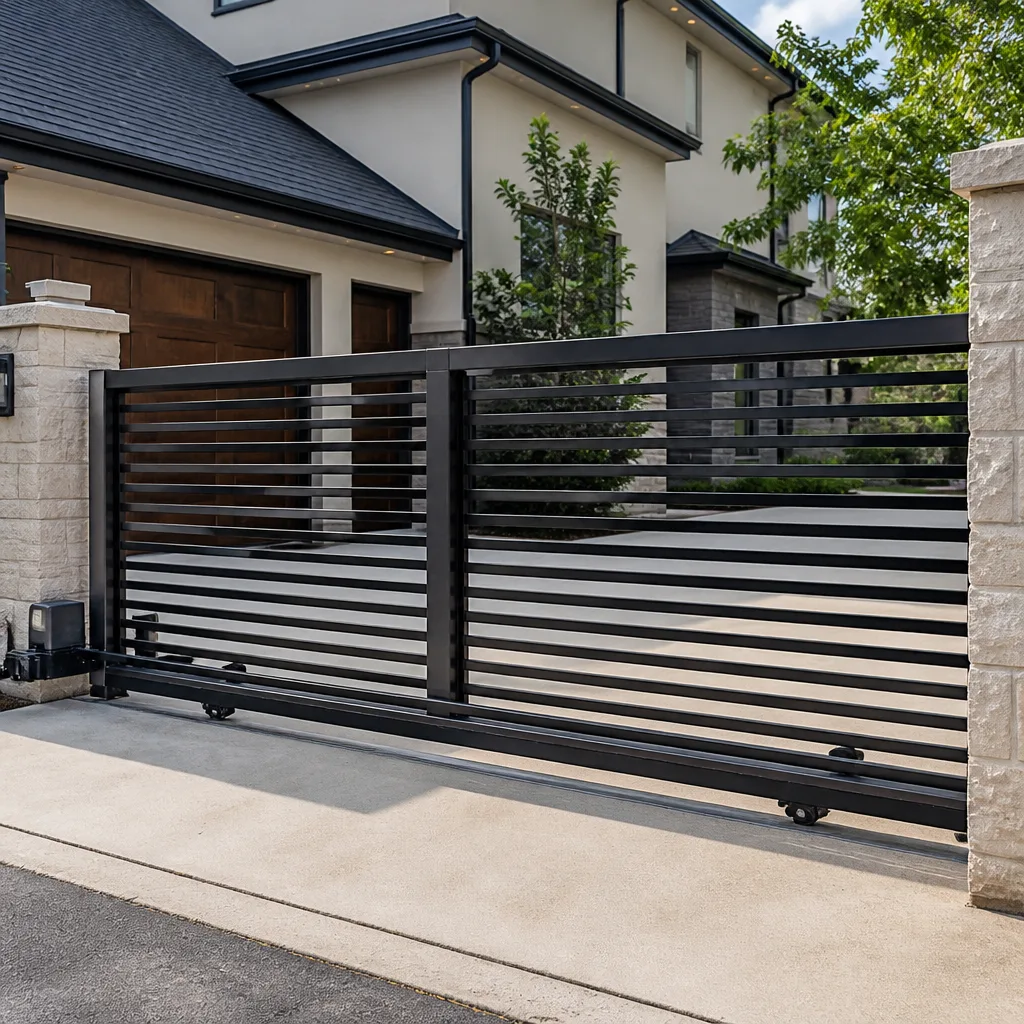 Sliding driveway gates
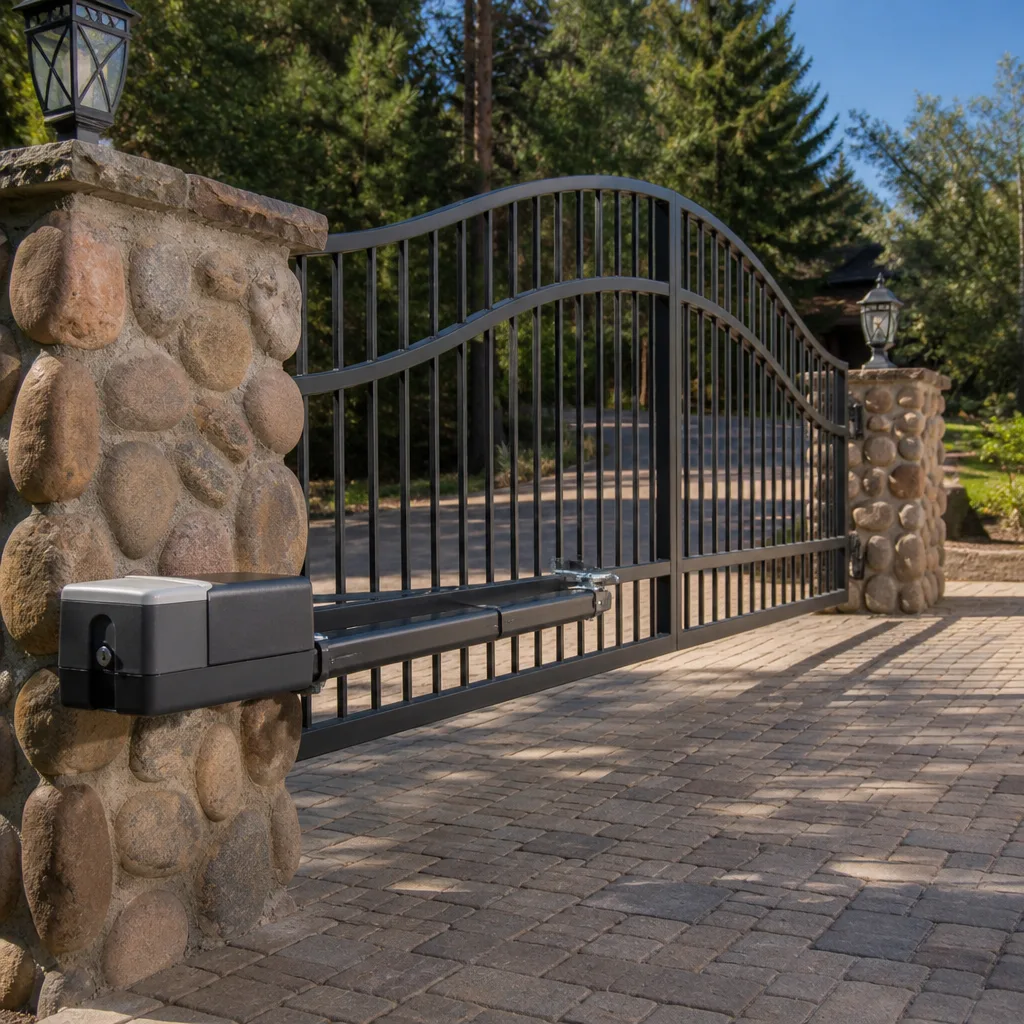 LiftMaster operators
Free on-site gate assessment - hinges, posts, and your LiftMaster or Nice gate operator checked before anything is quoted
The assessment is free and the quote is the invoice.
Get your free estimateThe Complete Guide to Gate Repair in Laredo
A gate that drags a little in January can be fully seized by August. That surprises people, because most gate repair advice floating around online was written for mild climates where metal moves and bearings wear at a leisurely pace. Laredo summers hammer gates in a way temperate-zone guides never account for, and the soil under the posts adds a second layer of trouble. This guide maps the whole repair landscape in Laredo: what actually breaks, why it breaks differently by brand, how soil movement fakes an operator failure, and how to tell a real fix from a band-aid before you pay for one.
Quick Answer
Gate repair in Laredo usually means diagnosing three overlapping problems: heat-accelerated mechanical wear, post movement caused by expansive clay and caliche soil, and an operator or control board that’s failing on its own schedule. A trained technician tests the gate by hand first, checks posts and hinges for movement, then moves to the motor, control board, and safety sensors. The repair itself is often a mechanical adjustment, a part replacement, or a wiring fix rather than a full replacement, and the price is quoted in writing before any work starts.
Styles & brands we work with
- Wrought iron
- Wood & steel frame
- Farm & ranch
- Sliding driveway gates
- LiftMaster operators
Table of Contents
- Why Gates Fail Differently in Laredo
- Caliche, Clay, and Post Shift: The Misdiagnosed Problem
- How Brand Changes the Diagnosis
- Repair, Adjustment, or Rebuild: Which One You Need
- Diagnosing Electric Gate Problems
- Why Single-Brand Dealers Leave You Stranded
- Cost and Timeline Benchmarks
- What Actually Extends a Gate’s Life Here
Why Gates Fail Differently in Laredo
Heat is the biggest factor most gate owners underestimate. When daytime temperatures push past 100°F for weeks at a stretch, every moving part on a gate lives in a slower-motion oven. Lubricants thin out and migrate away from the surfaces they’re supposed to protect. Metal expands and clearances tighten. Seals on the operator housing dry and crack. Bearings that should glide start to grumble. Over a full summer, that combination wears mechanical components noticeably faster than the same gate would wear in a moderate climate, so a gate that “just needs a little adjustment” in spring is often closer to failure than it looks.
The second factor is dust. Laredo’s dry stretches coat hinges, tracks, rollers, and chains in a fine grit that works like sandpaper every time the gate cycles. It also finds its way into the operator’s venting and settles on control boards. A gate that open and closes dozens of times a day, which is normal for an HOA entry or a small commercial lot, accumulates that grit fast.
What follows from this is practical:
- Gates in Laredo benefit from inspection before summer rather than after something breaks.
- Lubricant choice matters here more than in mild climates; a product that thins out at 100°F does nothing for you in July.
- Listen for changes. A new rattle, a slower cycle, or a louder motor is often the earliest evidence of heat-driven wear.
- Automatic gates on driveways and commercial entries cycle far more than people realize, and cycle count drives wear more than age.
None of this means a gate here is doomed. It means the maintenance calendar and the failure timeline both run faster than a generic repair guide would suggest, and a technician who works in this climate reads the signs earlier because they see them constantly.
Caliche, Clay, and Post Shift: The Misdiagnosed Problem
This is the one we see trip up the most homeowners: a gate that won’t latch, drags on one edge, or binds halfway through its swing can look exactly like an operator problem when the operator is fine. The real cause is often the ground under the posts. Laredo’s soil includes expansive clay and caliche, and both behave in ways that move a gate post over time. Clay swells when it takes on moisture and shrinks when it dries. Caliche forms dense, irregular layers that don’t settle evenly. A post set in either one can shift slightly, and because a gate swings on a long lever arm, a shift of a fraction of an inch at the base turns into inches of misalignment at the far edge.
What makes this hard to spot is that misalignment mimics motor trouble. The gate binds, so the operator strains, so the motor heats up, so the control board eventually trips or the operator stalls. Someone replaces a part, the gate runs for a while, and the problem returns because the post is still where it was.
How a proper diagnosis handles it:
- Disconnect or disengage the operator and move the gate by hand. A gate that binds or drags by hand has a mechanical or alignment problem, not a motor problem.
- Check the posts for plumb and look for gaps, cracks, or settling in the soil around the base.
- Check hinges, rollers, and the track for wear and for debris buildup.
- Only after the mechanical side checks out does the operator deserve attention.
Post correction might mean re-setting a footing to proper depth, shimming, adjusting hinges, or realigning the gate travel. Whatever it takes, it has to happen before the operator can work properly again. We handle this kind of diagnosis as part of gate repair across Laredo, because treating it as a motor problem wastes both the part and the money spent on it.
How Brand Changes the Diagnosis
A LiftMaster failure and a FAAC failure rarely look the same, and knowing the difference shortens diagnosis. Each brand family has its own control logic, its own error signals, and its own wear patterns. A technician who works across brands reads those patterns instead of starting from scratch on every call.
Some of what that looks like in practice:
- A LiftMaster residential operator can go into a lockout or flash a diagnostic code when a safety sensor is obstructed or misaligned; reading the code correctly saves a lot of guessing.
- A FAAC or BFT commercial-grade system often signals trouble through limit settings, encoder faults, or control board behavior that a generic installer won’t recognize.
- A DoorKing system at a commercial entry usually involves access control and loop or keypad wiring, which is a different diagnostic path than a residential swing gate.
- A Ghost Controls or Mighty Mule residential unit on a driveway tends toward battery, solar, and sensor issues that are simple once you know the model’s behavior.
- An Elite operator brings its own board and limit characteristics that don’t match any of the above.
The point isn’t to memorize brand trivia. It’s that brand familiarity turns a first-time investigation into a faster, more accurate diagnosis. When a technician already knows how your system is supposed to behave, they can spend the visit fixing the problem instead of figuring out the platform. That’s why we service nine brands: LiftMaster, FAAC, BFT, Linear, Viking, Ghost Controls, DoorKing, Elite, and Mighty Mule. Our technicians have up to 10 years of experience across those systems, from residential driveway openers to commercial-grade access hardware.
Repair, Adjustment, or Rebuild: Which One You Need
These three terms get used interchangeably, and that confusion is where people overpay. They are not the same job, and knowing which one your gate needs protects you from being sold a bigger job than necessary, or a smaller one than will actually hold.
Adjustment
An adjustment is for a gate that works but not cleanly: it drags slightly, doesn’t latch square, hesitates, or travels past its stop. Adjustment covers limit settings, hinge alignment, sensor positioning, and small travel corrections. It suits gates that are mechanically sound but slightly out of tune, and it’s usually the least involved job of the three.
Repair
A repair replaces a failed component: a control board, a motor, a sensor, a hinge, a roller, a piece of wiring, a battery. This is the right call when one part has clearly failed and everything around it is sound. A good repair keeps the rest of the system intact rather than pushing a full replacement.
Rebuild
A rebuild makes sense when the gate structure itself has degraded: multiple posts have shifted, the frame is bent or heavily worn, hinges and rollers are failing together, and the operator has been straining against all of it. At that point, chasing individual repairs becomes more expensive than addressing the whole gate. A rebuild can mean replacing the gate panel, re-setting posts, and pairing a new structure with a suitable operator.
Which one a Laredo home needs most often depends on the property. Homes with older gates on soil that’s been slowly moving lean toward rebuilds more often than the owner expects. Newer installs usually fall into adjustment or repair. A technician who tests the gate by hand before recommending anything will tell you which you’re looking at, and the written estimate will spell out the scope before anything starts.
Diagnosing Electric Gate Problems
When an automated gate stops working, the problem lives somewhere in a chain: power, motor, control board, sensors, or wiring. The repair is only as good as the diagnosis, which means testing each link rather than replacing the most visible part. Electric gate repair is a named part of what we do, and it’s treated that way, not as an afterthought to mechanical work.
A structured diagnostic goes like this:
- Check power. Confirm the operator is receiving voltage and that any breaker or disconnect is intact.
- Test the motor. Determine whether the motor runs, strains, or stays silent when commanded.
- Inspect the control board. Look for burnt components, moisture damage, or error indicators, and read the error code correctly for the brand.
- Check safety sensors and edges. A gate that reverses immediately or refuses to close is often reporting an obstruction that isn’t really there, and sensor alignment or wiring is the usual cause.
- Trace the wiring. Look for corrosion, loose connections, rodent damage, and any point where the low-voltage control line has been compromised.
Wiring deserves a caution. Gate operators run on line voltage, and the control boards that manage them are sensitive to faults. Troubleshooting power and wiring inside an operator is genuinely dangerous work, and it’s not a do-it-yourself task. A trained technician should handle anything past checking the breaker and the manual. That duty of care is part of why electric gate repair stays a separate, deliberate service here: motors, control boards, safety sensors, and wiring each need their own test before anything gets replaced.
One more pattern worth knowing. A gate that behaves like an electrical fault when it’s actually a mechanical one wastes both parts and labor, and a technician who only reads boards will miss it. Disengaging the operator and testing the gate by hand should come early, not last.
Why Single-Brand Dealers Leave You Stranded
If a single-brand dealer shows up to a property running a different manufacturer’s operator, the visit often ends one of three ways: they decline the job, they offer to replace your system with the brand they carry, or they start diagnosing from zero and charge you for the learning. None of those outcomes is good for the property owner, and all three are common.
General handymen create a different problem. They can tighten a hinge and swap a battery, but an automated gate with a control board, safety sensors, and low-voltage wiring isn’t a general repair job. When the problem sits in the electronics or the brand-specific control logic, a generalist either guesses or defers, and the homeowner is left with a gate that half-works and a bill for the visit.
A multi-brand specialist changes the diagnostic process in concrete ways:
- No pressure to replace working equipment just to match a dealer’s product line.
- Diagnosis starts from the brand’s actual behavior rather than a generic checklist.
- Repairs happen on your existing system wherever they reasonably can.
- Multi-building properties (an HOA entry plus a smaller residence gate, or a commercial lot with more than one operator) can be serviced on one call instead of several.
- Where a replacement is genuinely the right call, the recommendation fits the property, not a single product family.
That’s the practical argument for a gate-only, brand-agnostic service. We work on your brand rather than steering you toward ours, and specializing in gates means the technician arriving has done this exact job, on this exact kind of system, many times.
Cost and Timeline Benchmarks
Gate repair pricing depends on what’s actually wrong, which is why a written estimate follows an on-site look rather than a phone guess. The ranges below are typical for the work categories, not a quote. The written estimate, agreed before any work begins, sets the final price.
- Adjustment visit (limits, hinge alignment, sensor positioning, travel correction): usually the least expensive category, priced per job.
- Component repair (control board, motor, sensor, roller, hinge, wiring): priced per job based on the part and the labor it takes to reach it.
- Electrical diagnosis (power, motor, board, sensor, and wiring testing across an automated system): priced as a distinct job, since it involves more testing than a single-part swap.
- Post re-setting or realignment: priced per job depending on the footing and access.
- Full installation or rebuild: measured and quoted in writing after an on-site look, then scheduled. New work is never same-day impulse work.
What the ranges won’t do is catch every case; the diagnosis does that. What you can do is spot a lowball quote before it becomes an expensive regret. A quote that’s notably below the normal range for the category often leaves out the diagnostic step, the post check, or the safety sensor testing, and those are exactly the things that turn a cheap fix into a repeat visit. A quote that arrives before anyone has looked at the gate, tested it by hand, or read a single error code is a guess dressed up as a price.
Timeline works the same way. Straightforward repairs and adjustments are often done same day. Parts that have to be ordered, posts that need re-setting, and any new installation move to a scheduled date. Both are normal, and both are explained up front.
What Actually Extends a Gate’s Life Here
Prevention in Laredo means working with the climate and the soil instead of against them. A few habits make a real difference over a summer.
- Service moving parts before summer. Lubricate hinges, rollers, and the operator chain with a product suited to heat, not a light household spray that thins and runs off.
- Clear dust and grit regularly. Blow or brush out the track and the operator’s venting. Grit is the quiet cause of a lot of premature wear.
- Watch the gate’s travel. A gate that starts dragging, binding, or hesitating is asking for an adjustment, and catching it early keeps the operator from straining.
- Look at the posts. Cracks, gaps, or settling in the soil around a post are the earliest sign of the misalignment problem.
- Test the safety features. Sensor alignment and safety edges should actually stop the gate, not just be present. This is a safety matter, since a heavy gate panel can cause serious injury when a safety feature fails.
- Don’t tighten or adjust an operator’s internal wiring yourself. Line voltage and control boards belong to a trained technician.
None of this requires a full maintenance contract. It’s a few minutes of attention and a service call when something changes. A gate that gets looked at before summer tends to need less dramatic repairs.
Common Mistakes to Avoid
- Replacing the motor when the gate is misaligned. A new operator installed over a gate that binds will fail the same way the old one did. The post or hinge issue has to be fixed first.
- Using a light household lubricant in summer. Products that thin out at high temperatures wear off within days here. A heat-suitable lubricant is the difference between a gate that moves cleanly and one that grinds.
- Tightening or “fixing” the operator’s wiring yourself. Gate operators run on line voltage with sensitive control boards. This is dangerous and not a do-it-yourself repair.
- Accepting a phone quote as a price. A real estimate follows an on-site look and a hand test of the gate. A number without either is not a price.
- Calling a general handyman for an electric gate. The mechanical side may get a quick patch, but control boards, sensors, and low-voltage wiring need a gate specialist to diagnose properly.
- Skipping the safety sensor check. A gate that reverses at a phantom obstruction or fails to reverse at a real one is a hazard, not a nuisance. Testing sensors is part of any real repair.
- Ignoring the early signs. A slightly slower cycle or new noise in spring usually predicts a harder failure in August. Catching it early is cheaper.
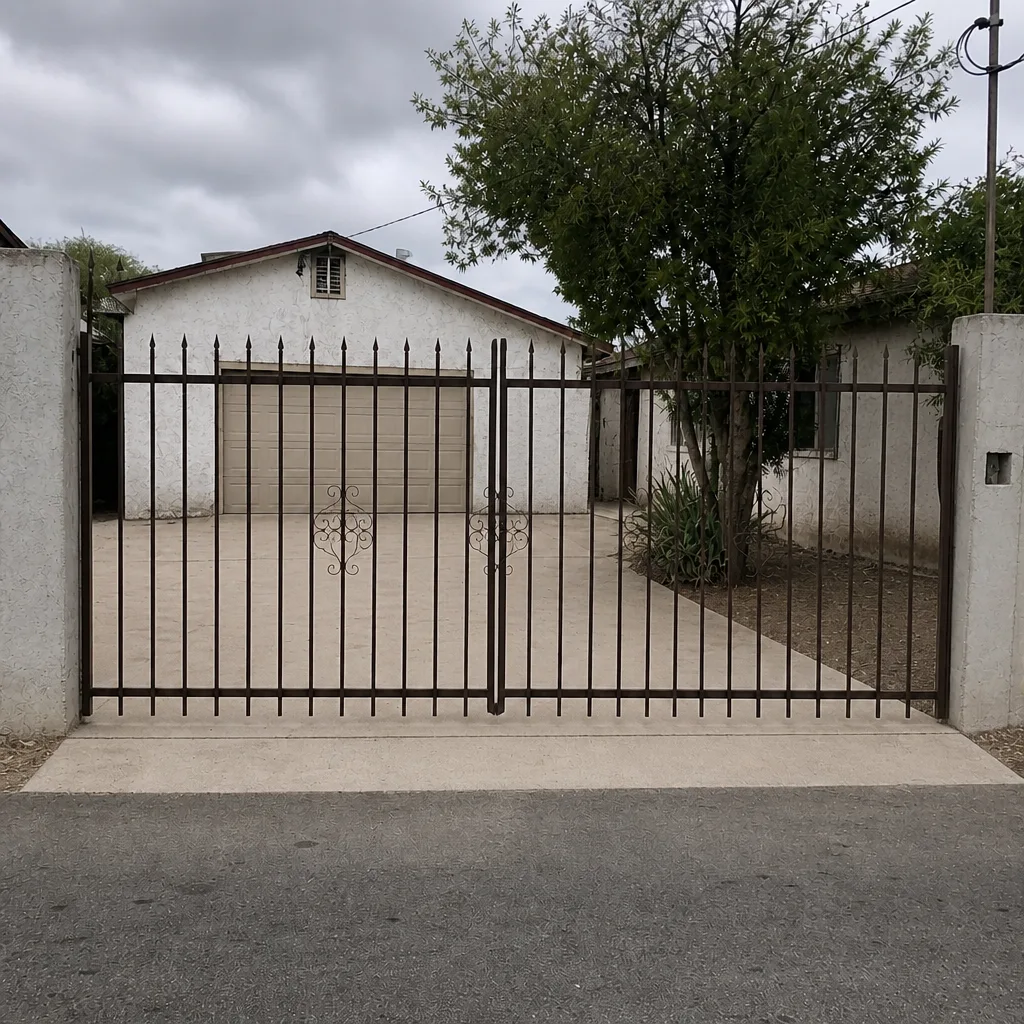
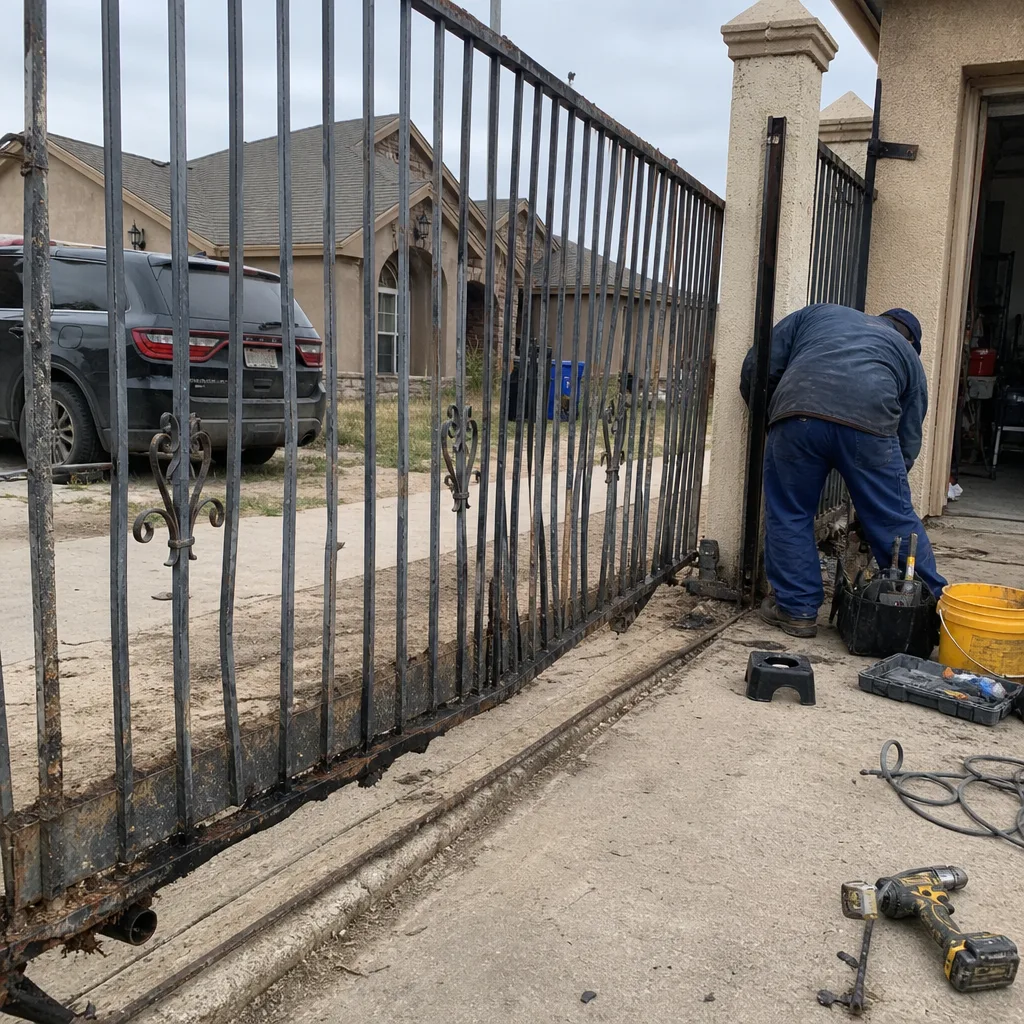
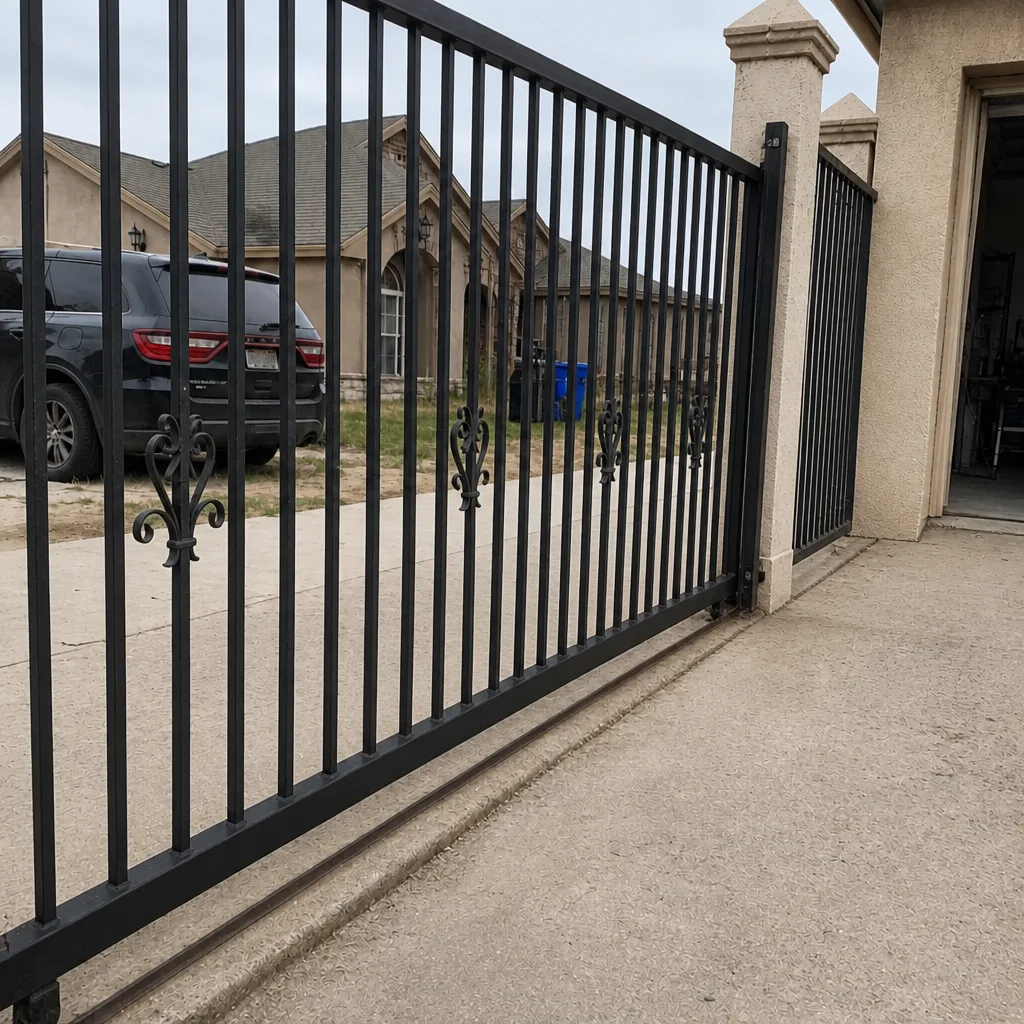
See the difference
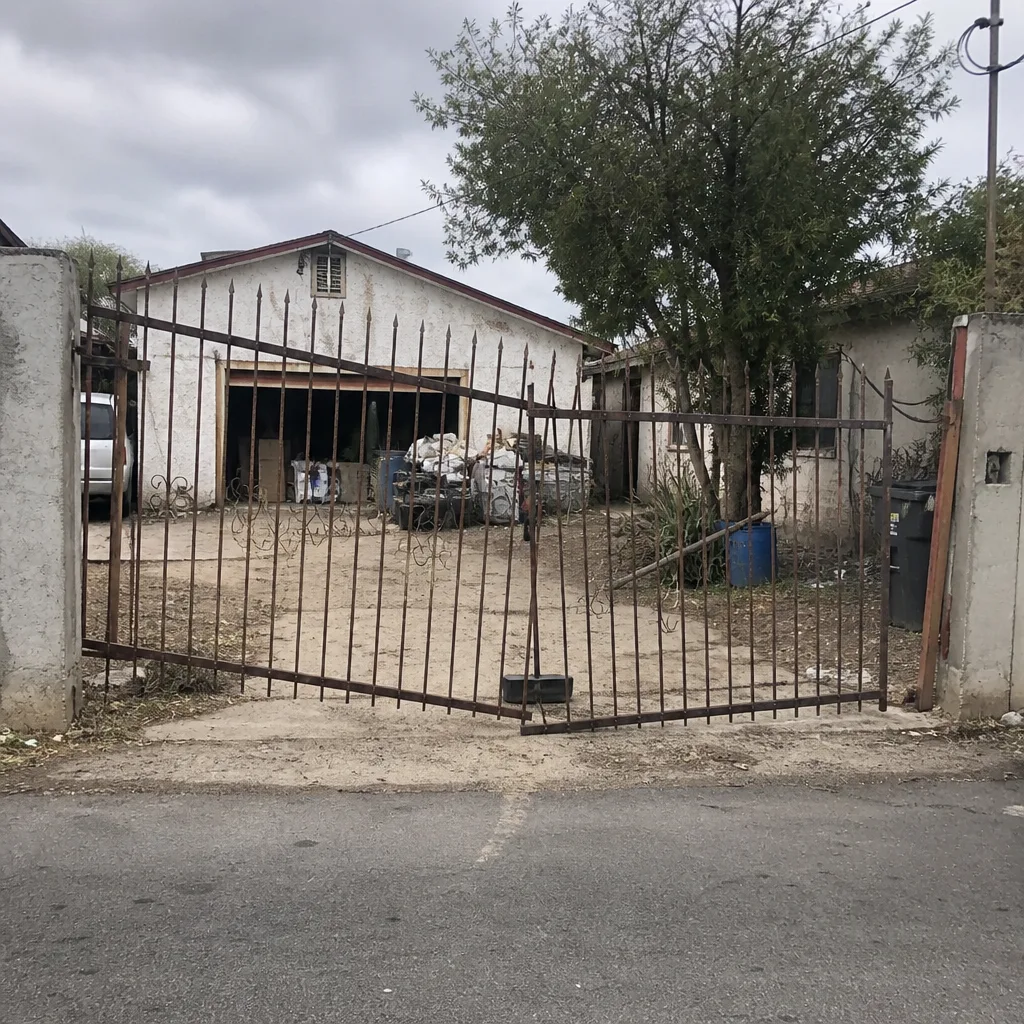 Before
 After
 Before
 After
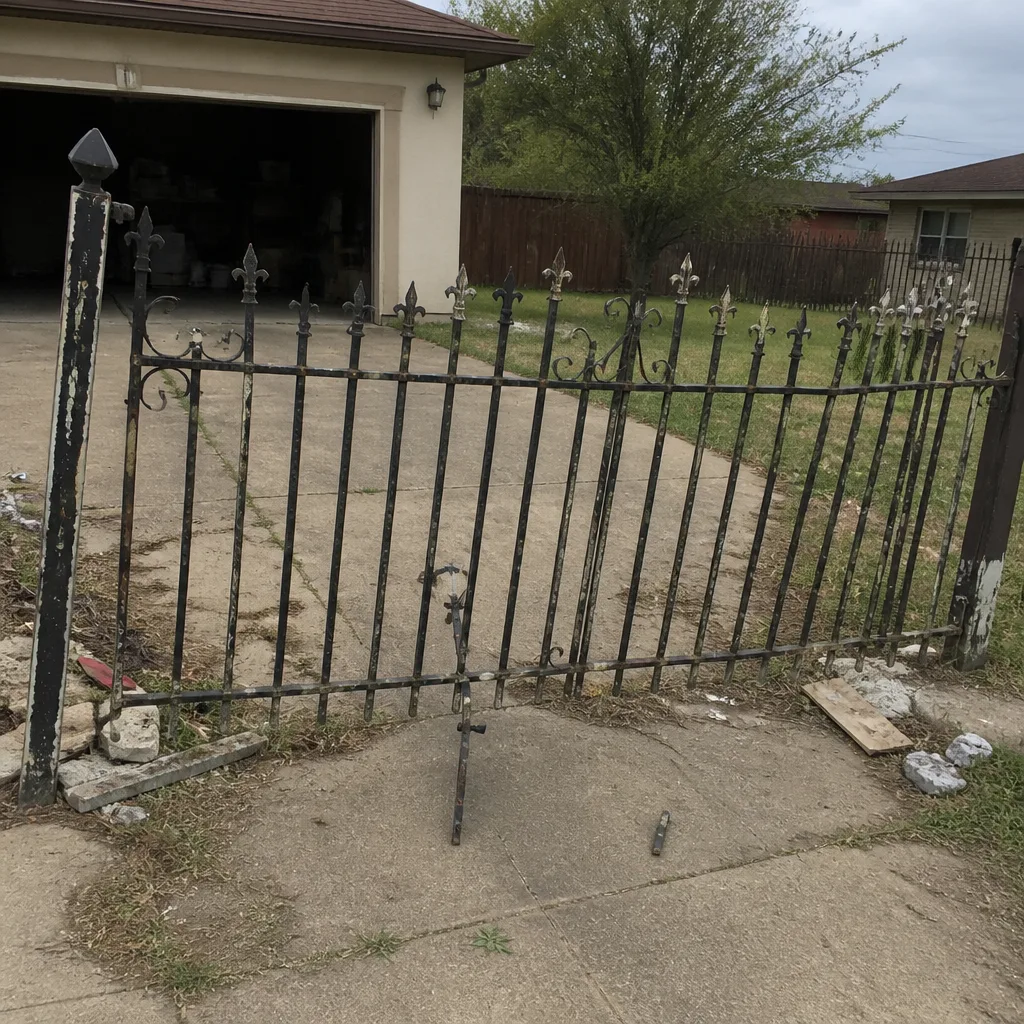 Before
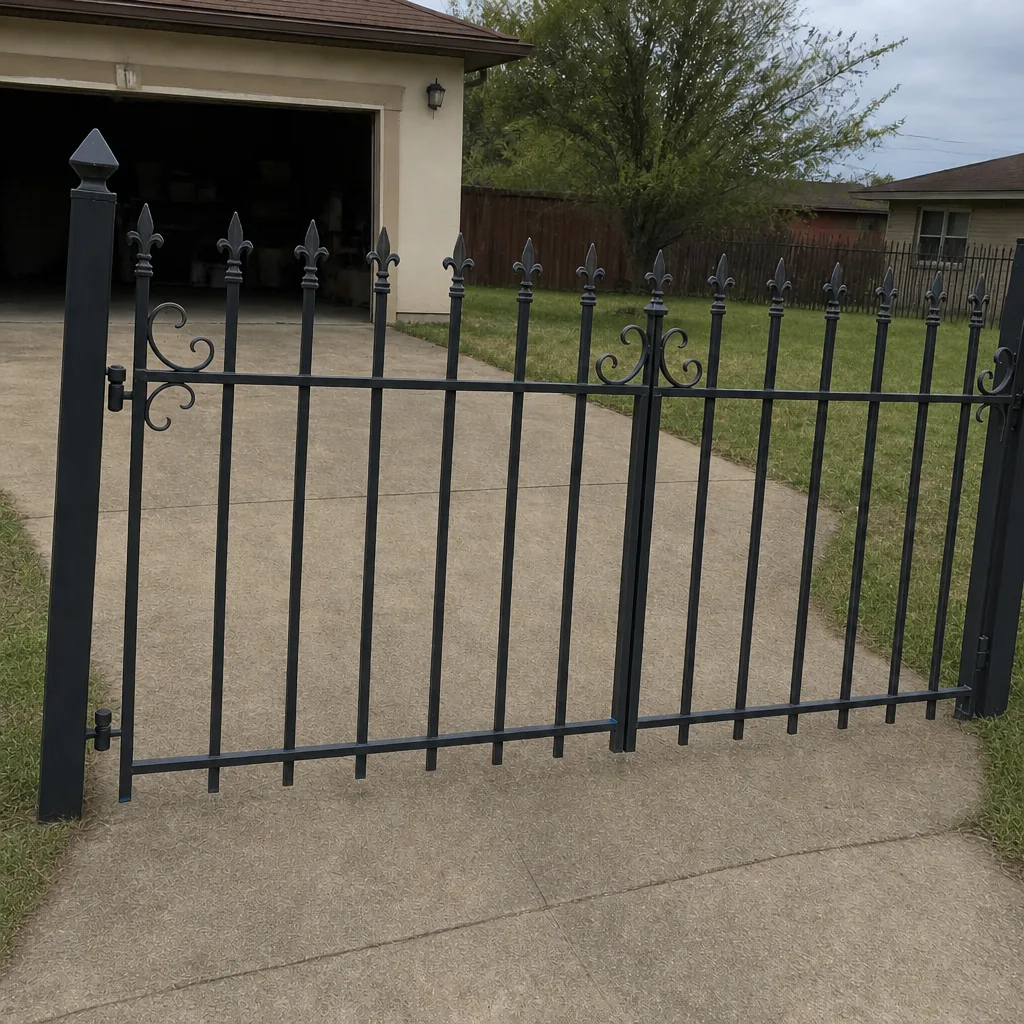 After
When to Call a Professional
Call a gate specialist when the gate reverses without an obstruction, stops mid-travel, refuses to latch, or the operator flashes an error you can’t read. Call when the gate hangs, drags, or binds when you move it by hand, since that points at posts, hinges, or the track. Call before summer if the gate is on a residential driveway that gets heavy use, or if an HOA or commercial entry cycles dozens of times a day. Call when a safety edge doesn’t stop a closing gate. Call when wiring is damaged, an operator runs hot, or the gate has repeated failures you’ve already paid to fix. Gate Repair Laredo offers free estimates in Laredo. Call (833) 946-7096.
Frequently Asked Questions
Gate repair is priced per job after an on-site diagnosis, and the written estimate sets the final price before work starts. Adjustments, component repairs, and electrical diagnosis fall into different pricing categories because they take different amounts of work. Estimates are free. Call (833) 946-7096 for an exact quote.
Yes. Electric gate repair includes power, motor, control board, safety sensor, and wiring diagnostics, and safety edges are part of that. A gate that doesn’t reverse on obstruction or fails to close properly gets tested as part of the diagnosis, not skipped over. Call (833) 946-7096 to schedule an on-site look.
Many repairs and adjustments can be handled same day. Parts that need ordering, post work, and any new installation are scheduled. We answer 24/7, with fast dispatch from 7am to 7pm, Sunday through Friday. Call (833) 946-7096 for the next opening.
Usually not by itself. Dragging and misalignment often trace back to post shift from expansive clay and caliche soil or to worn hinges and rollers, and a new operator installed over that problem will fail the same way. Disengaging the operator and testing the gate by hand tells you which problem you actually have. Call (833) 946-7096 for a diagnosis.
We service nine brands: LiftMaster, FAAC, BFT, Linear, Viking, Ghost Controls, DoorKing, Elite, and Mighty Mule. That spans residential driveway openers like Laredo homes use and commercial-grade access systems at heavier entries. Call (833) 946-7096 and we’ll tell you what your system needs.
A full installation is measured on site and quoted in writing before any work begins, then scheduled. It covers the gate structure, correct post footings, the operator, safety sensors, and the electrical connection that powers it. New work is planned, not same-day. Call (833) 946-7096 for a free estimate.
The Bottom Line
In Laredo, gate problems trace back to three things more often than anything else: heat that speeds up mechanical wear, clay and caliche soil that shifts posts and fakes an operator fault, and brand-specific control behavior that a generalist can’t read. Getting the diagnosis right is what separates a real fix from a band-aid. Test the gate by hand before trusting a motor test, watch for post movement, and treat safety sensors as a safety matter. An adjustment, a repair, and a rebuild are three different jobs, and a written estimate tells you which one you’re paying for. Our technicians have up to 10 years of experience across the major brands, and Gate Repair Laredo keeps the focus on gates only.
If your gate is dragging, reversing, failing to latch, or just slower than it used to be, get it looked at before summer does the rest. Call (833) 946-7096 for a free estimate. We answer 24/7, with fast dispatch from 7am to 7pm, Sunday through Friday.
Written by the team at Gate Repair Laredo.