
Last updated November 15, 2026
 Wrought iron
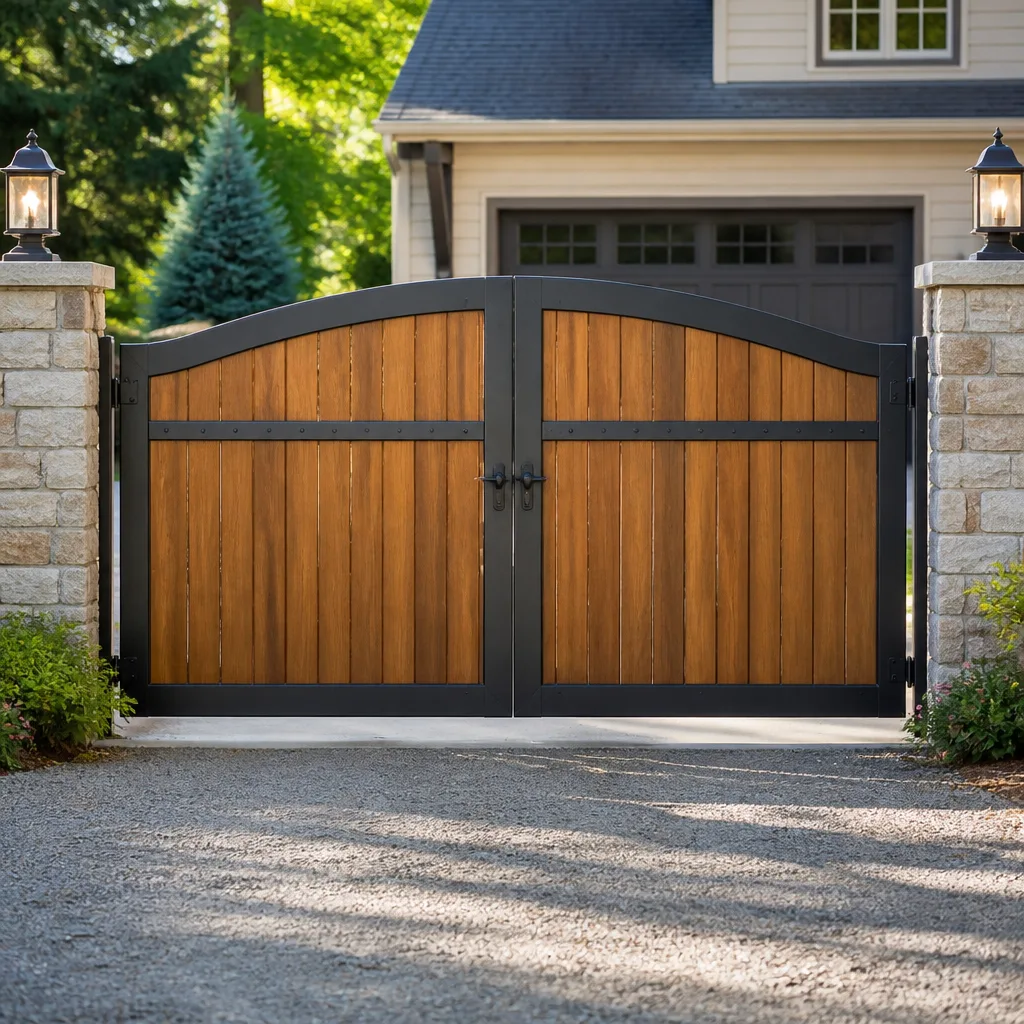 Wood & steel frame
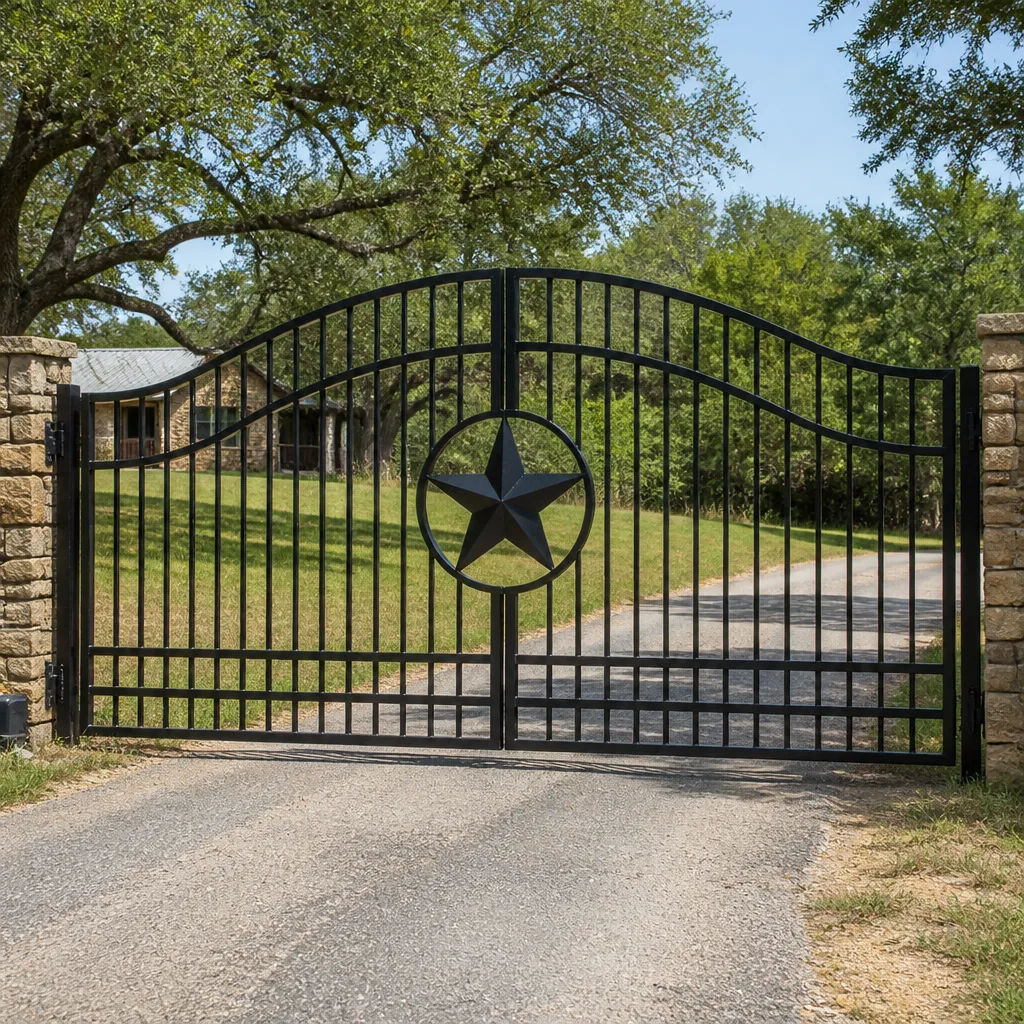 Farm & ranch
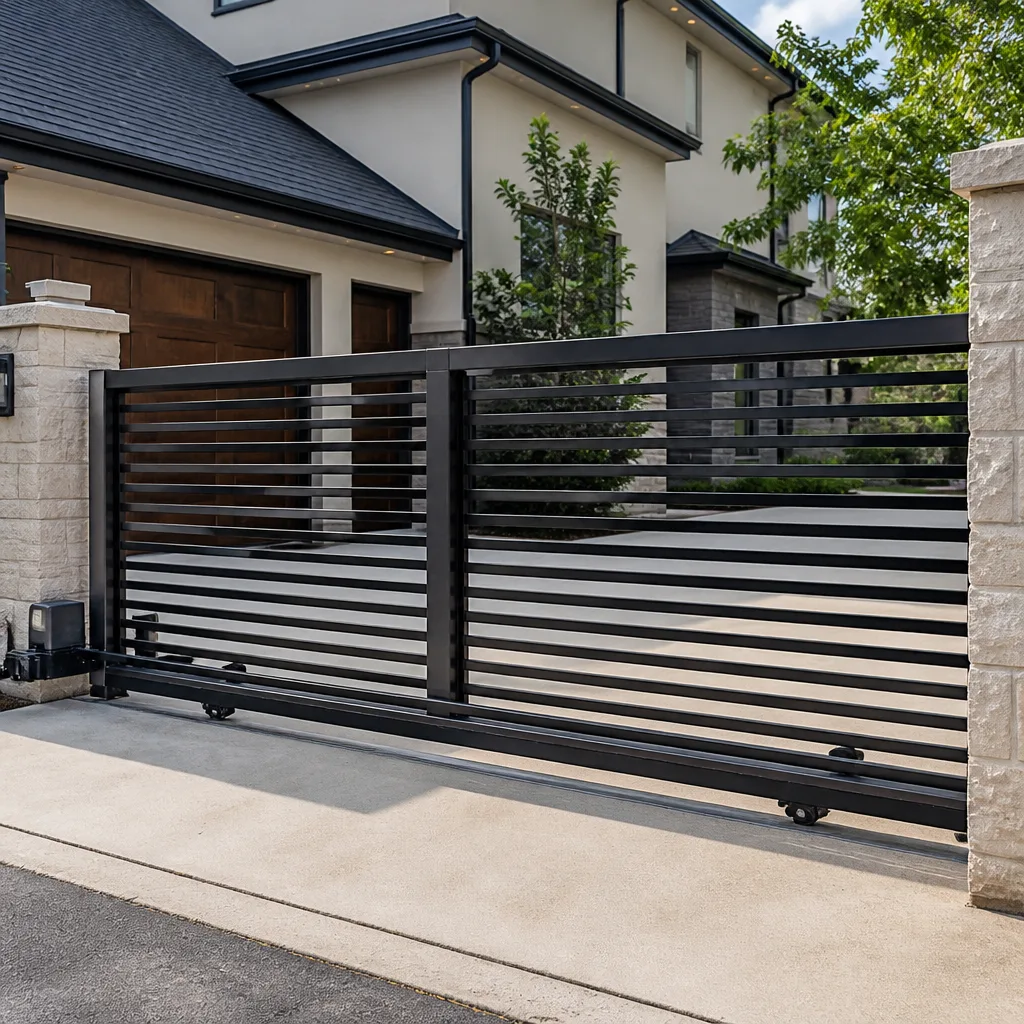 Sliding driveway gates
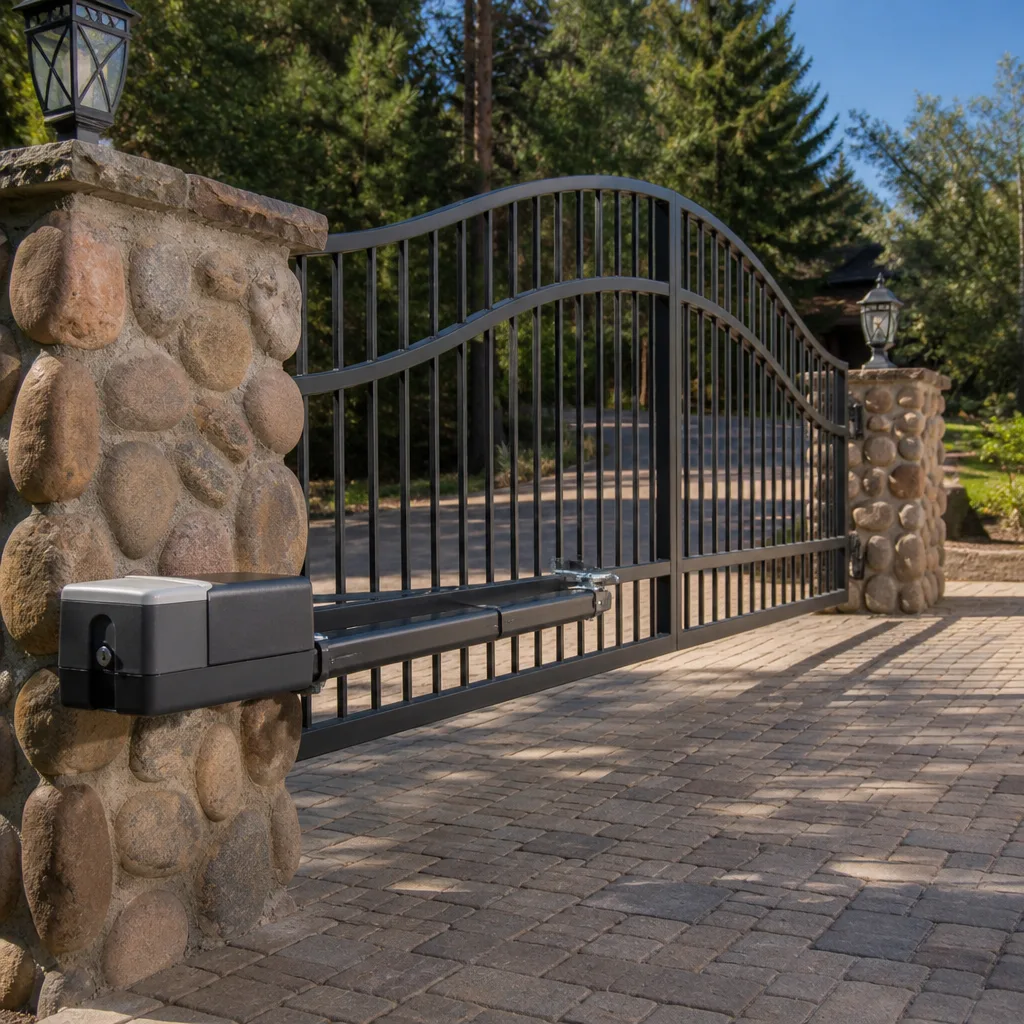 LiftMaster operators
Free on-site gate assessment - hinges, posts, and your LiftMaster or Nice gate operator checked before anything is quoted
The assessment is free and the quote is the invoice.
Get your free estimateDIY vs Professional Gate Repair: The Laredo Homeowner’s Decision Guide
Adjusting a limit switch is a legitimate DIY task. Diagnosing why the same gate keeps tripping its circuit breaker is not. That confusion is where homeowners get hurt, void a warranty, and turn a small repair into a full operator replacement, all in the same afternoon. The real question isn’t whether you’re handy enough to fix a gate. It’s whether you can correctly identify which category of problem you’re looking at. Mechanical adjustments and electrical/operator repairs carry completely different risk tolerances and skill sets. This guide draws that line precisely for Laredo homeowners, so you know which tasks are safe to attempt and which ones belong in the hands of a gate specialist.
Quick Answer
Mechanical issues – a sagging panel, a misaligned latch, a track that needs clearing, a limit switch that needs a small adjustment – are often safe to handle yourself on a manual gate, and sometimes on an automated one with a simple mechanical fix. Anything involving the operator’s power supply, control board, wiring, safety sensors, or a heavy automated panel that could crush or fall is a professional repair. In Laredo, the heat, dust, and seasonal storms accelerate wear on both mechanical and electrical gate components, so a problem that looks cosmetic often has an electrical cause underneath. When in doubt, a free on-site estimate costs you nothing and tells you exactly which category you’re in.
Styles & brands we work with
- Wrought iron
- Wood & steel frame
- Farm & ranch
- Sliding driveway gates
- LiftMaster operators
Table of Contents
- The Task Taxonomy: What’s Actually DIY-Safe and What Isn’t
- Where the Electrical Line Falls Under Texas Code
- Warranty Implications of DIY Work on Branded Operators
- Tool and Parts Access in Laredo: What You Can Buy and What You Can’t
- Liability Exposure: HOAs, Injuries, and Property Records
- How to Productively Assist a Technician Before and During the Visit
- Reducing Billable Diagnostic Time: What to Do First
- Common Mistakes to Avoid
- When to Call a Professional
- Frequently Asked Questions
The Task Taxonomy: What’s Actually DIY-Safe and What Isn’t
Most gate repair advice online treats every problem the same. That’s the mistake. A gate is two systems bolted together – a heavy mechanical structure and an electrical operator – and the risk profile of each is completely different. Sorting your problem into the right category before you touch anything is the single most useful thing you can do as a homeowner.
Genuinely DIY-safe tasks (manual or automated):
- Clearing debris, gravel, or vegetation from a slide gate’s track
- Tightening visible hinge bolts or latch hardware with hand tools
- Lubricating rollers, hinges, and tracks with the manufacturer’s recommended product
- Adjusting a limit switch on a residential operator per the owner’s manual
- Replacing a remote battery or re-pairing a remote to the operator
- Straightening a bent latch striker on a light residential gate
- Cleaning photo-eye lenses and brushing dust off sensor faces
Professional-only tasks:
- Any work inside the operator housing (control board, motor, capacitor, transformer)
- Any work on the 120V power feed, conduit, or the disconnect feeding the operator
- Replacing or repositioning safety sensors, safety edges, or loop detectors
- Repairing a slide gate that has come off its track or a heavy swing panel that has dropped
- Replacing gate posts, hinges on heavy commercial panels, or structural welds
- Diagnosing an intermittent fault (gate stops randomly, reverses without obstruction, trips a breaker)
- Any repair on a gate serving an HOA or commercial property
That second list isn’t about gate technicians protecting their turf. It’s about the fact that a heavy slide gate can weigh hundreds of pounds, a misadjusted safety edge can fail to reverse on contact, and a miswired operator is a fire risk. The mechanical list is real work you can do. The electrical and structural list is where the danger lives, and where professional diagnosis pays for itself.
Where the Electrical Line Falls Under Texas Code
Here’s the part most DIY guides skip: the electrical work on an automated gate isn’t the same category as the mechanical work, and Texas treats it that way. Anything on the line-voltage side – the 120V circuit feeding the operator, the disconnect, the conduit run, the junction box – is electrical work, and in most Texas jurisdictions that work requires a licensed electrician and a permit from the local building department. The operator’s low-voltage controls (the 24V signal wiring, the safety sensor loops) fall into a gray zone that varies by jurisdiction, so the correct move is to ask the City of Laredo’s building department what applies to your address before you touch it.
We draw this line carefully because it matters. The low-voltage side of a gate operator – the control board, the sensor wiring, the receiver – is where most “the gate just stopped” problems actually live, and it’s also where a homeowner with good intentions can create a genuine fire hazard. A loose line-voltage connection at the operator’s terminal block, a wire nut that isn’t rated for the load, an undersized conductor on a long run: none of these look dangerous, and all of them can fail in ways that aren’t visible until they do. This is why our electric gate repair work starts with the meter and ends with the manual, not with a guess.
The practical rule for Laredo homeowners: if the repair requires removing the operator cover and touching anything connected to line voltage, stop. If it requires only hand tools on the mechanical gate and the manual for the operator menu, you’re likely in DIY territory. Everything between those two points is a judgment call that a gate specialist can make in a few minutes on-site for free.
Warranty Implications of DIY Work on Branded Operators
Warranty coverage on branded gate operators varies widely by manufacturer, and the one consistent theme is this: owner-performed work inside the operator housing or on the electrical feed generally voids the warranty on the affected component. So does work performed by anyone who isn’t a recognized service provider for that brand. The details differ from brand to brand, and they’re worth reading before you pick up a screwdriver.
Operator brands in the residential and light-commercial market handle this differently. Some, including Linear and Viking, publish service guidelines that are relatively clear about what owner maintenance is allowed (typically battery replacement, remote pairing, and cleaning) versus what voids coverage. Others, including Ghost Controls, lean heavily on their own technical support channels and expect to troubleshoot over the phone before authorizing any repair, and the outcome depends on whether the unit’s serial history shows any non-approved service. For a heavier BFT system on a commercial or HOA gate, the warranty documentation typically requires service by an authorized provider for any work past the routine maintenance checklist.
Our practical advice: read the warranty documentation for your specific operator model before you do anything past a battery change or remote re-pair. If the operator is still under manufacturer warranty, the cost of a professional diagnosis is almost always less than the value of the coverage you’d lose by opening the housing yourself. We work with the major brands on their existing equipment, so a diagnosis with us doesn’t push you into a replacement – it protects the operator you already own.
Tool and Parts Access in Laredo: What You Can Buy and What You Can’t
Laredo’s location affects which gate parts you can find locally and which require brand-specific sourcing. That’s a real constraint on DIY repair here, not a sales pitch. The local building-supply and hardware stores carry the universal consumables – lubricants, bolts, hinges, replacement rollers, common fuses, batteries – enough to handle the DIY-safe list above. What they don’t carry is the brand-specific operator parts: a control board for a specific Linear model, a replacement receiver for a Ghost Controls unit, a motor for a BFT operator. Those come through dealer channels, and dealer channels don’t sell to walk-in customers.
Here’s the honest version of what that means for a Laredo homeowner deciding on DIY:
- Universal parts (lubricant, bolts, rollers, hinges, batteries, fuses): buy locally, handle the mechanical fix yourself.
- Brand-specific operator parts (control boards, receivers, motors, sensor modules, keypads): usually available only through the manufacturer’s dealer network or a technician with an account, and the wrong part number is a return for you and a refund for nobody.
- Safety edge, loop detector, and safety sensor assemblies: brand-matched and often model-matched, so sourcing them without the operator’s model number and date code is guesswork.
- Gate structure parts (posts, heavy hinges, track sections): available from local metal fabricators for standard sizes, less so for custom or older installations.
In our experience, the sourcing constraint is what most often turns a planned DIY fix into a professional call – not the difficulty of the repair itself. A homeowner can read a manual and follow it. What they can’t do is order the right control board without an account, or wait out a dealer lead time while the gate sits open. That’s where a dedicated gate technician saves time and money at the same time.
Liability Exposure: HOAs, Injuries, and Property Records
If your gate serves an HOA or a commercial property, DIY repair is a liability question, not just a capability question. The short answer: don’t. An HOA gate is common property maintained under the HOA’s governing documents, and repair work on it is typically the HOA’s responsibility through an approved vendor. Even if you own the unit that operates it, the safety of the assembly is the HOA’s exposure, and an injury or property damage claim that traces back to owner-performed work on a common-area gate is a claim the HOA’s insurer will look at closely.
On a private residential gate, the exposure is narrower but real. If a visitor, delivery driver, or family member is injured by a gate that was DIY-repaired, and the repair is later found to have caused or contributed to the injury, the homeowner’s exposure increases. That matters most on automated gates with safety features – photo-eyes, safety edges, reversing sensors – because those features are specifically there to protect people, and a DIY repair that leaves one of them nonfunctional is a much larger problem than a slow gate.
There’s also the record-keeping side. A repair that’s documented by a licensed, insured gate service provider creates a paper trail that protects you if the question ever comes up. A DIY repair doesn’t. For Laredo homeowners with a commercial property manager or HOA board to answer to, that documentation is often what decides which route to take.
How to Productively Assist a Technician Before and During the Visit
You can do real work before a technician arrives, and it shortens the visit and the bill. The idea is to hand the technician a clear picture of what’s happening so they spend their time diagnosing, not gathering information.
- Write down the operator’s brand and model. Check the label inside the operator housing or on the arm. If you can’t find it, note the brand name on the remote or the housing and a photo of the unit, and the technician will identify it on-site.
- Record the failure pattern. Does it stop at the same point every cycle, or randomly? Does it reverse without an obstruction? Does it fail on one direction only? Note whether the symptom appeared after a specific event (storm, power outage, new remote, recent physical contact with the gate).
- Note the weather and time of day. In Laredo, a gate that fails only in the afternoon is telling you something about the operator’s thermal load or the panel’s expansion; a gate that fails only after a dust storm is telling you something about the sensors. Details like this are diagnostic gold.
- Check the obvious, safely. Is the disconnect switch on? Is there a tripped breaker? Is there a manual release engaged? Is anything blocking the photo-eyes? These are questions the technician would otherwise ask, and you can answer them before the visit.
- Have the property and access ready. The gate open, the driveway clear, the operator accessible, and a person on-site who can demonstrate the problem.
- Have the paperwork ready. Warranty documents, prior repair receipts, and HOA approval if applicable.
During the visit, the most useful thing you can do is describe what you see without guessing at causes. “It stops about three feet in, only when it’s hot” is worth more than “I think it’s the motor.” A gate specialist with up to 10 years of experience on the tools can turn a clear description into a diagnosis in minutes.
Reducing Billable Diagnostic Time: What to Do First
The single biggest driver of an unexpected repair bill is diagnostic time spent chasing the wrong problem. Here’s how to reduce it before the technician arrives, based on the failures we see most often around Laredo.
Run this checklist first:
- Confirm the power. Breaker on, disconnect on, operator indicator light on if it has one. A surprising number of “dead gate” calls are a tripped breaker or a loose disconnect.
- Look at the safety sensors. Clean the lenses, check for spider webs, check that the sensor alignment hasn’t been bumped. If the operator has a diagnostic LED, note its pattern.
- Test the manual release, gently. If the gate moves freely by hand, the mechanical side is likely fine and the problem is electrical. If it binds, the mechanical side needs attention.
- Try a second remote or the wall keypad. If one works and the other doesn’t, the problem is in the remote or receiver, not the operator.
- Check the track and rollers. Debris, gravel, and dust are the most common cause of slide gate stalls in Laredo, and they’re a visual inspection away from diagnosis.
If those five checks don’t pinpoint the problem, you’re past the point where DIY diagnosis is efficient. The right move then is a free on-site estimate, not a part swap.
Common Mistakes to Avoid
- Trying to diagnose an intermittent fault by replacing parts. When a gate stops randomly, the failure is usually in a sensor, a wiring connection, or the control board’s logic – not the motor or the arm. Replacing the motor when the control board is at fault wastes the part and doesn’t fix the gate. Diagnose first, replace second.
- Working on the electrical side without knowing the code requirement. Laredo homeowners who open the operator housing and touch the line-voltage side without checking with the City of Laredo’s building department can void their warranty and create a genuine hazard. The manufacturer’s warranty documentation and the city’s permitting requirement both apply, and neither one is optional.
- Disabling a safety edge or photo-eye “just for now.” A gate with a disabled safety feature is a crush hazard and a liability. If the safety feature is the thing that’s broken, the gate shouldn’t be operated automatically until it’s fixed.
- Ordering a control board without the model and date code. Brand-specific operator parts are matched to the model, the production run, and sometimes the regional variant. Ordering from a photo or a memory of the model number is how Laredo homeowners end up with a part that doesn’t fit, no return authorization, and a gate stuck open while a replacement ships.
- Doing DIY work on an HOA gate without written approval. The HOA’s governing documents usually specify who can service common-area equipment, and working outside that scope exposes the homeowner to the HOA’s claim. Ask the board before you touch it.
- Assuming the gate is fully open when it isn’t. Laredo’s dust and heat cause panel and track expansion, and a gate that was clearing the ground in cooler months may be dragging by mid-summer. Look at the actual clearance rather than assuming the gate is fully retracted.
- Letting a slow gate stay slow. A gate that hesitates, stalls, or reverses without obstruction is a warning. It’s also the cheapest stage at which to repair it. Waiting turns a small fix into a full operator replacement.
When to Call a Professional
Call a gate professional when the problem is on the electrical side of the operator, when the gate is automated and heavy enough to injure someone, when it’s an HOA or commercial installation, when the manufacturer’s warranty is still active, or when the failure pattern is intermittent and you’ve already checked the basics. Call immediately if the gate has come off its track, if the operator is making a grinding or humming sound without moving the gate, if you smell burning from the operator housing, or if the gate reverses without an obstruction – that’s a safety feature failure, not a convenience issue.
If you’re in Laredo and unsure which category you’re in, that’s the right time to ask. A gate specialist can tell you in a few minutes whether the repair is yours to handle or one we need to take on. Gate Repair Laredo offers free estimates in Laredo – call (833) 946-7096. We answer 24/7. Fast dispatch from 7am to 7pm, Sunday through Friday. We’re closed Saturday, but a call is booked into the next opening. Our technicians have up to 10 years of experience, work on your brand rather than pushing a switch, and cover the full lifecycle from mechanical repair to electric gate repair to new installation across Laredo.
Frequently Asked Questions
Yes, limit switch adjustment is a legitimate DIY task on most residential operators, as long as you follow the manufacturer’s manual and don’t work on the line-voltage side of the operator. The switch tells the operator where the gate starts and stops, and small adjustments are within reach of a careful homeowner. If the operator’s manual doesn’t clearly describe the procedure for your model, that’s the sign to have a technician handle it. Call (833) 946-7096 for a free estimate if you’d rather not guess.
Owner-performed work inside the operator housing and any work on the operator’s 120V power feed generally void the warranty on the affected components across the major brands, though the exact terms vary. Battery changes, remote pairing, and cleaning are usually fine. Work on control boards, receivers, motors, or the electrical feed is not. Read the warranty documentation for your specific model before opening anything past the routine maintenance list. Call (833) 946-7096 and we’ll tell you what applies to your brand and model.
Because the fix is mechanical and the diagnosis is electrical. A gate that stops at the same point every cycle, or reverses without an obstruction, has a problem in the sensor path, the control board logic, or the wiring – not the motor or the gate panel. Replacing mechanical parts to chase an electrical fault is the most common DIY mistake we see in Laredo. A meter, a manual, and the failure pattern are what solve it. Call (833) 946-7096 for a free estimate and we’ll diagnose it correctly the first time.
Permit requirements depend on what’s being repaired and how the gate’s electrical feed is configured, so the correct answer comes from the City of Laredo’s building department for your specific address. Mechanical repairs typically don’t require a permit. Electrical work on the line-voltage side often does, and in many Texas jurisdictions requires a licensed electrician. Ask the city before you start, and make sure whoever does the work is licensed and insured. Call (833) 946-7096 for a free estimate and we’ll walk through what your repair involves.
Write down the operator’s brand and model, record the exact failure pattern, and note the weather and time of day when it fails. Then check the basics safely: breaker, disconnect, manual release, photo-eye lenses, and the track. Have the gate open, the driveway clear, the operator accessible, and the warranty documents ready. A clear description of the symptom is worth more than your best guess at the cause. Call (833) 946-7096 for a free estimate.
In most cases the repair is worth doing, and the decision should follow a diagnosis rather than a guess. A control board, motor, or sensor replacement on an otherwise-sound operator usually costs less than a full installation and keeps the existing gate structure, wiring, and access hardware in place. Replacement makes sense when the operator is out of parts support or the gate structure itself needs rework. Our gate repair approach starts with diagnosis, not replacement – call (833) 946-7096 and we’ll tell you which path your gate is actually on.
The Bottom Line
The DIY versus professional decision on gate repair comes down to one question: is the problem mechanical or electrical? If it’s mechanical, on a manual gate or a light automated panel, and the fix is described in your owner’s manual, it’s within reach. If it touches the operator’s line voltage, the control board, the safety sensors, or the heavy structure of an automated gate – and especially if it’s on an HOA or commercial property, still under warranty, or intermittent – it belongs with a gate specialist. In Laredo’s heat and dust, the lines blur faster than homeowners expect, so a free diagnosis is the cheapest insurance against a wrong-category repair. We’re Gate Repair Laredo, and our full scope is repair, electric gate repair, and installation – nothing else. Our technicians have up to 10 years of experience on brands including BFT, Linear, Viking, and Ghost Controls. Call (833) 946-7096 for a free estimate. We answer 24/7. Fast dispatch from 7am to 7pm, Sunday through Friday.
Written by the team at Gate Repair Laredo.
See the difference
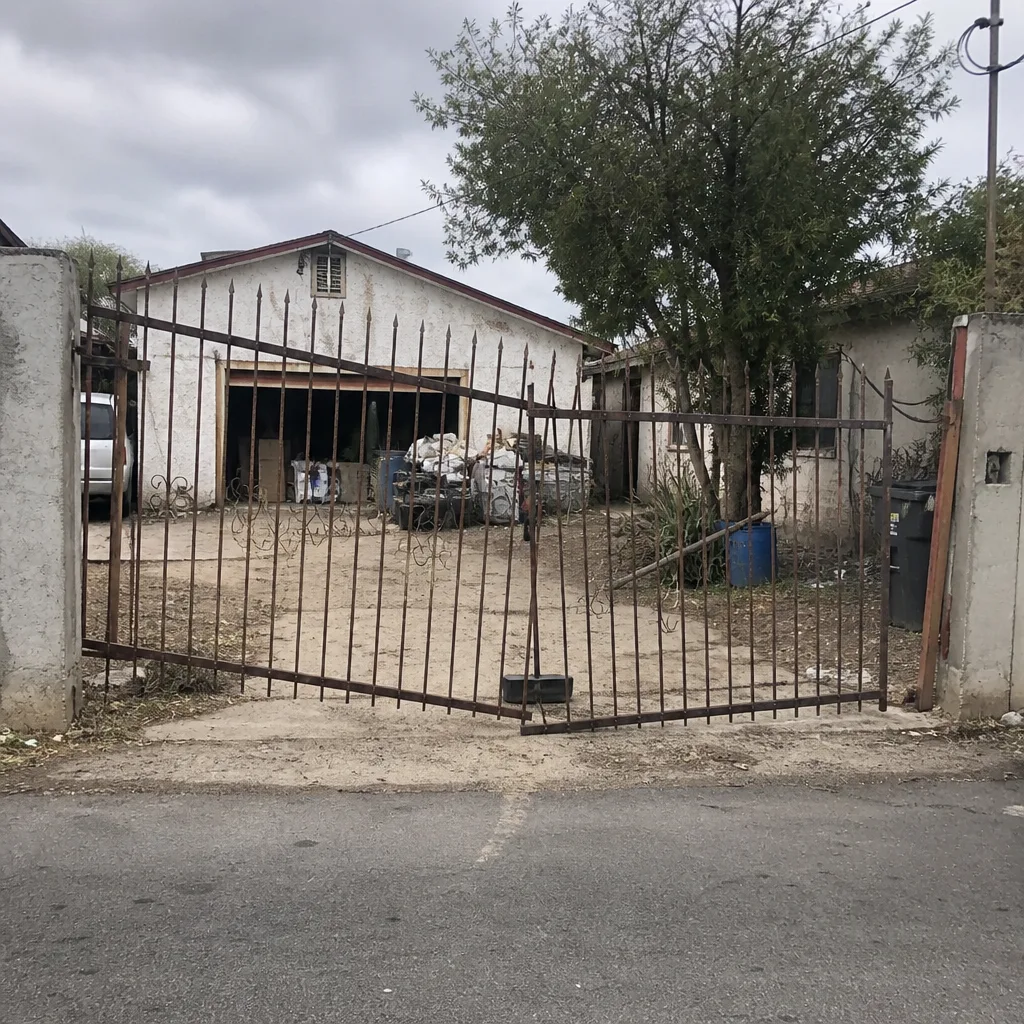 Before
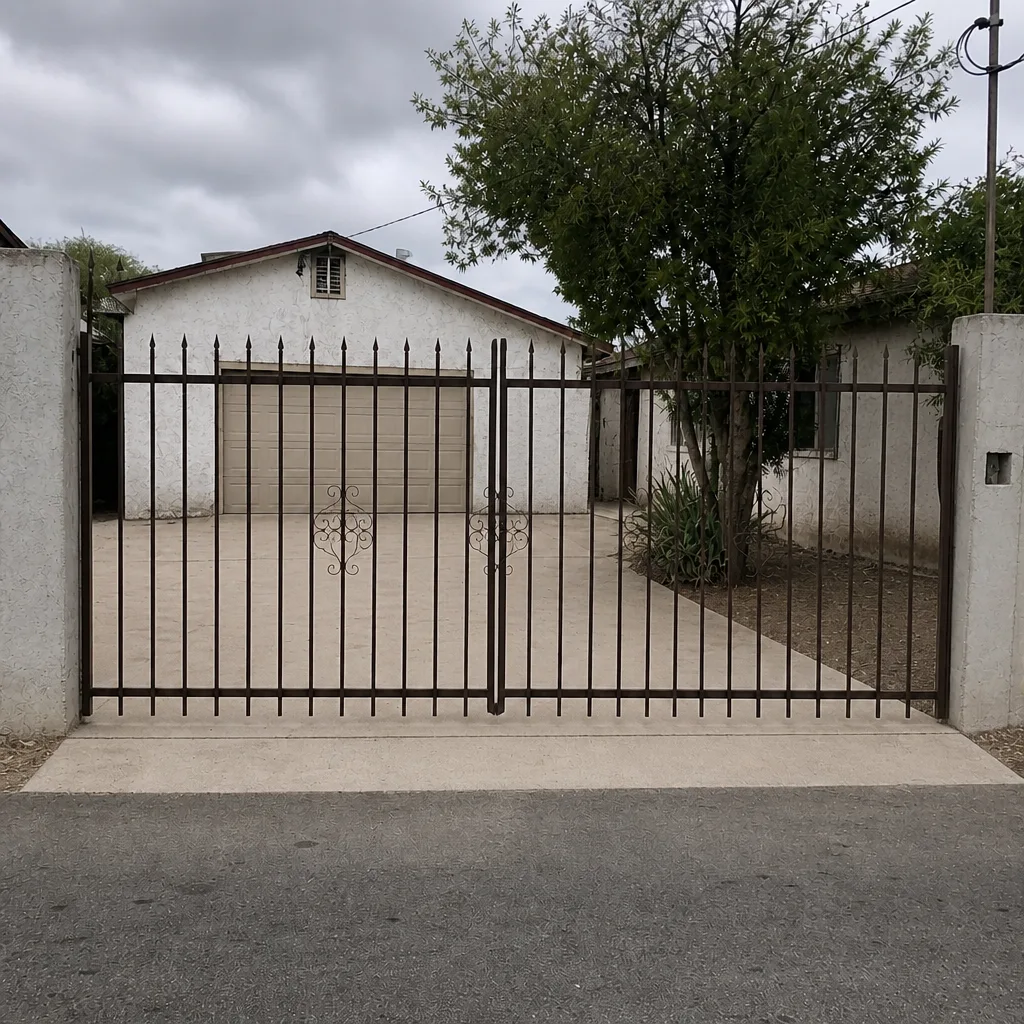 After
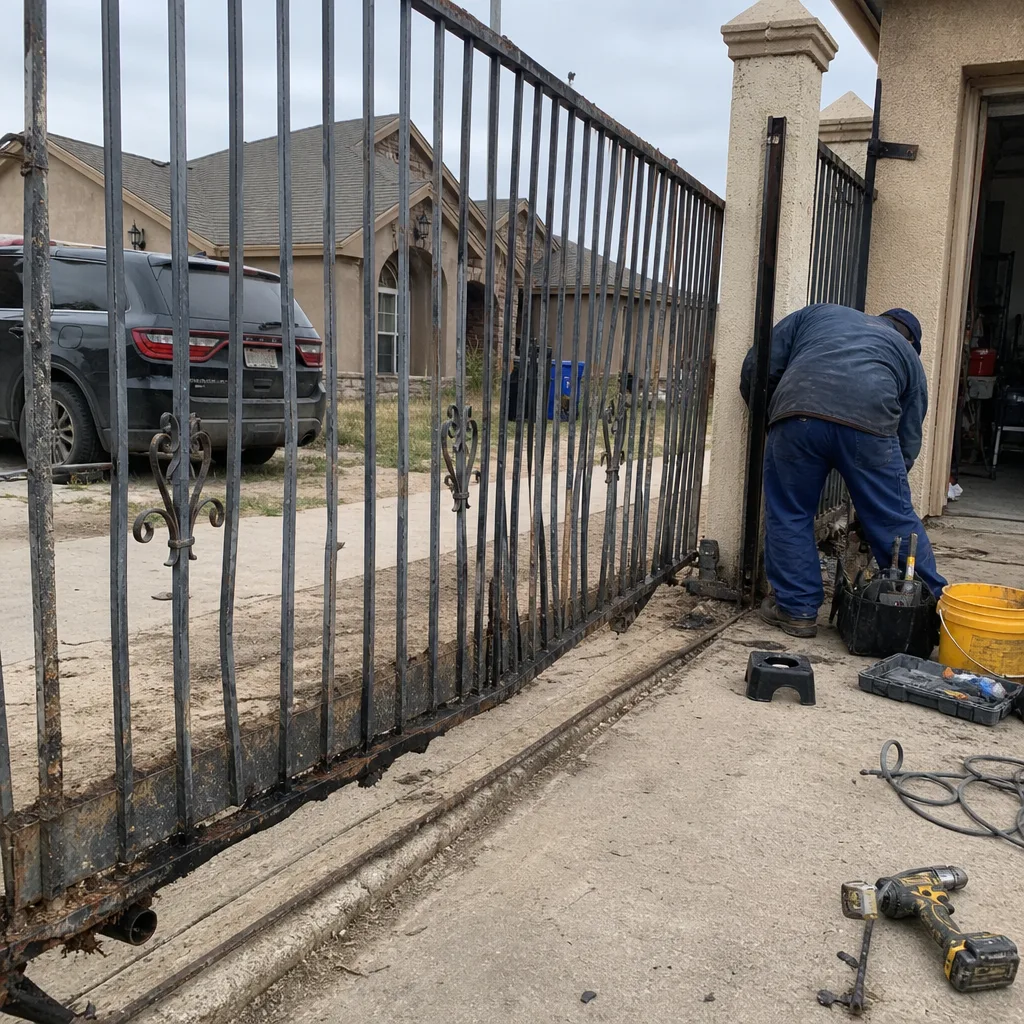 Before
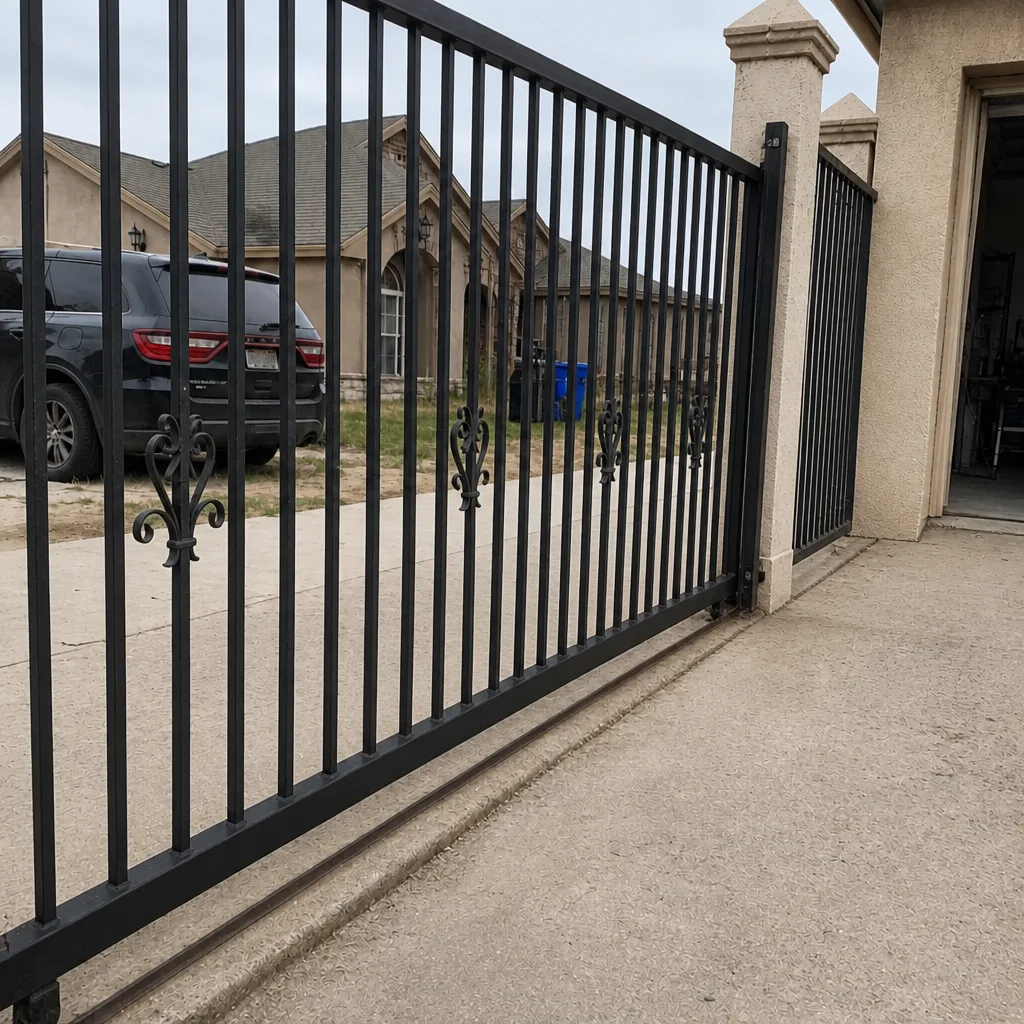 After
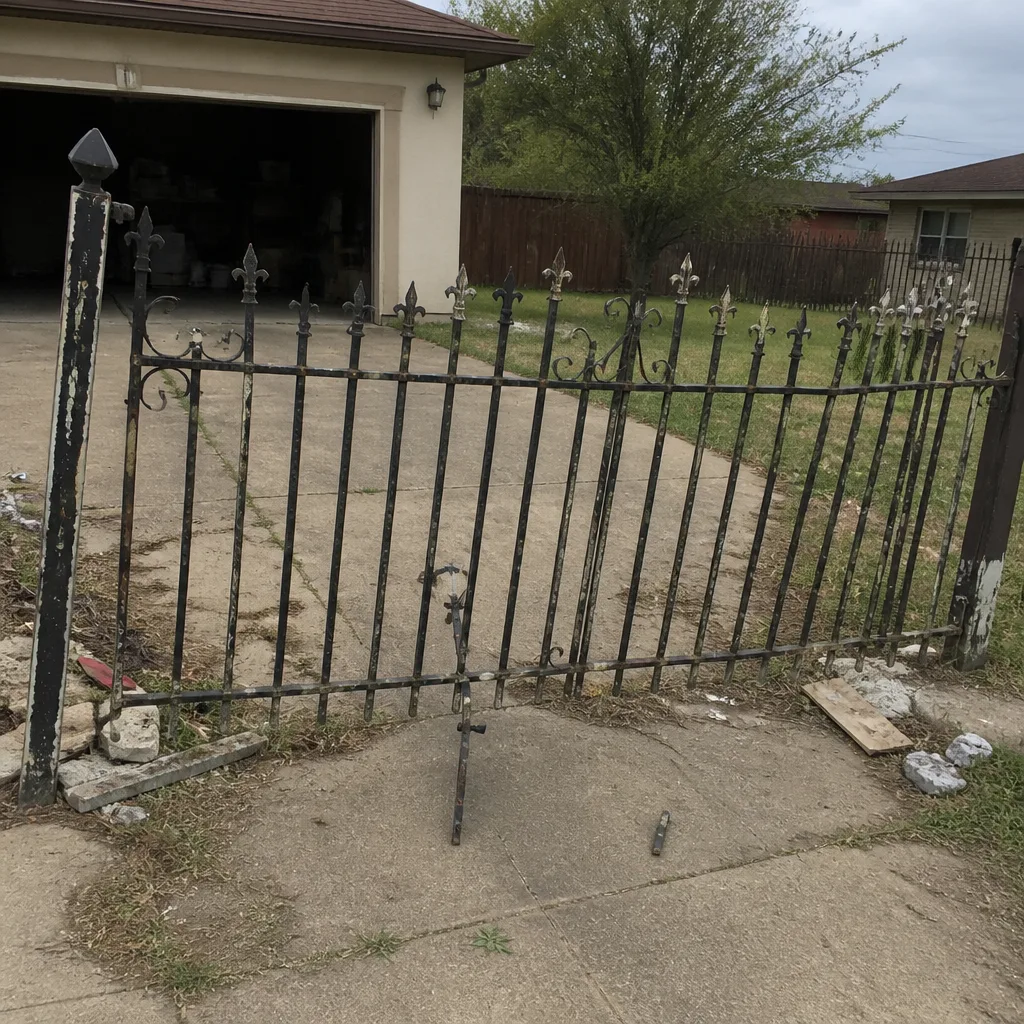 Before
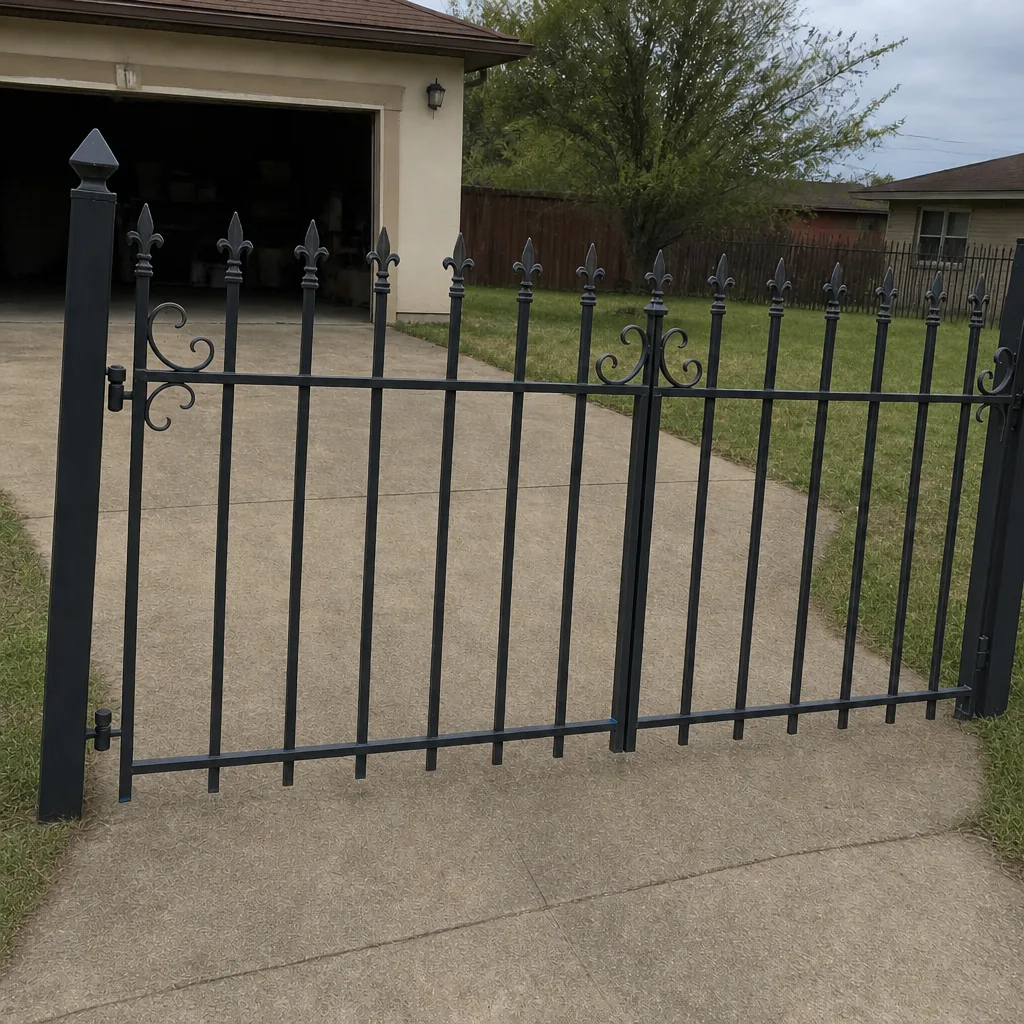 After