
Last updated November 15, 2026
 Wrought iron
 Wood & steel frame
 Farm & ranch
 Sliding driveway gates
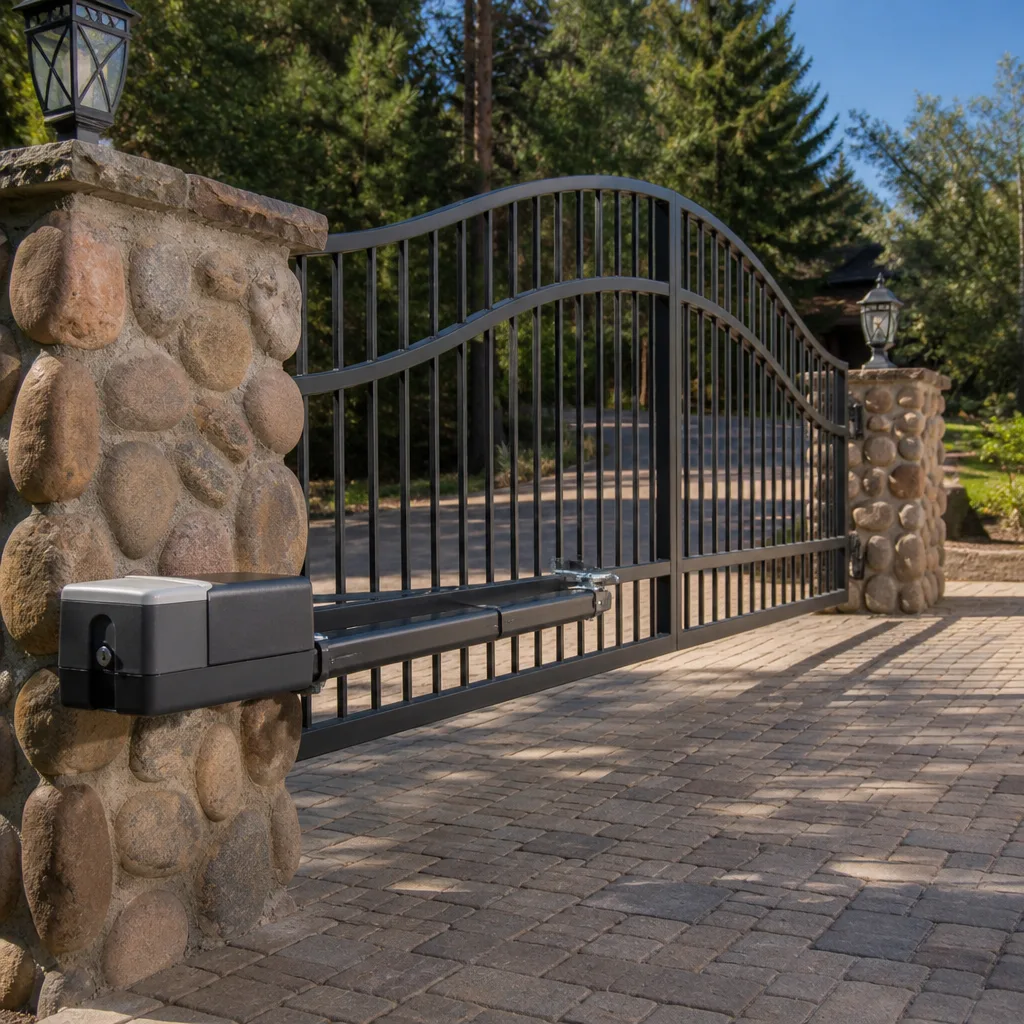 LiftMaster operators
Free on-site gate assessment - hinges, posts, and your LiftMaster or Nice gate operator checked before anything is quoted
The assessment is free and the quote is the invoice.
Get your free estimateGate Repair Maintenance Checklist for Laredo Homeowners
Most gate maintenance advice was written for a climate with four seasons and soft, rainy soil. Laredo has neither. Here, gates fail on a different schedule: sun bakes rubber seals and photo-eye lenses until they crack, wind-driven dust packs into tracks and hinges, and the caliche under your posts swells and shifts in ways that push a gate out of square long before the motor ever gives out. That’s why a generic checklist from a national home-maintenance site will miss the failures you’ll actually see on a Laredo driveway. This guide lays out a month-by-month, quarter-by-quarter routine built around what breaks first here – not in a Portland suburb.
Quick Answer
A Laredo homeowner should check a gate monthly for dust and debris in the track and photo-eye lenses, lubricate moving parts quarterly with a heat-stable product, and have the operator serviced annually. The biggest local stressors are intense UV (Laredo sees 220+ sunny days a year), alkaline caliche soil that shifts under the posts, and constant wind-blown dust that clogs sensors and grinds down hinges. Catching these early is what separates a quick adjustment from a full hinge or operator replacement.
Styles & brands we work with
- Wrought iron
- Wood & steel frame
- Farm & ranch
- Sliding driveway gates
- LiftMaster operators
Table of Contents
- The Monthly Checklist
- Cleaning Photo-Eye Sensors Without Misaligning Them
- Lubrication by Gate Type: Swing, Slide, Overhead
- Reading Caliche Soil and Catching Post Lean Early
- Brand-Specific Maintenance Intervals
- The Quarterly and Annual Deep Check
- Common Mistakes to Avoid
- When to Call a Professional
The Monthly Checklist
Fifteen minutes once a month is enough to catch most of what fails on a Laredo gate. The idea is to look for the small changes that turn into expensive repairs if you ignore them. Work through these steps in order, and do them in the cooler part of the morning so you’re not fighting the heat.
- Walk the track or the swing arc. Clear leaves, twigs, and grit. In Laredo, dust and blown debris collect faster than most guides assume. A track with grit in it wears the rollers and strains the motor.
- Look at the photo-eye lenses. Even a light film of dust scatters the beam and can cause phantom reversals or a gate that won’t close. Wipe them gently (more on this below).
- Listen to the motor. A healthy operator sounds smooth and even. Grinding, clicking, or a labored strain is your early warning that something mechanical is binding.
- Check the gate’s swing or travel by hand with the operator disengaged. It should move smoothly. If you feel resistance or a catch, something’s worn or out of alignment.
- Inspect the hinges and rollers for wobble or rust. Heat and dust accelerate wear here.
- Test the safety reverse. Put an object in the gate’s path and confirm it stops and reverses. This is a safety function, not a convenience, and it needs to work every time.
If any of those checks turn up a problem you can’t resolve with a cleaning or a minor adjustment, that’s your cue to look closer or have a dedicated gate technician take a look. Small mechanical issues on a gate don’t fix themselves, and in our experience they tend to compound once the heat and dust get to work on them.
Cleaning Photo-Eye Sensors Without Misaligning Them
Photo-eye sensors are the most common cause of a gate that “acts haunted” – closing halfway, reversing for no reason, or refusing to move at all. In Laredo, the culprit is almost always dust caked onto the lens. The fix is simple, but doing it wrong can knock the sensors out of alignment and create a whole new problem.
The trick is to clean the lens without pushing on the housing. The sensors are aimed at each other across the gate opening, and even a small nudge can break that alignment. Here’s how to do it safely:
- Turn the operator off at the control box or disconnect power before you touch anything near the gate path. This is non-negotiable.
- Use a soft, dry microfiber cloth or a can of compressed air to clear loose dust first. Don’t spray anything directly into the housing.
- Wipe the lens in a single direction with light pressure. Don’t scrub in circles and don’t press the housing. You’re cleaning glass, not polishing a shoe.
- If the lens is grimy, dampen the cloth slightly with plain water – not a solvent, not a cleaner. Solvents can cloud the plastic lens and make the problem worse in the heat.
- Restore power and test. If the gate now behaves normally, you’re done. If it still stutters or reverses, the sensors may have lost alignment or the wiring may have an issue.
If you’ve cleaned them and the gate still misbehaves, don’t keep fiddling. Misaligned or failing photo-eyes are a job for someone who can test the beam and the wiring properly. This is exactly the kind of diagnostic work our electric gate repair team handles – from the motor to the control board.
Lubrication by Gate Type: Swing, Slide, Overhead
Lubrication is where most generic advice falls flat in Laredo. The standard recommendation – a light oil or a general-purpose grease – breaks down fast in extreme heat and, worse, turns into a dust magnet. A sticky, oiled hinge in this climate grabs grit like flypaper, and that grit grinds the joint down. You want products that stay put and resist heat.
Here’s how to approach each gate type:
- Swing gates: Lubricate the hinges and the operator’s pivot points. A heat-stable, high-temperature grease on the hinges holds up far better than thin oil. Wipe off excess so dust doesn’t collect.
- Slide gates: The track and rollers are the wear points. Keep the track clean and dry, and use a dry-film or silicone-based lubricant on the rollers – not a wet grease that collects grit. A dry lubricant won’t turn into a dust trap.
- Overhead gates: These have rollers, hinges, and often a chain or drive mechanism. Use a heat-resistant grease on the moving joints and a dry lubricant on the track. Never grease a chain that’s designed to run dry – check with the operator’s documentation first.
One rule applies across all three: less is more. A thin, even coat that stays in place beats a heavy glob that collects dust and runs in the heat. If you’re not sure what your operator manufacturer recommends, that’s a good question for a gate specialist who works on your brand.
Reading Caliche Soil and Catching Post Lean Early
This is the section most national guides don’t have, because most of the country isn’t sitting on caliche. Caliche is a hard, calcium-carbonate-rich soil layer common across South Texas. It behaves differently depending on moisture: it can be rock-hard when dry and then swell and shift when it takes on water. Over time, that movement works on your gate posts.
You don’t need to dig to spot the early signs. What to look for at the surface:
- Hairline cracks radiating from the base of a post. These often appear as the soil shifts and settle around the footing.
- A gate that’s suddenly harder to latch or that drags at one corner. That’s often a post that’s leaned a fraction of an inch.
- A visible gap or tilt when you sight down the post line. Stand at one end and look along the row – lean shows up clearly from that angle.
- Uneven ground around the footing, where soil has washed or settled away from the post.
Catching post lean early is the difference between a straightforward adjustment and a full hinge replacement or re-set. If a post has moved, the gate hangs out of square, and that puts constant stress on the hinges and the operator. Don’t try to force a leaning gate back into alignment by cranking on the hinges – that just transfers the strain. If you see lean, it’s time to have it looked at.
Brand-Specific Maintenance Intervals
Not every operator has the same service rhythm. A Viking operator on a residential swing gate and a DoorKing system at a commercial entry are built for different duty cycles and wear differently. Treating them the same is a mistake. Here’s a rough guide to how the brands we work with tend to behave – and why brand knowledge matters for maintenance.
- Residential-grade openers (Mighty Mule, Ghost Controls): These are built for lighter duty on a home driveway. They benefit from a monthly visual check and a quarterly cleaning and lubrication of the moving parts. Dust and UV are the main enemies; the electronics are usually robust but the mechanical parts need attention.
- Mid-range and multi-purpose (LiftMaster, Linear): Common on residential and light commercial gates. A quarterly check of the drive mechanism plus an annual look at the control board and wiring keeps these running smoothly.
- Commercial-grade (FAAC, BFT, DoorKing): These handle heavier duty and higher cycle counts. They still need regular inspection, but the wear points are different – the drive system and safety devices get more of the attention. An annual professional service is worth it on a system that runs all day.
- Elite: A solid residential and light commercial option. Same quarterly routine as the mid-range group, with an eye on the operator’s moving parts in the heat.
The reason this matters: a technician who knows your specific brand already knows where that model tends to wear and what its service schedule looks like. That’s the whole point of working with a specialist. We’re familiar with nine gate brands, from a Mighty Mule on a residential driveway to a DoorKing system at a commercial entry, and we work on the equipment you already have rather than steering you toward a replacement.
The Quarterly and Annual Deep Check
Monthly checks catch the small stuff. Quarterly and annual checks catch what’s building underneath. Here’s how to break it down.
Quarterly
- Clean and lubricate all moving parts per the section above.
- Test the safety reverse and all safety devices.
- Inspect the wiring for cracks, sun damage, or rodent chew – UV degrades insulation over time in this climate.
- Check the battery backup (if your operator has one) and the control box for dust buildup.
- Sight down the post line again for any new lean.
Annually
- Have the operator serviced by a professional – especially on commercial-grade systems.
- Inspect the control board and all electrical connections for corrosion or loose terminals.
- Check the gate frame and welds for rust or fatigue.
- Reassess the footings if you’ve seen any soil movement.
- Review the operator’s manual for any manufacturer-specific service intervals.
For a full breakdown of what professional repair involves versus routine upkeep, see our gate repair page. And if you’re in the market for a new gate or a full operator upgrade, our Gate Repair Laredo home base covers the full scope of what we do.
Common Mistakes to Avoid
- Greasing a track or chain that should stay dry. In Laredo’s dust, a wet lubricant turns into a grit trap that wears parts faster. Match the lubricant to the component.
- Scrubbing photo-eye lenses with a solvent. It can cloud the plastic and make the sensor worse. Use a dry or barely damp cloth, and never push on the housing.
- Ignoring a leaning post because the gate “still works.” Post lean puts constant stress on hinges and the operator. By the time the gate stops working, you may be looking at a bigger repair than an adjustment.
- Forcing a misaligned gate back into place by hand or with tools. This transfers strain to the hinges and operator. Find the cause instead.
- Skipping the safety reverse test. It’s easy to overlook, but it’s the most important safety function on an automated gate. Test it every month.
- Using a general handyman for a brand-specific operator issue. A specialist who knows your brand diagnoses faster and doesn’t guess. Your time and money are better spent on someone who’s seen the problem before.
- Waiting for a full failure before getting service. A gate that’s grinding or straining is telling you something. Catching it early is almost always cheaper than a breakdown.
See the difference
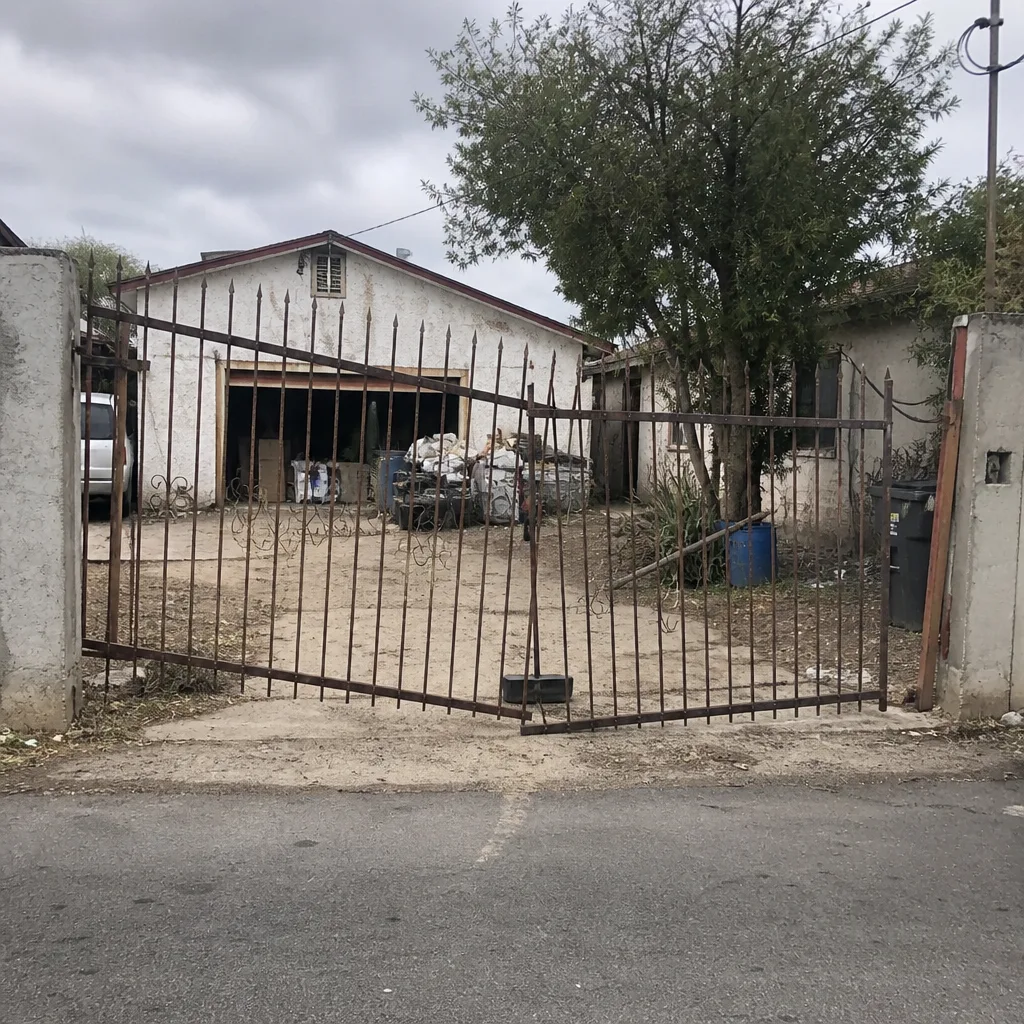 Before
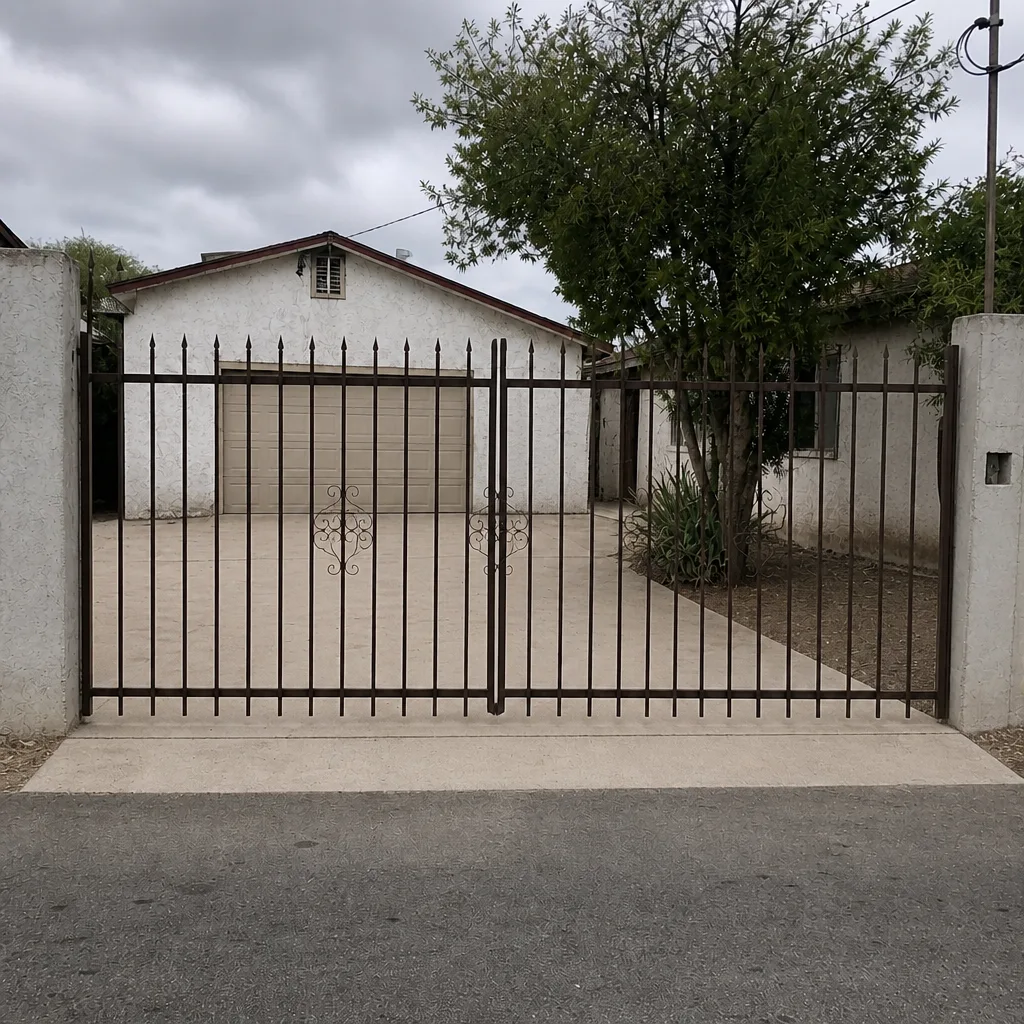 After
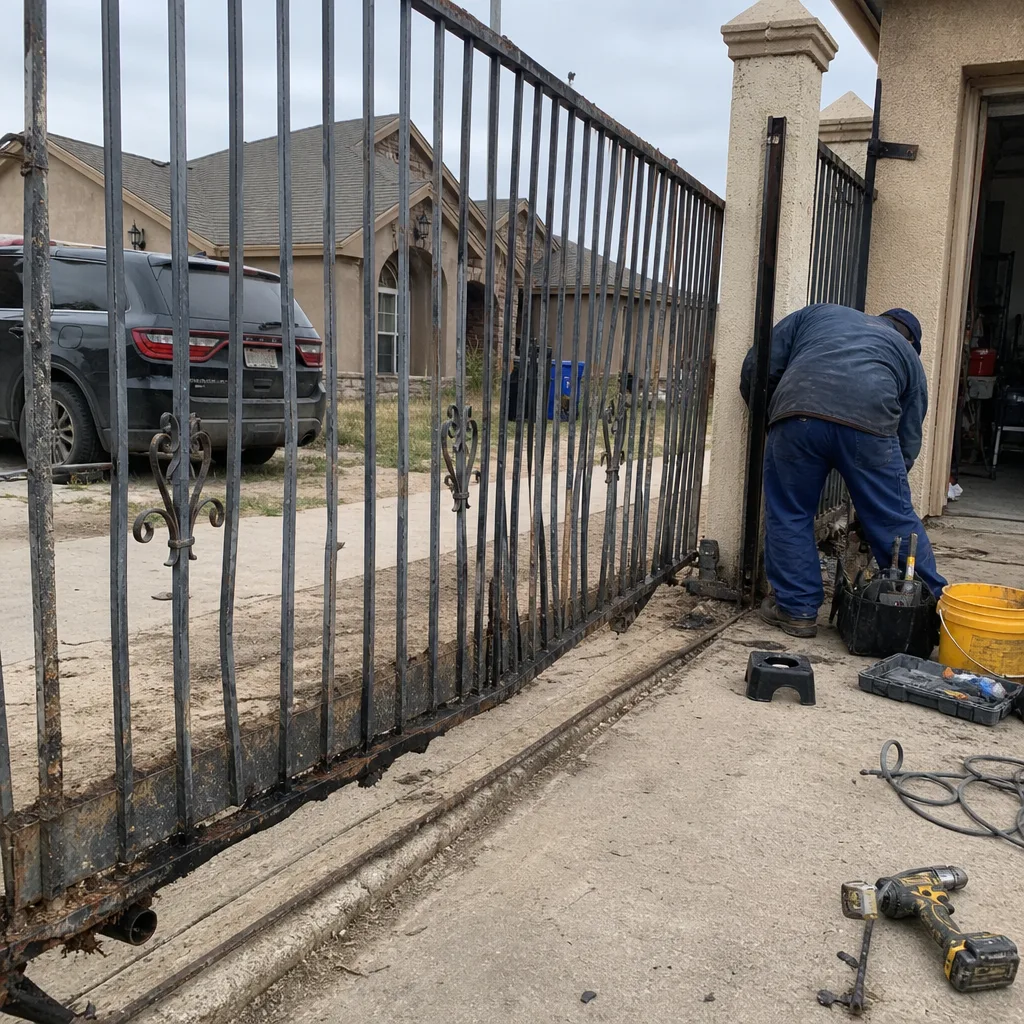 Before
 After
 Before
 After
When to Call a Professional
Some tasks are fine to handle yourself: wiping down a track, clearing debris, cleaning a lens, testing the safety reverse. Others need a trained gate technician. Call a professional if the gate stops or reverses intermittently after cleaning, if the motor grinds or strains, if you see post lean, if the wiring looks damaged, or if the operator’s control board is acting up. Electrical work on an operator and anything involving the power run or safety edges is not a DIY job, and heavy gate panels can cause serious injury if they come off track or swing unexpectedly. Our technicians have up to 10 years of experience, and Gate Repair Laredo offers free estimates in Laredo – call (833) 946-7096. We answer 24/7. Fast dispatch from 7am to 7pm, Sunday through Friday.
Frequently Asked Questions
Check it monthly, lubricate and deep-clean quarterly, and have the operator serviced annually. Laredo’s 220+ sunny days, dust, and shifting caliche soil accelerate wear compared to milder climates, so staying on a regular schedule matters more here. If your gate runs heavily or is commercial-grade, lean toward the shorter intervals.
A gate that reverses for no reason is usually a photo-eye sensor problem – most often dust caked on the lens. Clean both lenses gently with a dry cloth without pushing on the housing. If that doesn’t fix it, the sensors may be misaligned or the wiring may be damaged, which takes a technician to diagnose. Call (833) 946-7096 for a free estimate.
Sight down the post line from one end – a lean shows up clearly from that angle. Also watch for hairline cracks around the footing, uneven ground at the base, or a gate that suddenly drags or won’t latch cleanly. Caliche soil shifting with moisture is a common cause in Laredo. If you see lean, have it checked before it turns into a hinge or operator problem.
Yes. A residential Mighty Mule on a home driveway doesn’t wear the same way as a DoorKing system running all day at a commercial entry. Residential openers need more attention to dust and UV on the mechanical parts, while heavier-duty systems need the drive and safety devices checked regularly. A brand-aware technician can tell you what your specific operator needs.
Yes, cleaning is a reasonable DIY task – turn off the operator first, then wipe the lens gently with a dry microfiber cloth or use compressed air. What you shouldn’t do is adjust the housing or keep fiddling if the gate still misbehaves. Misalignment and wiring faults need proper testing.
A grinding motor usually means something mechanical is binding – a worn roller, a misaligned track, or debris in the path. Stop using the gate and have it looked at, because continued operation can damage the operator. Call (833) 946-7096 for a free estimate – estimates are free and the price is set per job by the written estimate.
The Bottom Line
Laredo gates fail on a different schedule than the national maintenance guides assume. The three local stressors – intense UV, alkaline caliche soil, and wind-driven dust – do most of the damage, and they’re all things you can watch for with a fifteen-minute monthly check. Clean the track and lenses, lubricate with heat-stable products, sight down the post line for lean, and test the safety reverse every month. Add a quarterly deep clean and an annual operator service, and you’ll catch most problems before they become repairs. When something’s beyond a cleaning or an adjustment, a dedicated gate specialist who knows your brand is the right call. Serving homeowners across Laredo, our team works on your brand – from the motor to the control board. Call (833) 946-7096. We answer 24/7. Fast dispatch from 7am to 7pm, Sunday through Friday.
Written by the team at Gate Repair Laredo.