
Last updated November 15, 2026
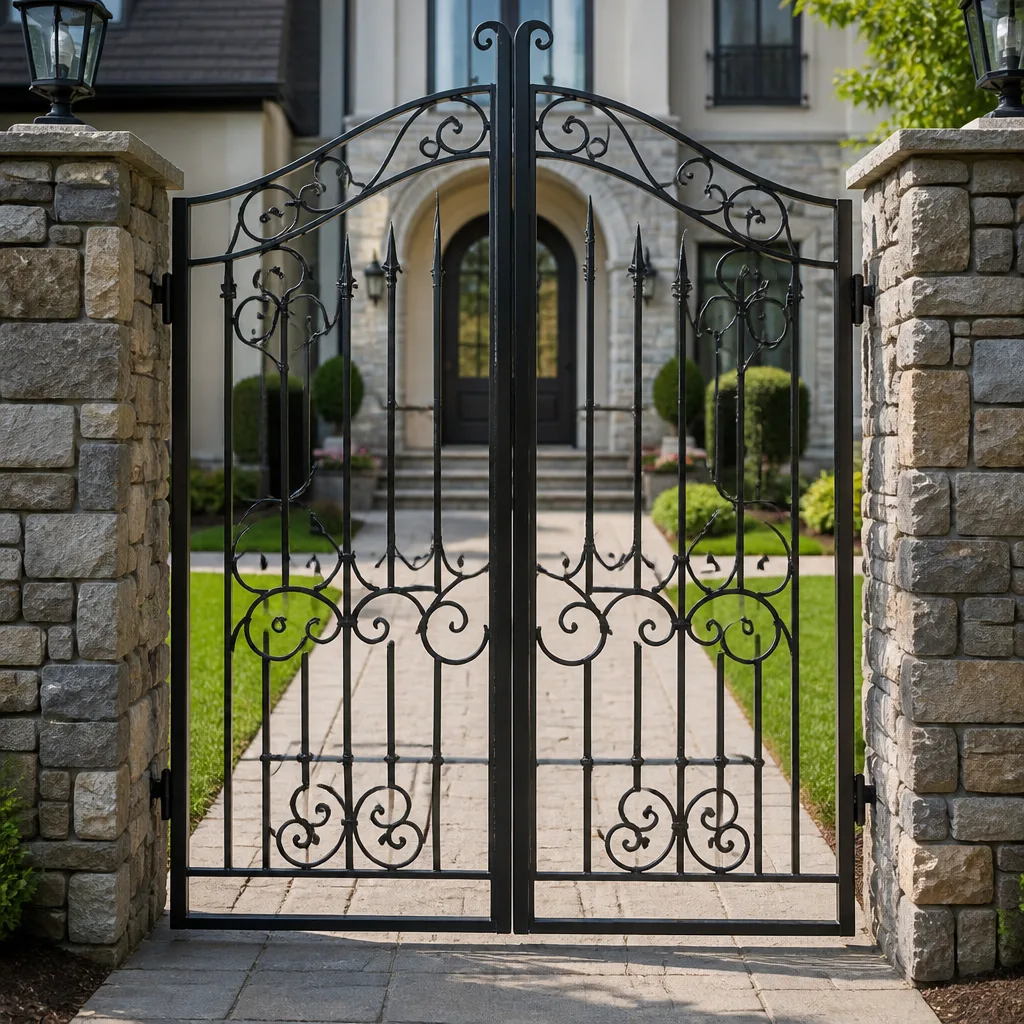 Wrought iron
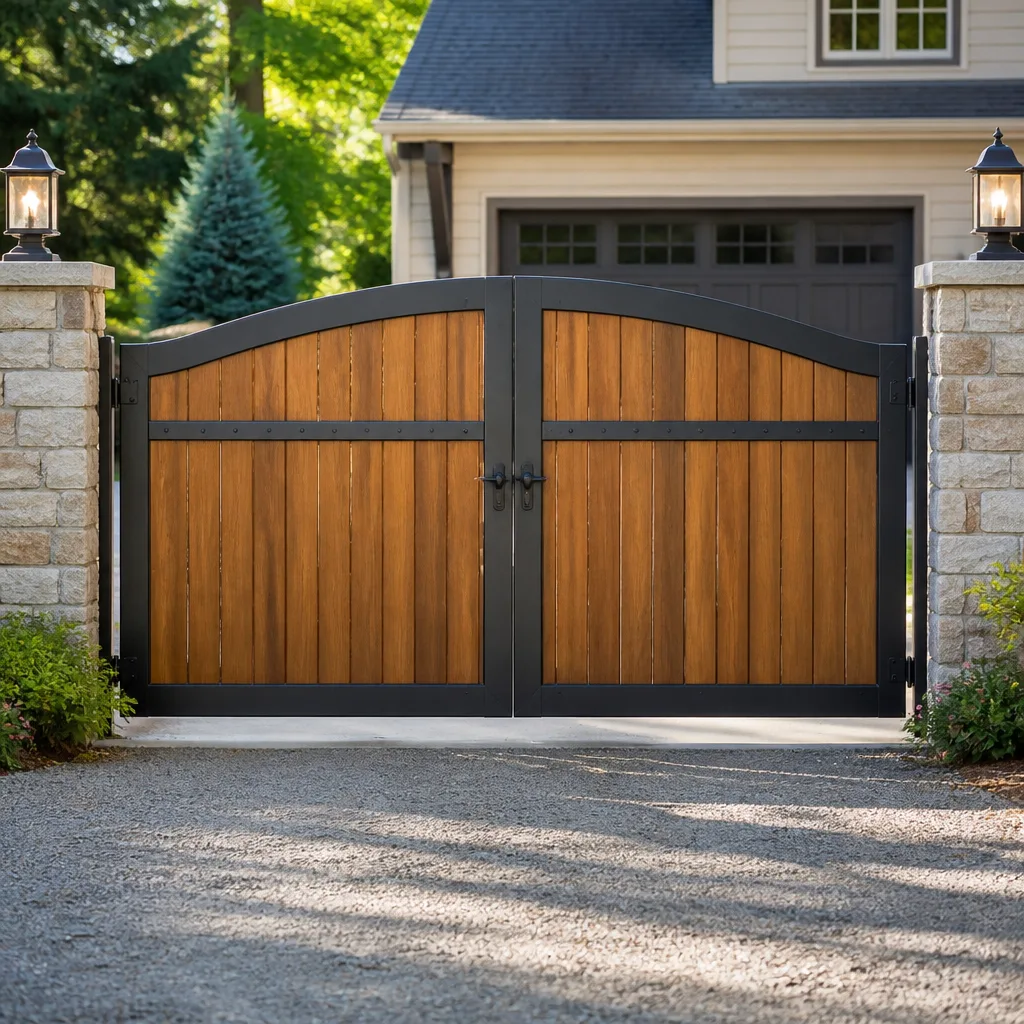 Wood & steel frame
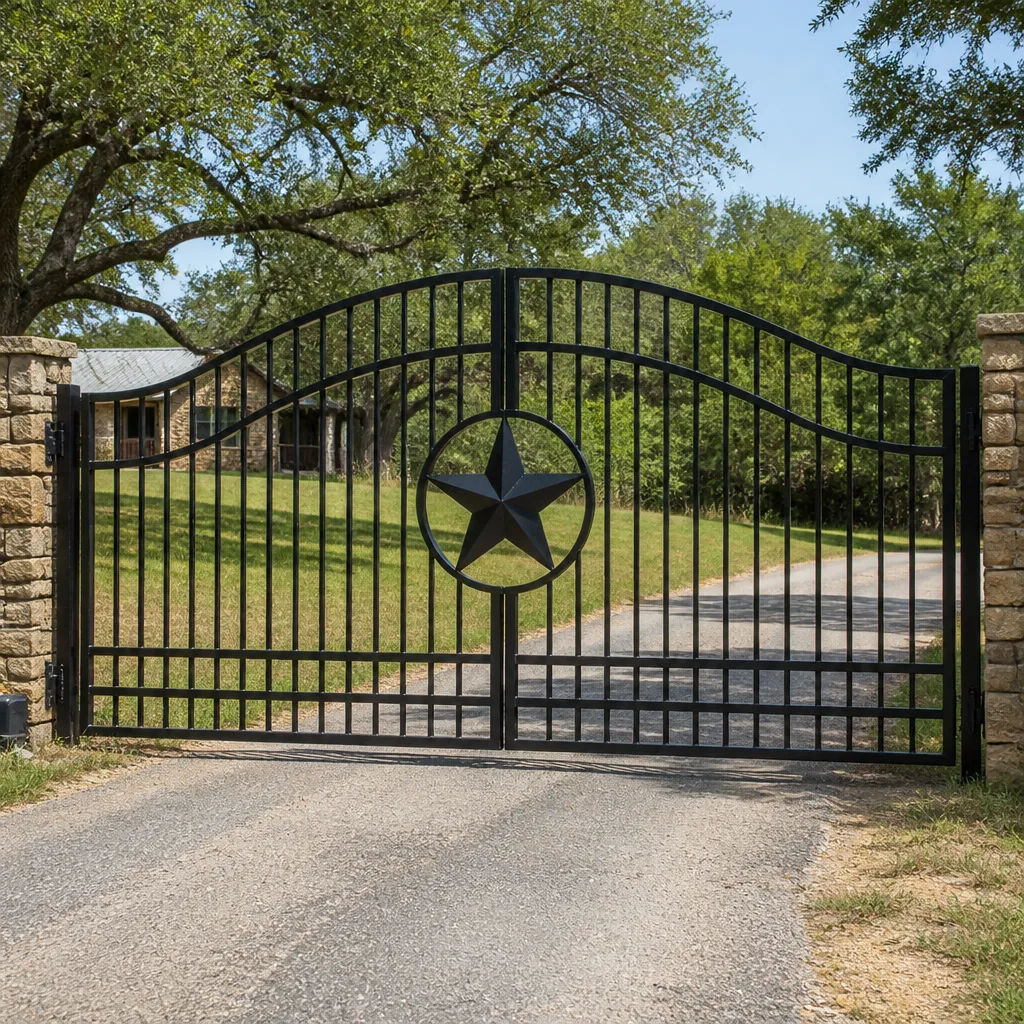 Farm & ranch
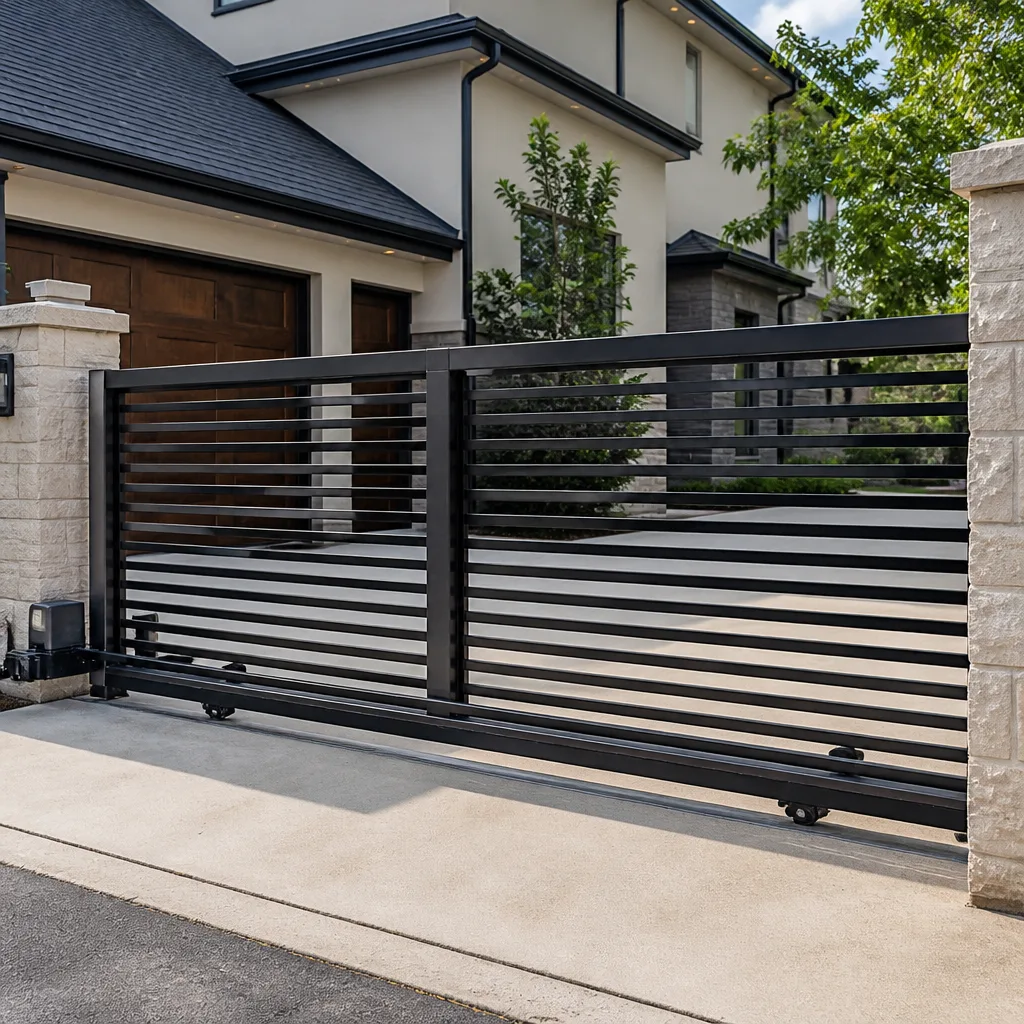 Sliding driveway gates
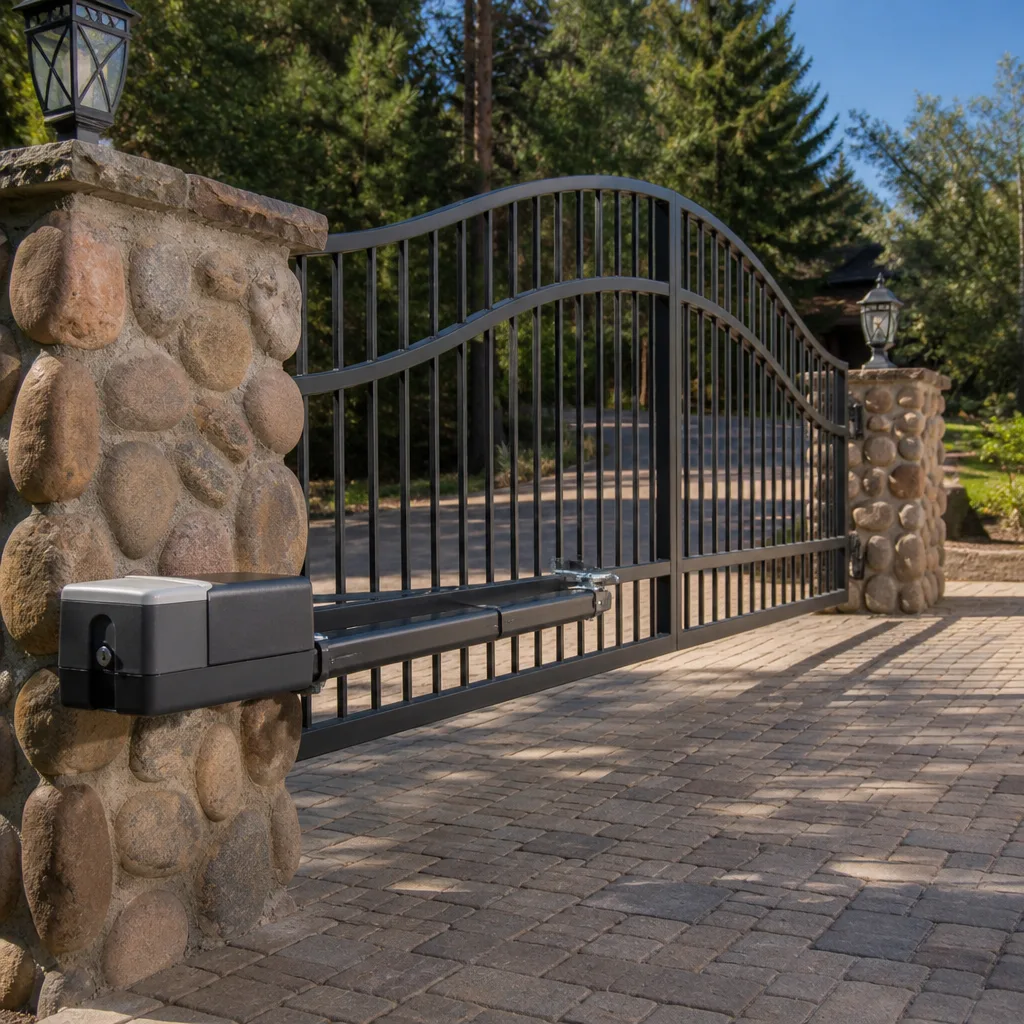 LiftMaster operators
Free on-site gate assessment - hinges, posts, and your LiftMaster or Nice gate operator checked before anything is quoted
The assessment is free and the quote is the invoice.
Get your free estimateChoosing the Right Gate Repair Brand: A Buyer’s Guide for Laredo
The brand on the control board matters far less than whether anyone in Laredo can get the part for it. That’s the counterintuitive lesson we’ve learned working on automated gates across Webb County. Homeowners spend hours comparing operator names online, then discover the hard way that a premium system needing a special-ordered motor takes weeks to fix while a mid-tier brand with a local parts chain is back running in days. This guide walks through the nine major gate and operator brands we work on, how they hold up in Laredo’s heat and summer downpours, how to match an operator class to your actual gate, and what brand choice does to repair costs over ten years. No hype. Just the factors that decide whether your gate opens next month.
Quick Answer
The right gate brand in Laredo is the one whose operator matches your gate’s weight and daily cycle count, whose control board and motor you can source locally or within a day, and whose safety systems hold up to South Texas heat. Brand reputation helps, but duty cycle ratings, part availability in Laredo, and whether the system uses proprietary or widely carried components decide long-term ownership cost. A well-matched Mighty Mule on a light residential driveway can outlast an oversized commercial operator on the same gate if the duty cycle fits.
Styles & brands we work with
- Wrought iron
- Wood & steel frame
- Farm & ranch
- Sliding driveway gates
- LiftMaster operators
Table of Contents
- Why Brand Choice Matters More in Laredo
- The Nine Brands We Service and How They Compare
- Matching Operator Class to Gate Weight and Usage
- Heat, Dust, and Humidity: How Operators Handle Laredo Weather
- Local Serviceability: Which Brands Have Parts in Laredo
- Residential vs. Commercial Operators for High-Frequency Access
- How Brand Choice Affects Repair Cost Over Ten Years
- Our Diagnostic Process: Why We Never Push a Brand Switch
Why Brand Choice Matters More in Laredo
A gate operator is a mechanical and electronic system that fails in predictable ways. Motors burn out. Control boards corrode. Safety sensors lose alignment. Battery backups stop holding charge. None of that is brand-specific. What is brand-specific is how fast a technician can get replacement parts in Laredo and how many other systems share the same components.
Laredo sits at the edge of the South Texas plains, and that location is a real factor in gate service. Anything that has to be special-ordered from a manufacturer’s regional depot in Dallas or Houston adds days to a repair. For a homeowner, that means a driveway gate stuck open or a commercial entry gate locked shut while the part moves through shipping. For an HOA or a property manager, it means a security gap that can’t be closed.
We work on nine brands. Some of them have wide distribution and parts that turn up at supply houses near Webb County. Others have proprietary control boards and motors that require factory ordering. Neither situation makes a brand good or bad on its own. The point is to know which is which before you buy, not after a breakdown.
If you’re already dealing with a broken operator and need it diagnosed, we handle electric gate repair as one of our core services, and we don’t charge for the estimate.
The Nine Brands We Service and How They Compare
We work on LiftMaster, FAAC, BFT, Linear, Viking, Ghost Controls, DoorKing, Elite, and Mighty Mule. That runs from entry-level residential openers to commercial-grade access systems. Here’s how they compare on the criteria that actually matter for Laredo property owners.
- Mighty Mule: A common choice for residential driveways. DIY-friendly installs, widely available parts, and plenty of aftermarket support. Good match for light swing gates that see a handful of cycles a day. Not the right pick for a heavy sliding gate on a busy commercial entry.
- Ghost Controls: Residential-focused, similar tier to Mighty Mule. Solar-friendly options and easy-to-source components. Best on single-family driveway gates where the duty cycle stays modest.
- Linear: Solid mid-tier residential and light commercial. Access control overlap with linear-branded systems. Control boards are generally available through distribution and not stuck behind a proprietary wall.
- Viking: Known for swing and slide operators, often found on HOA and multi-unit entries. Durable mechanicals, and parts are usually obtainable through gate distributors.
- Elite: Residential and light commercial swing and slide gates. Reasonable parts chain, and controls are not as proprietary as some commercial brands.
- LiftMaster: Big-name distribution and access-control integration, especially on commercial and gated-community systems. Parts and support are generally accessible through distribution channels.
- FAAC: Commercial-grade. Found on heavier swing and slide gates and on higher-cycle entries. Usually requires a more careful diagnostic approach since the operator class is higher and system wiring is more elaborate.
- BFT: Commercial-grade and often found where reliability and cycle count matter. Parts may require ordering depending on the specific model, so brand familiarity on the diagnostic side saves time.
- DoorKing: Commercial-grade access systems, common on gated properties and commercial entries. The brand is tied to access control as much as to the operator itself, which changes how repairs and diagnostics work.
Notice what the list does not include: no brand is universally better. A Mighty Mule that fits a light residential gate works. A FAAC that’s oversized for a three-cycle-a-day driveway is a waste of money. In our experience, mismatched operator class causes more premature failures in Laredo than brand quality does.
Matching Operator Class to Gate Weight and Usage
Duty cycle is the number of open-and-close cycles an operator is rated to handle per hour or per day, and it’s the single most important number most homeowners never check. A residential operator is typically rated for low cycles per day. A commercial operator is rated higher, which is why it costs more. Put the wrong one on a gate and it fails early no matter what name is on the housing.
Matching duty cycle to gate weight is the two-part calculation. Here’s how we approach it:
- Weigh the gate leaf or panel. A steel or ornamental iron gate that looks ordinary from the driveway can easily be two or three times heavier than an aluminum frame gate of the same size. The operator has to move that mass, not just the visible frame.
- Count real cycles per day. A single-family driveway gate might run four to twelve cycles on a busy day. An HOA entry gate can run a hundred or more. A small commercial lot entrance may run several hundred. The operator has to be rated for the busiest day, not the average.
- Check whether the gate is swing or slide. Swing operators and slide operators are different products with different torque and travel requirements. A residential slide operator on a heavier-than-typical panel is a common cause of early motor failure.
- Confirm safety devices match the operator’s requirements. Photocells, safety edges, and loop detectors have to work with the operator’s control board. If the operator class is upgraded but the safety devices are not, the system may not meet the manufacturer’s requirements and may not operate reliably.
- Look at the attachment points. Hinges, rollers, tracks, and gate structure carry load well beyond what the operator does. A perfectly sized operator on a sagging gate or worn hinge still fails.
Most of the premature failures we see in Laredo trace back to a skipped step here. If you want an honest read on whether your current operator matches your gate, the gate repair side of our work starts with that assessment.
Heat, Dust, and Humidity: How Operators Handle Laredo Weather
Laredo summers are long and hot. That matters for gate operators because heat degrades motors, control boards, and batteries faster than cold ever does. A motor running near its thermal limit on a mild afternoon runs into trouble on a 105-degree day. Batteries that power an operator’s backup fail faster in sustained heat. Control boards in sealed enclosures get hot from their own electronics plus the sun on the housing.
We look at four things when judging how a brand will hold up under Laredo conditions:
- Motor thermal protection: Good operators include a thermal cutoff that pauses the motor before it cooks. Brands that lead with thermal protection on their residential and commercial lines hold up better in a South Texas summer than cheaper operators that push the motor to its limit.
- Control board placement and enclosure: Boards mounted in a sun-exposed steel housing near the gate are hotter than boards in shaded or ventilated enclosures. When choosing where an operator gets installed, the shade position on the property changes how long the electronics last.
- Corrosion resistance on hardware: Laredo’s summer humidity and rain cycles stress hinges, brackets, and fasteners more than the operator itself. Powder-coated or galvanized structural parts last longer than painted steel. Summer storms that drop a lot of rain in a short window make this an annual concern.
- Battery backup quality: Backup batteries fail in heat. When the operator is a commercial or access-control system that depends on the battery for safe operation during an outage, the battery’s quality matters as much as the operator’s. Replacement cycles are shorter in Laredo than in cooler climates.
Dust is the lesser factor, but it’s real. Laredo’s dry stretches mean more airborne grit around slide gate tracks and swing gate hinges. Operators with sealed switches and enclosed gear trains are less sensitive to dust than open-framed designs. Greasing and cleaning hinges on a schedule handles most of it, but the design of the operator matters too.
Local Serviceability: Which Brands Have Parts in Laredo
Here’s the test we recommend for any brand: if the control board fails today, how many days until you can have a replacement on the gate in Laredo? That single answer tells you more about the real cost of owning a given brand than any marketing comparison.
Three tiers show up in practice:
- Parts available locally or within a day. These brands have supply distribution reasonably close to Laredo or carry stock at regional supplier warehouses. Residential lines like Mighty Mule, Ghost Controls, Linear, and Elite often sit in this tier because the components are widely distributed.
- Parts available within a few days. Some mid-tier and commercial-grade systems require ordering from a Texas or regional distribution center. LiftMaster, Viking, and some FAAC and BFT models often land here. Repair time depends on shipping speed and whether the specific model is in stock.
- Parts requiring factory or special order. Proprietary control boards, older commercial models, and access-control-integrated systems like DoorKing can push replacement to a longer window when the exact part is not stocked nearby. If the part has to come from the manufacturer, plan for a longer repair.
This is why a brand-agnostic service model matters. We work on your brand and your existing equipment whatever it is, and we know which systems need special ordering and which ones we can get running quickly. If you’re searching for a gate team in Laredo that already knows your system before arriving, the Gate Repair Laredo team works on all nine of these brands and will tell you upfront whether a repair is realistic or a replacement is the better call.
Residential vs. Commercial Operators for High-Frequency Access
The biggest mistake we see with HOA and small commercial clients is buying a residential operator because it costs less and the gate “doesn’t look that busy.” Then the entry gets a hundred or more cycles a day, and the residential operator spends half its life inside its thermal cutoff or burning through motors and batteries far faster than it should.
The distinction matters at the system level, not just the housing:
- Residential operators are rated for a handful of cycles per day and often rely on a chain or screw drive sized to a single-family gate. They’re fine on a driveway. They’re not fine on a shared entry gate at an HOA in Laredo where every homeowner and the mail carrier and the landscaper pass through daily.
- Commercial-grade operators use heavier motors, higher-rated gear trains, and control boards built to handle frequent switching. They cost more upfront. Over a heavily used entry, they cost less in repairs because they’re not running near their limits. Examples include FAAC, BFT, DoorKing, and heavier LiftMaster models.
- Access control integration pushes the choice further. Systems with keypads, card readers, intercoms, or phone-app entry usually pair with commercial operators designed to work with those accessories. Residential-grade controls can be added on, but the wiring and board capacity is not always up to it.
For a single-family home on a quiet street, a residential operator like a Mighty Mule or Ghost Controls on a well-matched driveway gate can be a perfectly sound choice. For an HOA entry or a commercial lot in Laredo with high traffic, sizing down to save upfront money usually costs more within two or three years of service.
How Brand Choice Affects Repair Cost Over Ten Years
The sticker price of an operator is one number. The cost of owning it is another. Over a ten-year window, the repair cost gap between brands can match or exceed the purchase price. Two things drive that gap: how proprietary the parts are, and whether aftermarket alternatives exist.
Brands with widely available aftermarket components are cheaper to keep running. Batteries, photocells, limit switches, and some boards can be sourced from more than one place, and pricing stays competitive. Brands with proprietary control boards and manufacturer-only motors keep a ceiling on repair options. That’s not a defect of those systems. Commercial-grade equipment often needs that tight integration to deliver its reliability and access-control features. But it changes what repair costs look like when a part fails.
The rough shape of it:
- Component availability: Wide-distribution brands give you more price and time options for each repair. Proprietary brands give you one path and one timing, which is more predictable but usually slower and more expensive.
- Diagnostic time matters as much as parts: A specialist who knows the brand finds the actual failure quickly. A generalist who doesn’t may replace the wrong board or the wrong motor before landing on the real fault. That troubleshooting overhead gets baked into the repair bill either way.
- Upgrade paths: A brand with a compatible upgrade path lets you take a light residential operator to a higher cycle rating without replacing the whole system. Brands with closed ecosystems can force a full replacement instead.
- Repair vs. replace: The best financial move is often neither rebuilding the failed part nor swapping the whole operator. It’s repairing the specific failure. A brand-agnostic technician who works on your existing equipment has more room to do that for you.
When we come out to look at a gate in Laredo, we give a free written estimate before any work begins, so you see the price before you approve it. No surprises at the end.
Our Diagnostic Process: Why We Never Push a Brand Switch
A gate specialist’s first job is to find out what’s actually wrong. Operators fail in layers, and cutting straight to a replacement quote throws money at a problem that a repair might have solved for a fraction of the cost. Here’s the sequence we follow for any brand on our list.
- Ask how the gate is failing. Won’t open? Won’t close? Opens partway and reverses? Opens manually but not with the operator? Random stops? Every pattern points to a different part of the system.
- Watch the gate cycle. We run the gate and observe the swings or travel, listen for unusual noise, and watch how the safety devices respond. That usually narrows the fault to the mechanical side or the electrical side.
- Test the electrical side from the motor to the control board. Volts at the motor, continuity at the safety sensors, condition of the control board, wiring integrity at the terminals. This is where a specialist saves hours compared to a generalist: we know the common failures on each close-up brand like BFT, Linear, Viking, and Ghost Controls.
- Check the gate hardware as a system. Hinges, rollers, tracks, and gate alignment. A perfectly good operator can struggle with a gate that drags or sags. Fixing the hardware sometimes restores the operator’s performance with no part replaced.
- Recommend repair, upgrade, or replacement in that order. We only recommend replacement when the operator class truly doesn’t fit the gate and usage, or when the parts needed are no longer available. Otherwise, repair.
- Give a written estimate before any work. Price per job, in writing, agreed before we start.
That process is why we don’t push brand switches. The brand on your property today is almost always the right one to repair, provided the operator class matches the gate. If it doesn’t, upgrading within a brand or replacing the operator is a specific recommendation, not a default.
Common Mistakes to Avoid
- Choosing a brand from a national review site instead of a local one. A brand that gets praised nationally might require special ordering for parts in Laredo. Ask about parts availability before you buy, not after a breakdown.
- Buying the cheapest operator for a busy gate. Price-first decisions on an HOA or small commercial entry often cost more in repairs within a couple of years than a properly sized commercial operator would have cost upfront.
- Skipping the gate weight calculation. A residential operator sized by the gate’s appearance instead of its actual weight is one of the most common causes of premature motor failure in Laredo.
- Ignoring the gate hardware. Replacing the operator when a sagging hinge or worn track is the real problem. A new operator on a dragging gate won’t fix the root cause.
- Mixing brands of safety devices with the operator’s board. Safety sensors and edges that don’t match the control board’s requirements don’t hold up and may not operate reliably.
- Choosing a proprietary system without understanding the long-term cost. Proprietary controls suit commercial access needs, but they lock you into one parts chain. If sources of supply for that chain are slow in Laredo, factor that into the decision.
- Hiring a generalist who learns the brand on your dime. A gate specialist who already knows the operator saves diagnostic time and finds the actual fault faster. You can read more about how different gate systems behave at our Laredo service page.
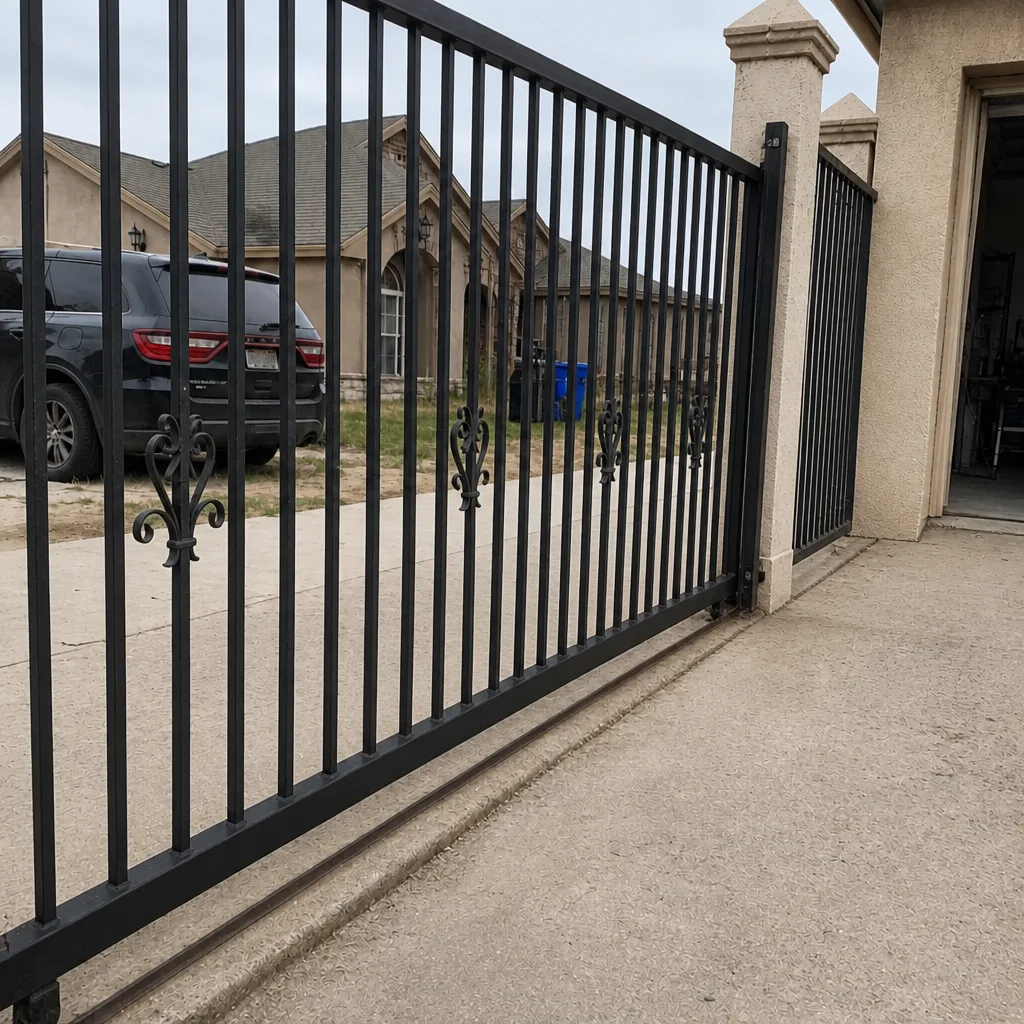
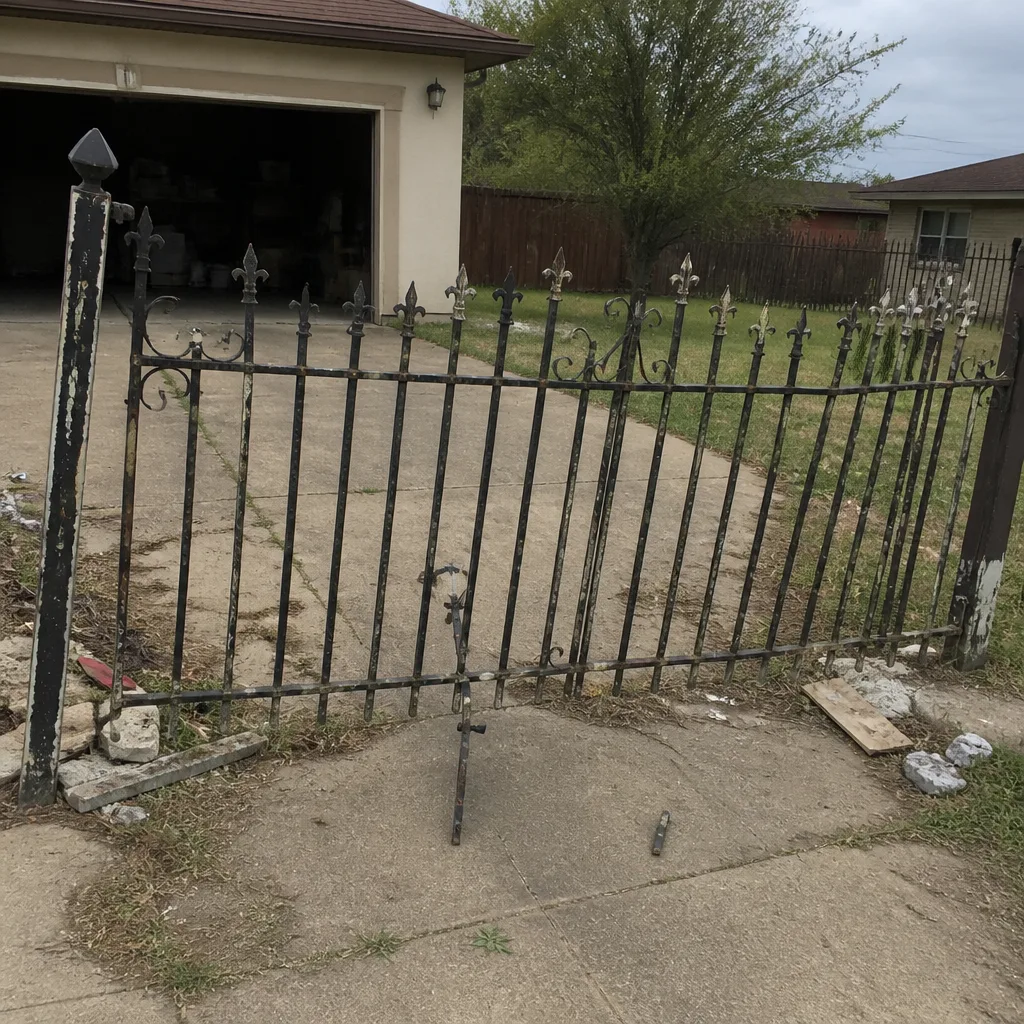
See the difference
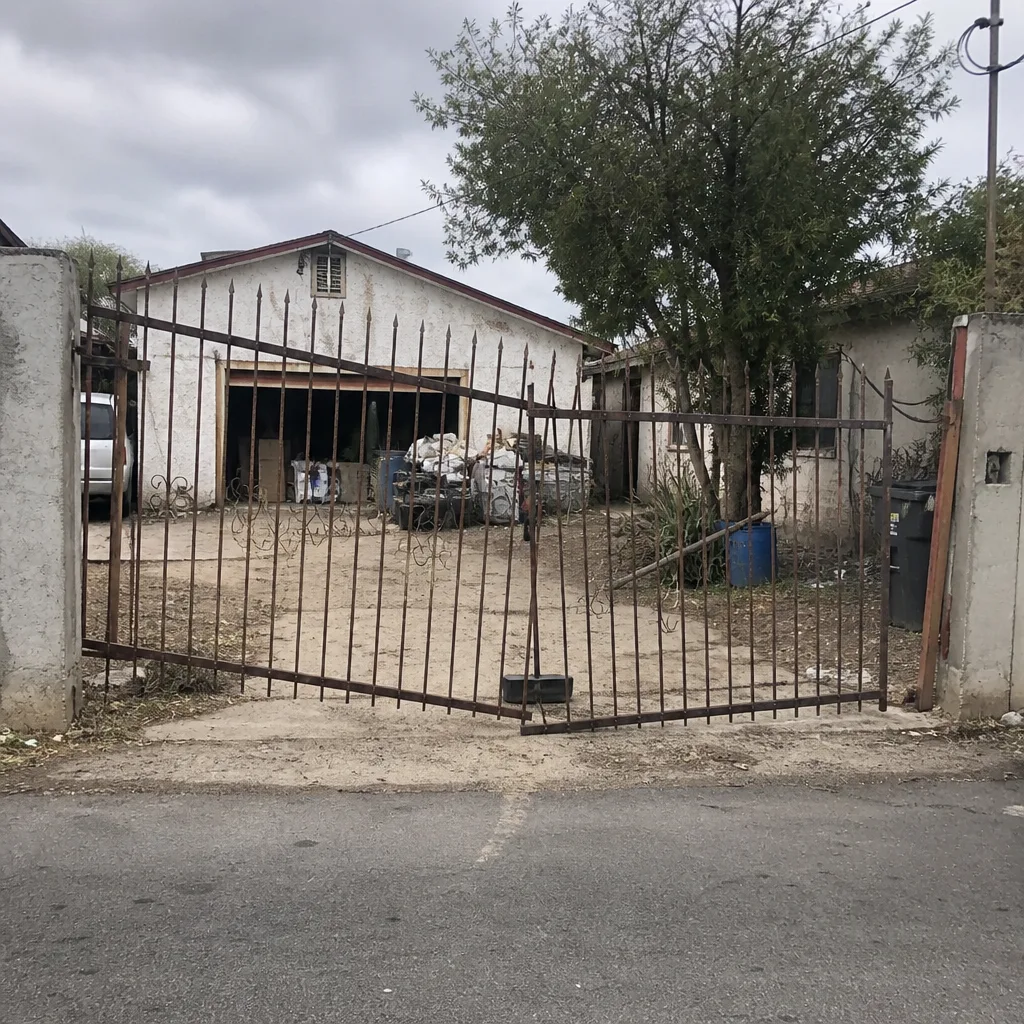 Before
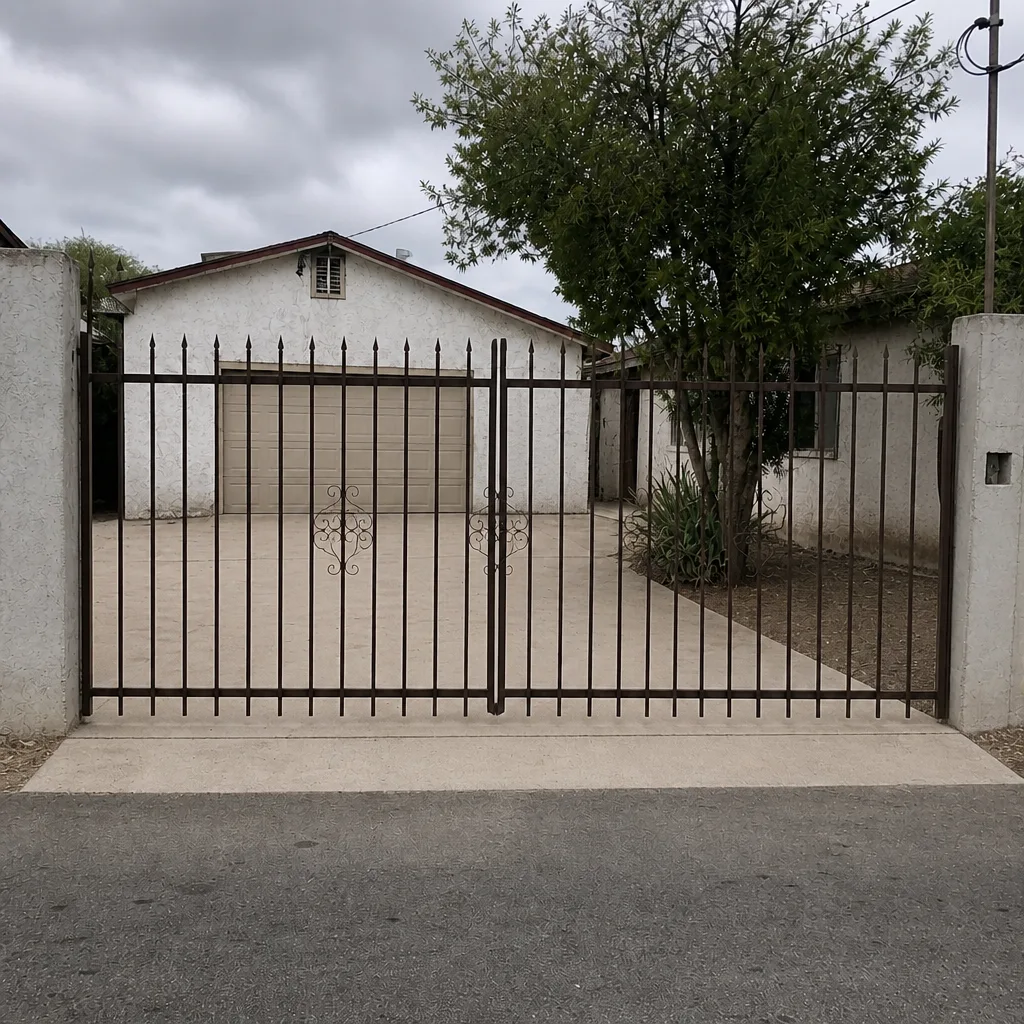 After
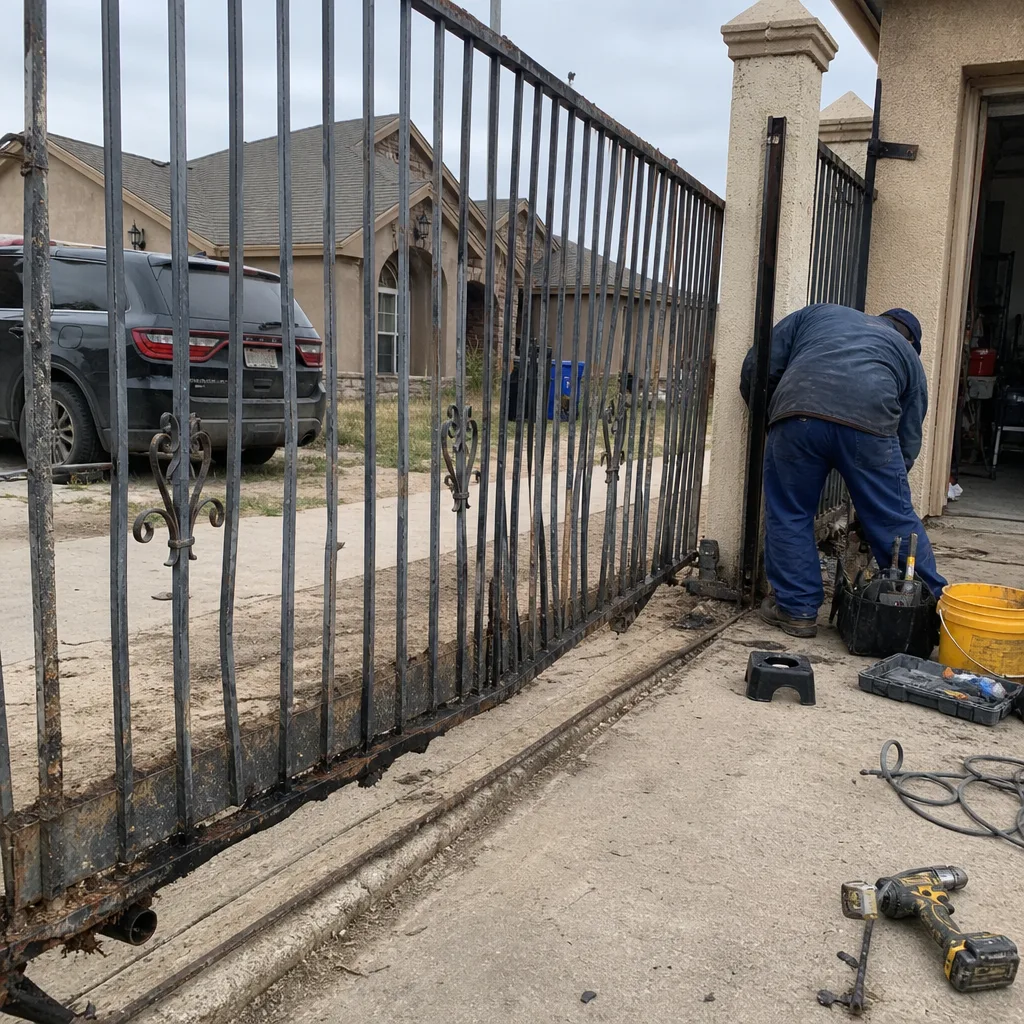 Before
 After
 Before
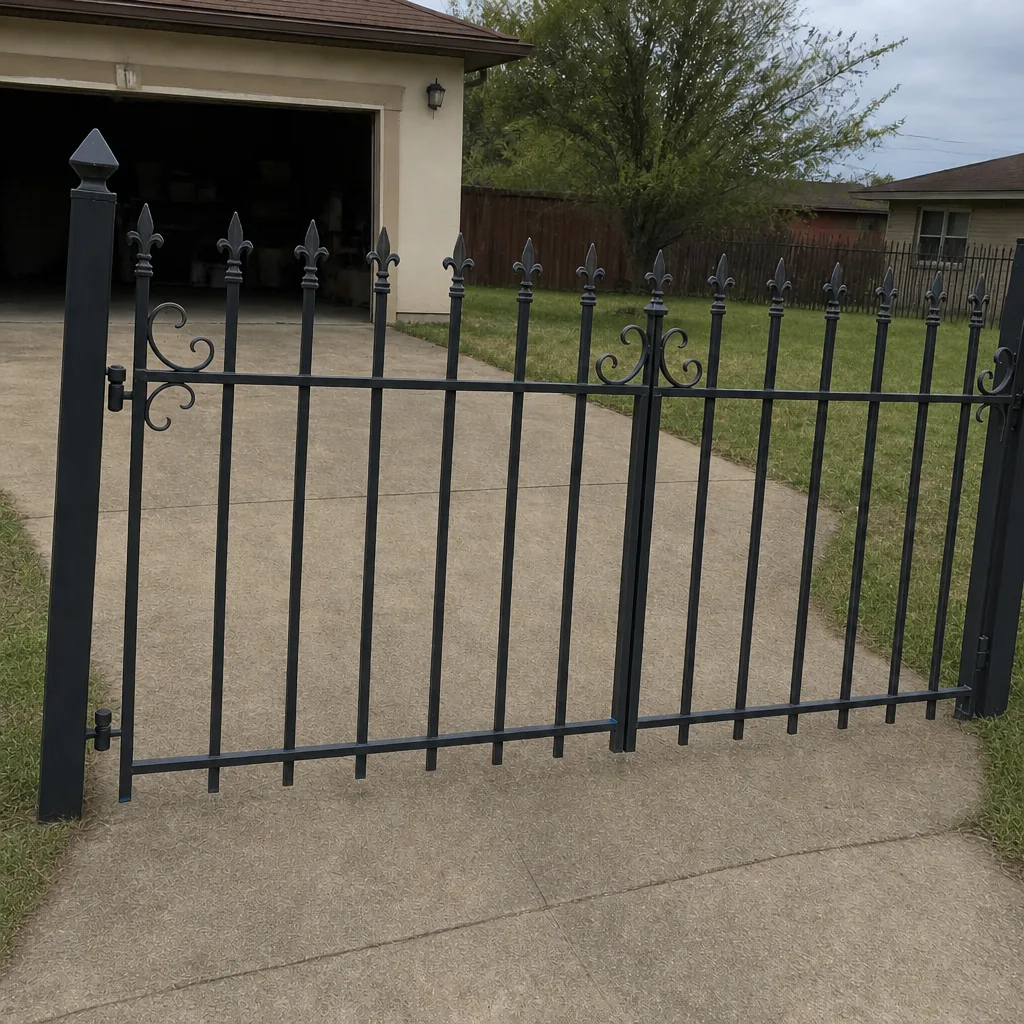 After
When to Call a Professional
Call a gate specialist when the gate won’t open or close, opens partway and reverses, or stops without a clear reason. Call when the operator throws a fault code you don’t recognize, when safety sensors fail, or when the motor runs and the gate doesn’t move. For automated and electric systems with motors, control boards, and wiring, the electrical side is real work and not a DIY task. Loose connections, miswired safety devices, or a control board swapped without diagnosis can make a small problem worse and cost more to fix afterward.
Call for a new gate installation quote if you’re planning a new automated entry. Call for an upgrade quote if your current operator is undersized for the gate’s usage. Call for a second opinion if someone has recommended a full replacement. Gate Repair Laredo offers free estimates in Laredo and surrounding Webb County. Call (833) 946-7096. We answer 24/7. Fast dispatch from 7am to 7pm, Sunday through Friday.
Frequently Asked Questions
There’s no single best brand, but the operators that hold up best in Laredo have strong motor thermal protection, sealed enclosures, and control boards placed to avoid the worst sun exposure. Residential brands like Mighty Mule, Ghost Controls, Linear, and Elite do well on light driveway gates. Commercial-grade systems like FAAC, BFT, DoorKing, and LiftMaster’s commercial line are a better fit for high-cycle HOA and commercial entries. Call (833) 946-7096 for an exact quote on your gate – estimates are free.
Ask a gate specialist who works on your brand whether the part is stocked locally or requires ordering. In practice, wide-distribution residential brands and some mid-tier commercial brands can be sourced through regional distribution. Proprietary control boards and access-control systems often require special order. Our technicians have up to 10 years of experience across all nine major brands we work on, so we can tell you upfront what to expect on parts timing.
The operator has to be rated for the gate’s actual weight and its busiest daily cycle count, not the average. A residential operator sized for a dozen cycles a day will fail early on a shared entry with hundreds of cycles. We measure and calculate duty cycle before recommending any class of operator, so the fit is right from the start. Call (833) 946-7096 for an on-site assessment.
Repair is almost always the first option when the operator class matches the gate, and most failures we see are repairable. Replacement makes sense when the operator is undersized for the gate’s usage, when parts are no longer available, or when upgrades are the cheaper path over the next few years. We diagnose the actual failure and give a written estimate for each path before any work starts.
We work on nine brands: LiftMaster, FAAC, BFT, Linear, Viking, Ghost Controls, DoorKing, Elite, and Mighty Mule. That list covers entry-level residential openers through commercial-grade access systems. If you’re unsure what brand you have, we can usually identify it during the diagnostic visit. We work on your existing equipment rather than pushing a brand switch. Call (833) 946-7096 for a free estimate.
Yes. Electric gate repair is a core service for us, not an add-on, and it covers motors, control boards, safety sensors, and wiring. Many “won’t open” problems come down to a failed safety device, a loose connection, or a control board issue that’s diagnosable without swapping the motor. We carry the diagnostic tools and know the system layouts for the brands we service. Call (833) 946-7096 – we answer 24/7 and dispatch from 7am to 7pm, Sunday through Friday.
The Bottom Line
The right gate brand in Laredo is the one that fits your gate’s weight and cycle count, has parts you can source without weeks of waiting, and is built to survive a South Texas summer without cooking its motor. Matching operator class to gate usage is the calculation most homeowners skip, and it accounts for more premature failures than brand quality does. Repair is usually the answer, not replacement, and a technician who works on your existing equipment gives you more options. Gate Repair Laredo works on nine major brands across mechanical repair, electric gate repair, and installation, and every price is set by a free written estimate before work starts. Call (833) 946-7096. We answer 24/7. Fast dispatch from 7am to 7pm, Sunday through Friday.
Written by the team at Gate Repair Laredo.