
Last updated November 15, 2026
 Wrought iron
 Wood & steel frame
 Farm & ranch
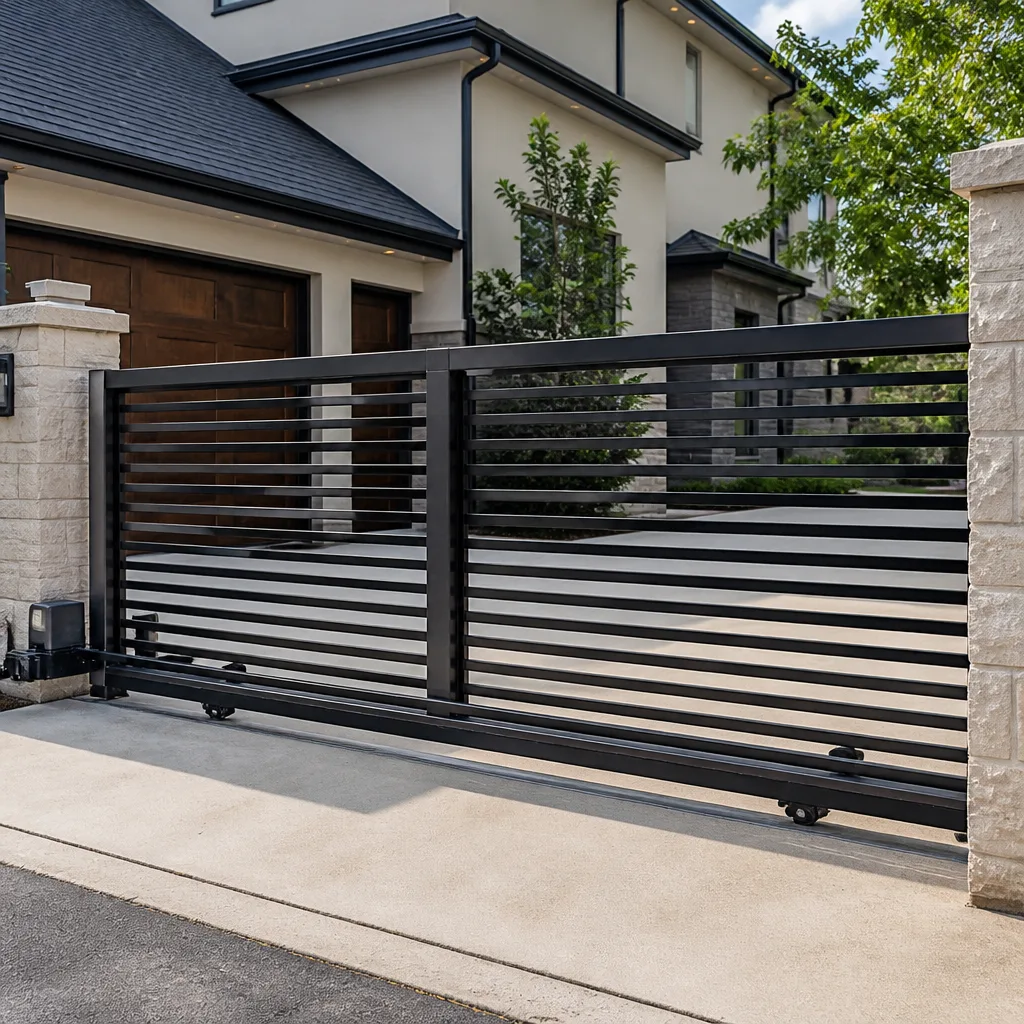 Sliding driveway gates
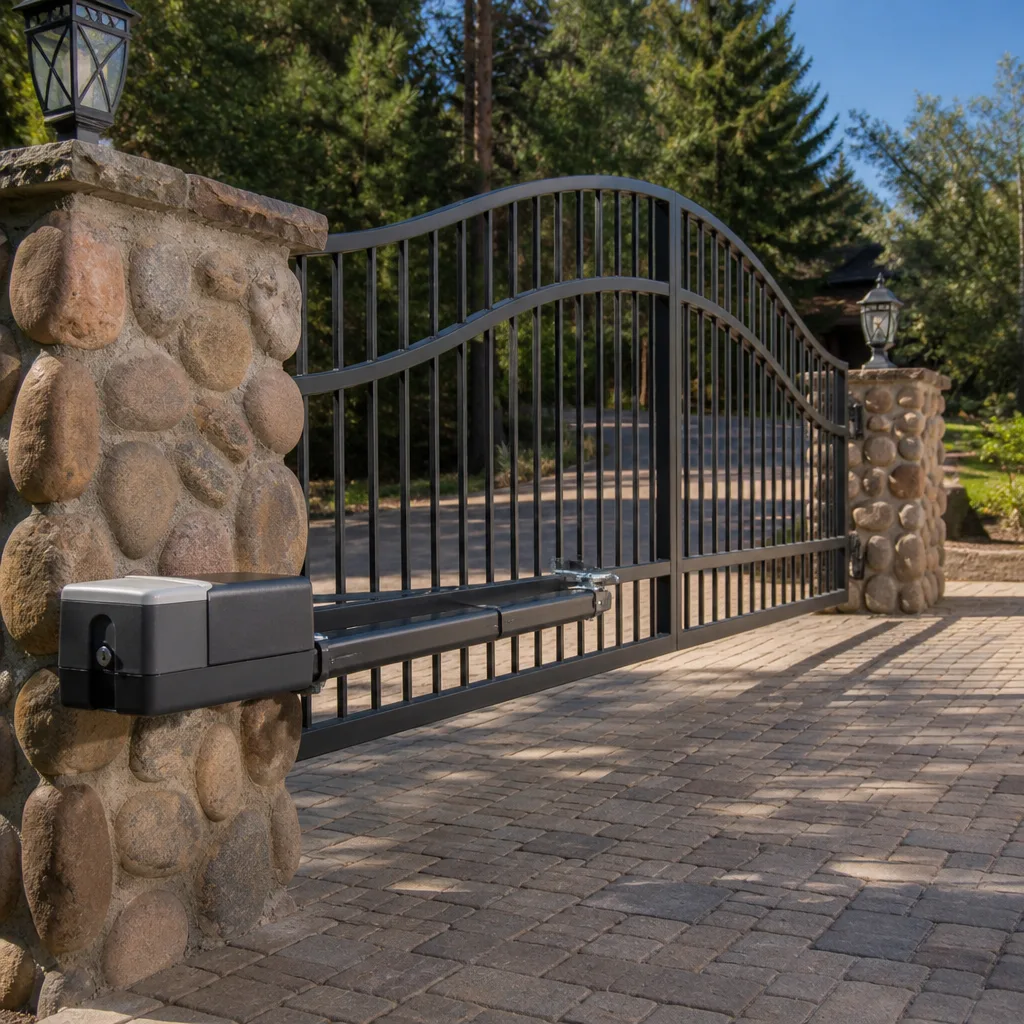 LiftMaster operators
Free on-site gate assessment - hinges, posts, and your LiftMaster or Nice gate operator checked before anything is quoted
The assessment is free and the quote is the invoice.
Get your free estimateGate Repair Permits, Codes & Inspections in Laredo, TX: What You Need to Know
If a contractor tells you “gates never need permits” in Laredo without asking what kind of work you need, that’s your first sign they haven’t pulled a permit in this city before. The truth is more nuanced. A broken hinge or a sagging swing arm usually needs nothing from the city. But the moment you add a new electrical circuit, run power to an operator, change the structure of the gate, or build one from scratch, you’ve crossed a line that the City of Laredo cares about. The permit isn’t for the contractor’s benefit; it’s for yours. This guide draws the exact boundary between permit-required and permit-exempt gate work in Laredo, explains how Webb County and city rules interact on the urban fringe, and shows you what inspectors actually look for before they sign off.
Quick Answer
Most mechanical gate repairs in Laredo do not require a building permit, but any work involving new electrical circuits, structural alterations to the gate or its posts, and full new gate installations typically does. Electrical work is the most common trigger, because running power to a gate operator is a regulated electrical installation in Texas. Always confirm requirements with the City of Laredo Building Department before work begins, and never assume a contractor has pulled the permit just because the job is small.
Styles & brands we work with
- Wrought iron
- Wood & steel frame
- Farm & ranch
- Sliding driveway gates
- LiftMaster operators
Table of Contents
- Where Repair Ends and Permitted Work Begins
- The Electrical Trigger: When an Operator Becomes Regulated Work
- City of Laredo vs. Webb County: The Fringe Gap
- What Inspectors Actually Look For
- HOA Deed Restrictions: The Parallel Approval Nobody Checks
- Who Carries the Liability When Work Is Unpermitted
- The Permit Process Step by Step
- Common Mistakes to Avoid
Where Repair Ends and Permitted Work Begins
The simplest way to think about it: if you’re putting the gate back the way it was, you’re probably in repair territory. If you’re changing what the gate is or how it’s powered, you’re probably in permit territory. That distinction matters for homeowners, HOAs, and property managers across Laredo, because the city’s building department draws its authority from changes to a structure and its systems, not from routine maintenance.
Repair work that generally does not require a permit:
- Replacing a worn hinge, roller, or guide on an existing gate
- Straightening a bent swing arm or repairing a latch
- Replacing a control board, remote receiver, or safety sensor on an existing operator circuit
- Repairing or replacing a gate motor that connects to an existing, inspected power source
- Wiring repairs to an existing low-voltage control loop
Work that typically does require a permit or inspection:
- Installing a new gate where none existed before
- Running a new electrical circuit from the panel to the gate location
- Changing the structural posts, footings, or framing of an existing gate
- Converting a manual gate to an automated operator with new power
- Adding a stand-alone structure such as a gatehouse or entry canopy
In our experience across Laredo, the confusion almost always comes from the electrical side. A homeowner calls about a failing electric gate repair, and the technician discovers the real problem is a spliced circuit someone ran years ago without a permit. That’s a different conversation than a control board swap. Knowing which one you’re in saves time, money, and a headache at resale.
The Electrical Trigger: When an Operator Becomes Regulated Work
Electrical work is where gate projects most often cross into regulated territory. In Texas, electrical installations are governed at the state level, and local jurisdictions like Laredo enforce those requirements through their permitting and inspection process. The key point: running a new power line to a gate operator is not the same as replacing an operator on a line that already exists and was properly permitted.
If you’re adding an operator to a gate that’s never had one, or if the existing power feed is inadequate, a new circuit has to be run. That circuit typically needs a permit and inspection. The work falls into a category that should be handled by a licensed electrician working alongside the gate technician, or by a gate contractor who coordinates the electrical permit as part of the job.
Repair scenarios that typically do not require a new electrical permit:
- Swapping a failed motor on an operator with an existing, permitted circuit
- Replacing a control board, limit switch, or safety edge on the same circuit
- Replacing a remote receiver or keypad
- Troubleshooting low-voltage sensor wiring
We work on systems from Mighty Mule residential openers to DoorKing commercial-grade operators, and the pattern is consistent: the equipment rarely determines the permit. The circuit does. If the question is whether a repair crosses into new electrical work, ask the city. It’s a two-minute call that protects you. And if you’re not sure what kind of work you’re actually facing, a professional can tell you before anyone picks up a tool.
City of Laredo vs. Webb County: The Fringe Gap
Laredo sits inside Webb County, and properties on the urban fringe can fall under one jurisdiction for some purposes and another for others. This is where homeowners get caught off guard. A property that carries a Laredo mailing address may actually sit outside city limits, in unincorporated Webb County. In that case, city building ordinances may not apply the same way, and county requirements govern instead.
Here’s what to check before you assume anything:
- Pull up the Webb County property records and look at the legal description and parcel boundaries.
- Call the City of Laredo Building Department and ask, with the address in hand, whether the parcel is inside city limits.
- If it’s outside city limits, call Webb County to ask about permitting requirements for gate structures and electrical work.
- Ask about deed restrictions separately, because those apply whether you’re inside or outside the city.
The practical effect on Laredo properties on the fringe: county rules can be less prescriptive about small structures, which leads some contractors to conclude “no permit needed” without realizing the property is actually within city limits. That assumption is a real problem at resale. Title companies pull permit history. A title search that shows a gate, operator, or electrical circuit with no permit can stall a sale or trigger a demand for retroactive approval. Know your jurisdiction before you build.
What Inspectors Actually Look For
Most gate inspections are not about the cosmetic finish. Inspectors look at what’s been built and how it’s connected, and the checklist tends to be consistent from one Laredo project to the next.
What an inspector typically checks during a new gate installation:
- Footings and post depth – the structure needs to be anchored to proper footing depth, not just set in surface concrete
- Electrical connection and grounding – the circuit feeding the operator must be properly protected and grounded
- Safety devices – photo eyes, safety edges, or loop detectors must be in place and functioning on automated gates
- Operator accessibility – manual release or disconnect must be reachable and functional
- Setbacks and clearance – the gate and its swing or slide path must sit within allowed property lines and clear of public rights-of-way
What contractors often miss when preparing:
- Not having the electrical permit ready when the electrical inspection is scheduled
- Failing to document the safety device test
- Not matching the installed operator to what the approved plan specified
- Missing the final inspection because the gate was left in manual mode
Safety devices are the part we see skipped most often. A LiftMaster or Elite operator installed without functioning photo eyes will fail an inspection immediately, and it will also create a genuine hazard for anyone near the gate’s path. The safety components are not optional, and an inspector will treat them that way.
HOA Deed Restrictions: The Parallel Approval Nobody Checks
A building permit is one thing. HOA or deed restriction compliance is entirely separate, and it exists entirely outside the city’s permitting process. Laredo has a mix of older neighborhoods with deed restrictions and newer subdivisions governed by active HOAs. If your property is in an HOA, or if your deed carries architectural covenants, you can have a fully permitted gate and still be out of compliance with your community rules.
What to check, in parallel with the city permit:
- Review your HOA’s architectural review guidelines and deed restrictions for gate height, style, material, and color.
- Submit an architectural request to your HOA before ordering materials, not after.
- Confirm whether the HOA requires a specific setback from the street or property line.
- Ask whether the HOA restricts signage, lighting, or operator noise.
- Keep the HOA approval and the city permit in the same file for future resale.
These two approval tracks can run simultaneously, and they should. A gate that satisfies the city inspector but violates the HOA can still end in a violation notice and a mandatory rebuild. The reverse is also true. Running both checks at the same time is the only way to avoid a problem on either side.
Who Carries the Liability When Work Is Unpermitted
When unpermitted gate work is discovered, the liability question usually surfaces at two moments: a property sale or an insurance claim. In both cases, the owner carries most of the risk.
At the point of sale, a title search can reveal permitted and unpermitted work. If a gate, structure, or electrical circuit has no permit on file, the buyer’s lender may require retroactive approval. That means engineering inspections, drawings, and sometimes correction work, and the seller generally pays for it because the seller carries the property. For a Laredo homeowner trying to close, this can delay or kill the sale.
On an insurance claim, the question is whether the work that caused the loss was done to code and with proper permit. An insurer investigating a claim tied to gate electrical work may ask for the permit history. Without it, coverage can be disputed. That’s the piece most homeowners don’t consider until they’re in the middle of a claim.
Contractor liability cuts differently. A licensed contractor who pulls the permit for work that requires one is carrying that responsibility explicitly. A contractor who skips the permit shifts the risk onto the property owner, who may never know until years later. That’s the part worth remembering: the permit is not overhead, it’s proof that the work was reviewed by someone qualified to inspect it.
The Permit Process Step by Step
The process varies based on whether you’re doing a repair, a conversion, or a new installation, but the general sequence in Laredo looks like this.
- Confirm the scope. Decide exactly what’s changing: new gate, new operator on existing power, new electrical circuit, or structural change. The scope determines the permit.
- Identify the jurisdiction. Verify whether the property is inside Laredo city limits or in unincorporated Webb County. This determines which department to call.
- Check HOA and deed restrictions. Submit any required architectural request before ordering materials.
- Apply for the permit. Submit the application and any drawings or electrical details required by the department.
- Schedule inspections. Typically a rough-in inspection for electrical before the gate is fully assembled, and a final inspection once everything is complete.
- Test safety devices before the final. Confirm the photo eyes, safety edges, and manual release are all functional.
- Keep the approved permit and inspection record. File it with your property records for future resale.
For a straightforward mechanical repair, none of this applies and the fix is just the fix. For anything larger, this sequence is what keeps the project clean. When in doubt, the department is the authority, and the call is free.
Common Mistakes to Avoid
- Assuming all repairs are exempt. Most mechanical fixes are, but electrical changes usually aren’t. Ask before you assume the scope is small.
- Trusting the address instead of the jurisdiction. A Laredo mailing address does not mean a property is inside city limits. Check the parcel before calling either department.
- Skipping the HOA check because the city approved the permit. These are two separate approvals. One does not cover the other.
- Not confirming the electrical permit for a new operator circuit. A new power run is regulated work even if the gate itself already existed.
- Forgetting to keep the inspection record. Permit history is one of the first things a title company pulls. Save the approved documentation with your property file.
- Letting a contractor “handle it later.” A permit that’s pulled after the work starts creates problems with the inspector and can lead to a stop order.
- Missing the safety device test on a new installation. Inspectors check for functioning photo eyes and safety edges. Installation without them fails the final inspection.
See the difference
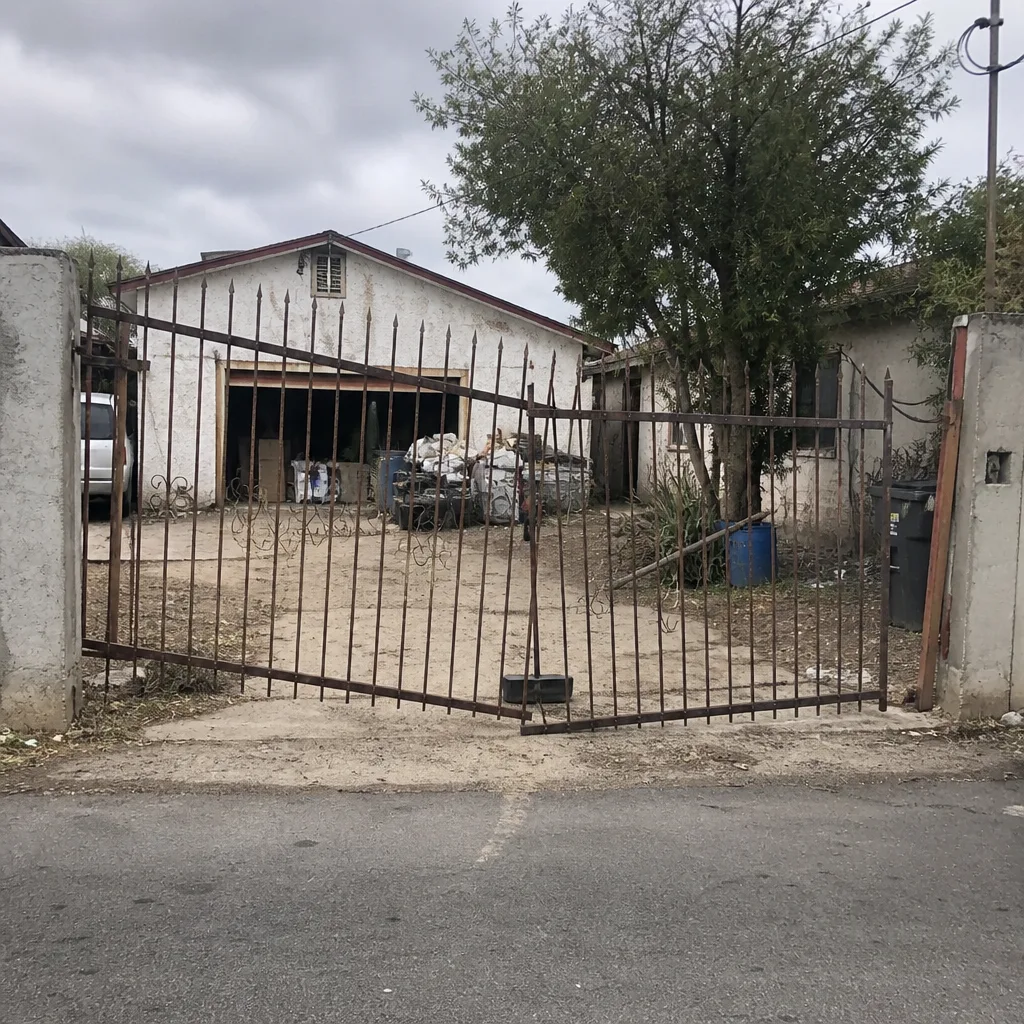 Before
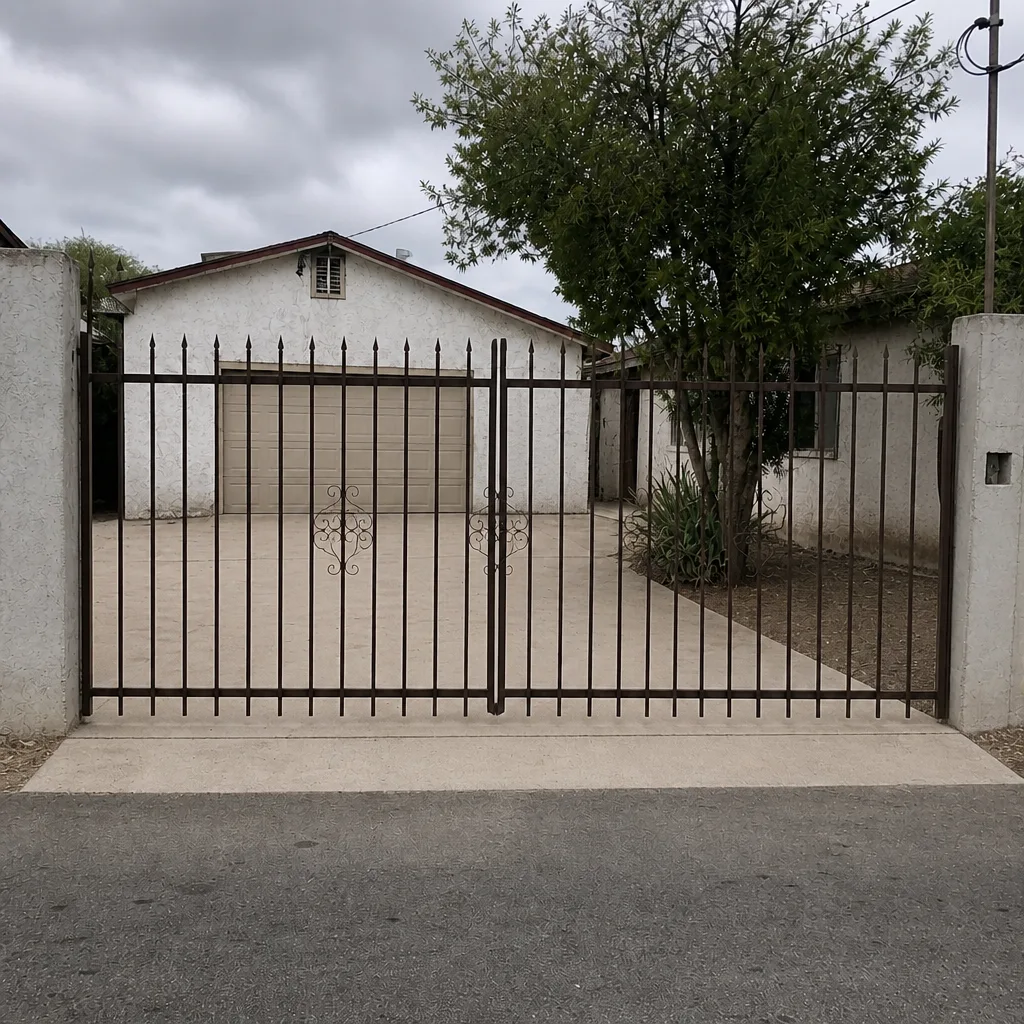 After
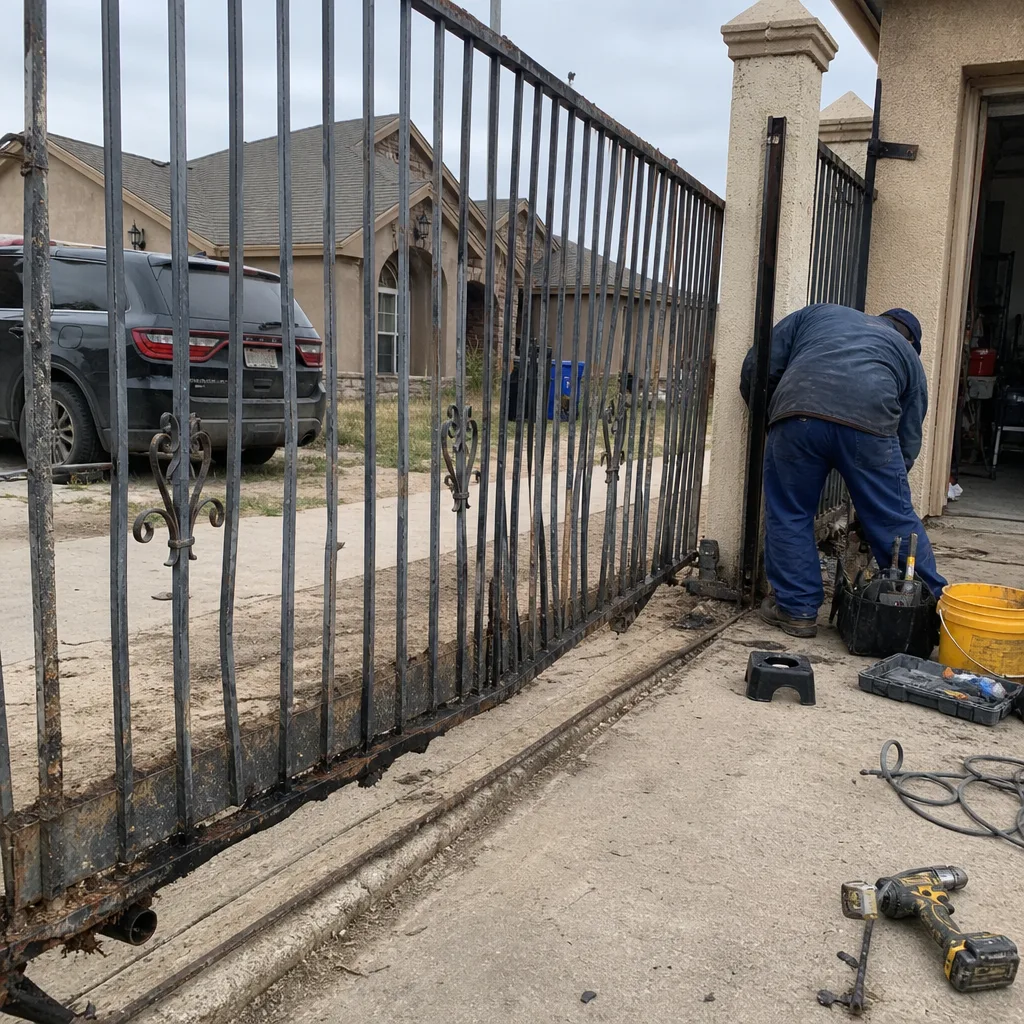 Before
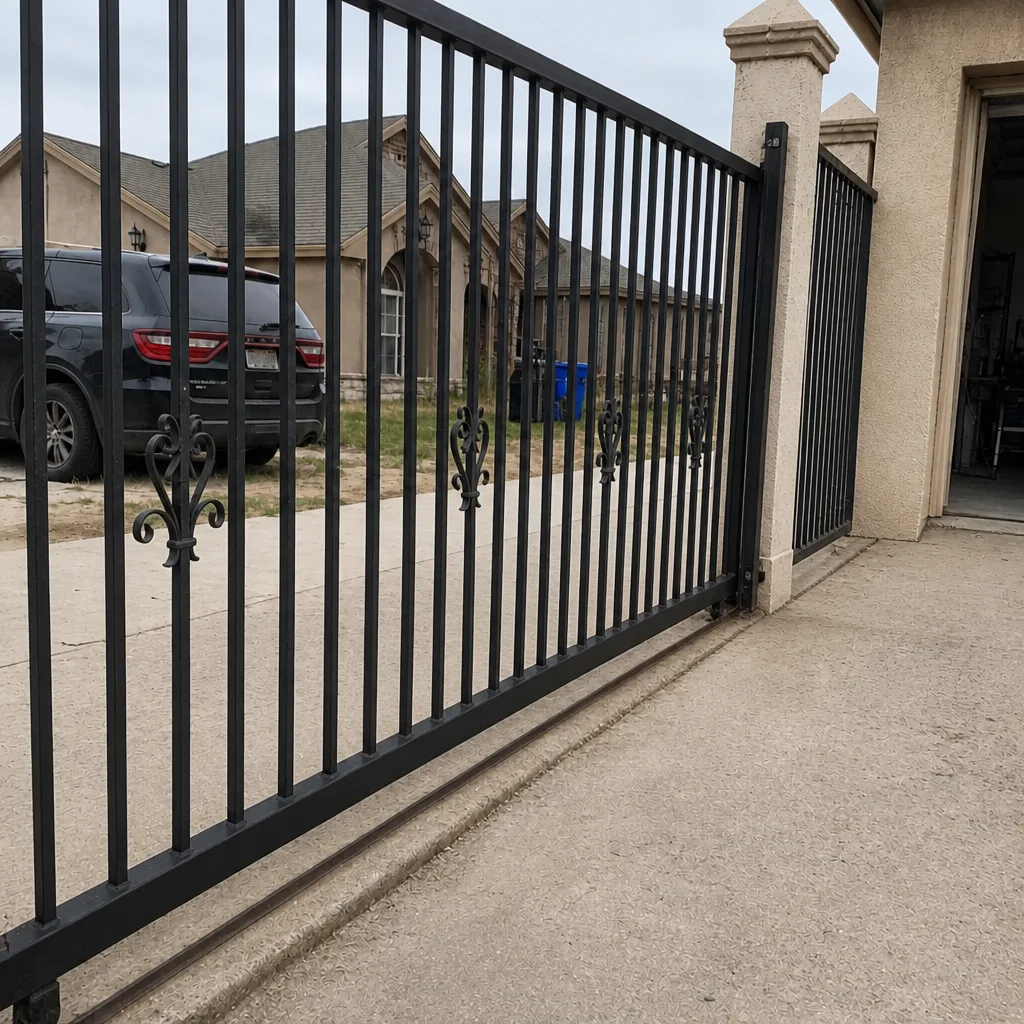 After
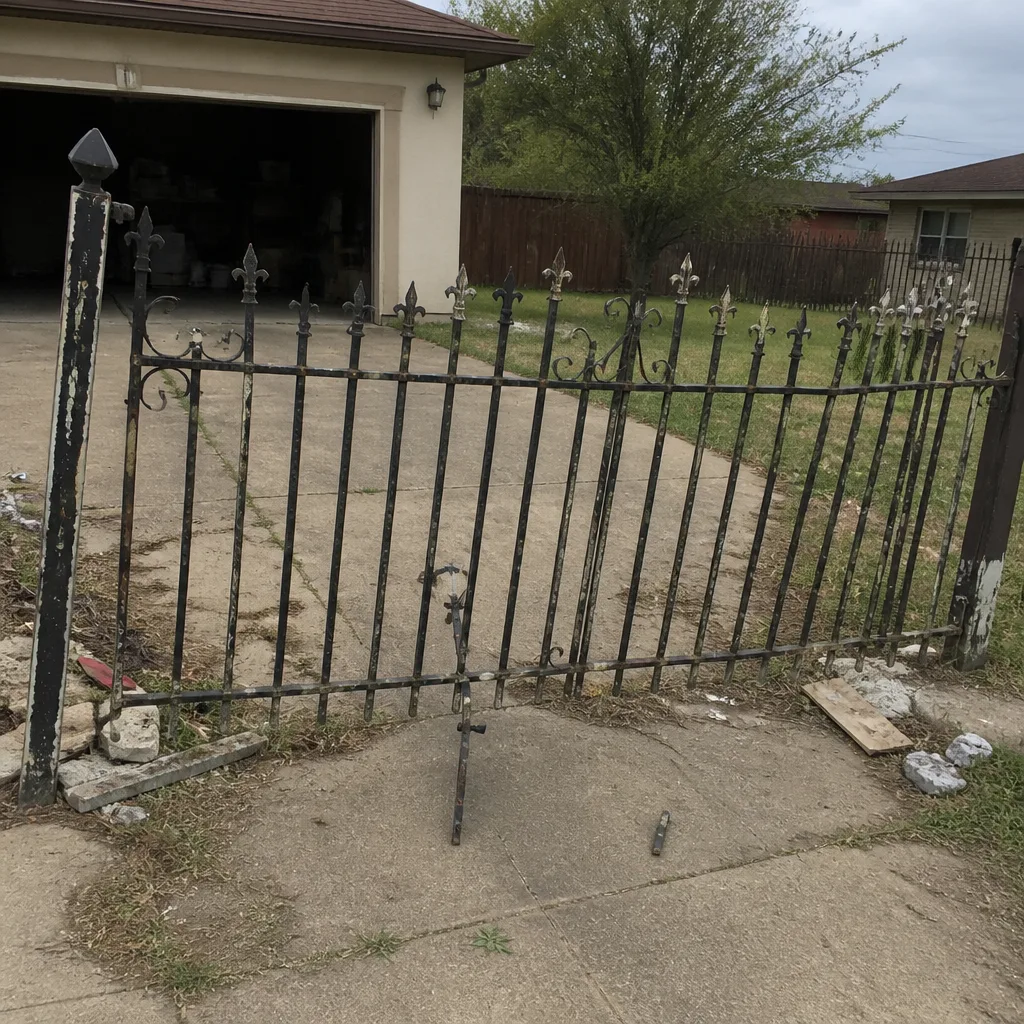 Before
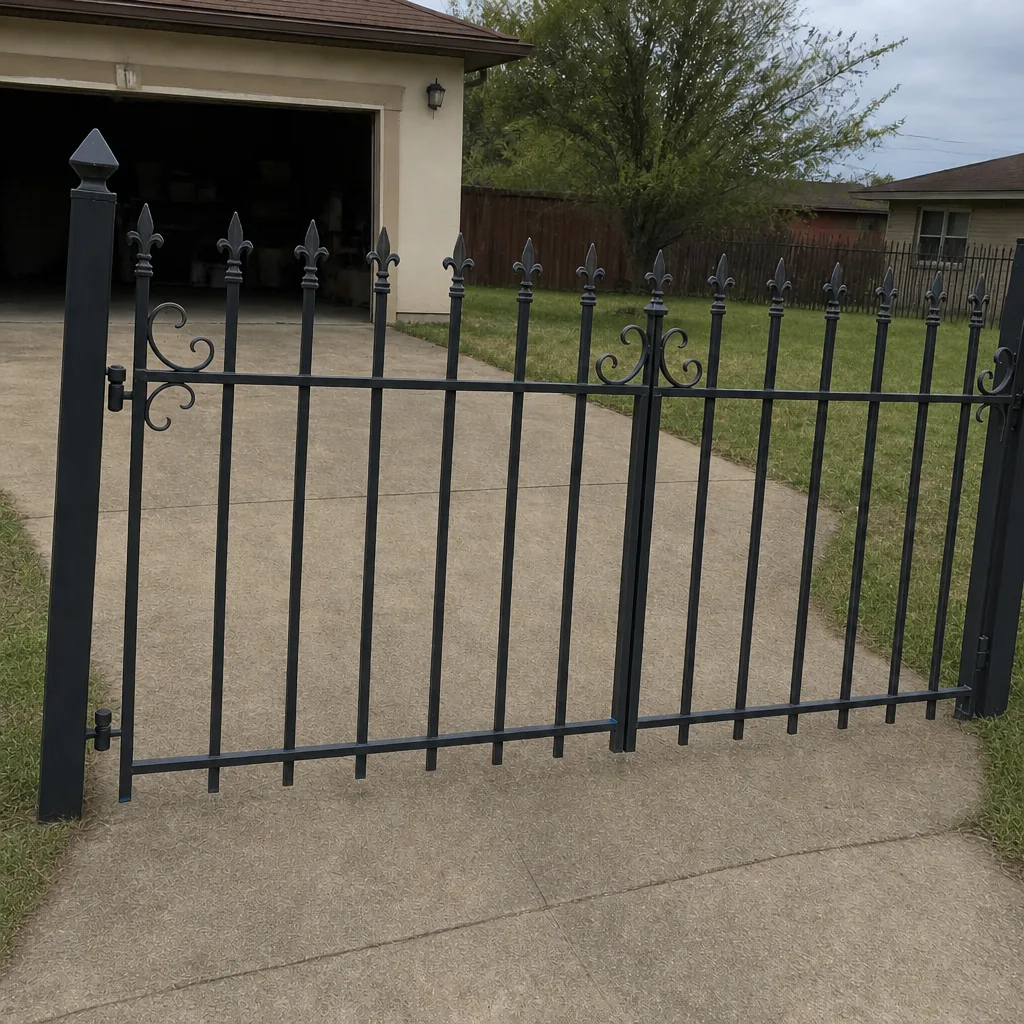 After
When to Call a Professional
Call a dedicated gate technician when the work involves an operator, control board, safety sensor, or wiring on a system that isn’t responding the way it should; when you’re adding automation to a manual gate; when the gate’s structure, posts, or footings need repair or replacement; or when you’re planning a new installation and need a measure and a written estimate. If you’re unsure whether your work needs a permit, a professional gate technician can look at the system and tell you what kind of work you’re actually facing, before any permit or tool comes out. We are a gate-only service company, not a general contractor that happens to take gate jobs, and our technicians have up to 10 years of experience diagnosing exactly these situations. Gate Repair Laredo offers free estimates in Laredo. Call (833) 946-7096.
Frequently Asked Questions
Usually no, if the work is mechanical repair on an existing gate. Replacing hinges, rollers, guide rails, or a motor on an already-permitted circuit typically does not require a permit. Any work involving a new electrical circuit, a structural change to the gate or its posts, or a new installation likely does. Confirm with the City of Laredo Building Department before work begins. For an exact answer on your property, call (833) 946-7096 for a free estimate.
Yes, if the installation involves running a new electrical circuit from the panel to the gate. Adding an operator to a gate that has never had one, or upgrading power to an existing operator, typically crosses into regulated electrical work and requires a permit and inspection. Replacing a failed operator on the same existing circuit usually falls under repair. We answer 24/7. Call (833) 946-7096 for a free estimate.
The city’s building ordinances apply inside Laredo city limits, while unincorporated Webb County properties fall under county requirements instead. A property with a Laredo mailing address can still sit outside city limits, which is one of the most common sources of confusion on the urban fringe. Verify your parcel before calling either department. Call (833) 946-7096 for a free estimate.
Yes. HOA deed restrictions are a separate approval track from city permitting, and they can restrict gate height, style, material, color, and setback independently of what the city allows. Homes in Laredo subdivisions with active HOAs should submit an architectural request before ordering materials. Call (833) 946-7096 for a free estimate.
The sale can be delayed or stalled until the work is retroactively approved, and the seller typically carries the cost because the seller owns the property. A title search can reveal the gap, and buyers’ lenders may require engineering inspections or correction work. Keep the permit and inspection record with your property file to avoid this. Call (833) 946-7096 for a free estimate.
Footing and post depth, proper electrical grounding, functioning safety devices including photo eyes and safety edges, an accessible manual release, and clearance from property lines and public rights-of-way. The safety devices are the part contractors most often miss. Fast dispatch from 7am to 7pm, Sunday through Friday. Call (833) 946-7096 for a free estimate.
The Bottom Line
Most gate repairs in Laredo need nothing from the city. The moment electrical work, structural changes, or a new installation enters the picture, the permit requirement usually kicks in, and the risk of skipping it lands on the property owner, not the contractor. If you’re on the urban fringe, confirm your jurisdiction before you call anyone. If you’re in an HOA, run the architectural approval and the city permit at the same time. The permit is not a formality, it’s the record that protects you at resale and at claim time. Gate repair, electric gate repair, and new installations are the three things we do. Call (833) 946-7096. We answer 24/7. Fast dispatch from 7am to 7pm, Sunday through Friday, closed Saturday. Free estimates.
Written by the team at Gate Repair Laredo.