
Last updated November 15, 2026
 Wrought iron
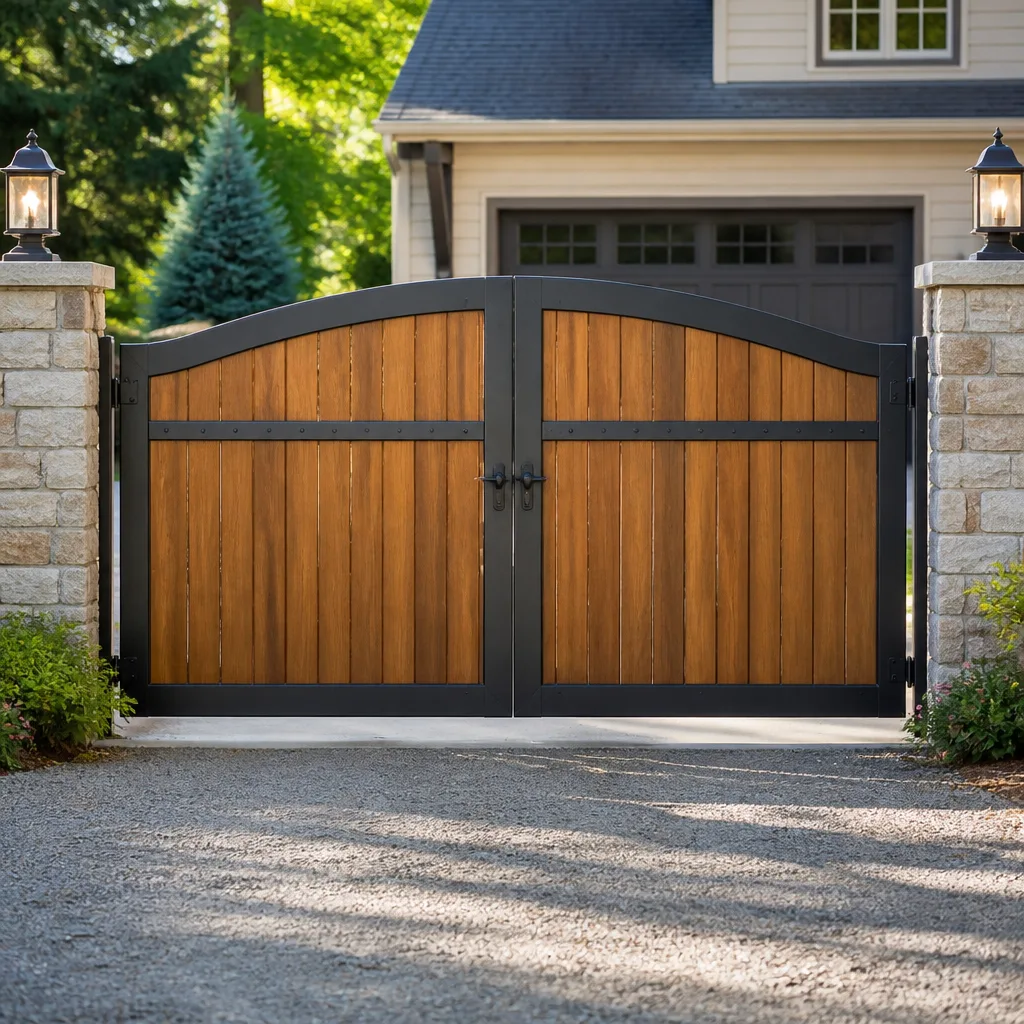 Wood & steel frame
 Farm & ranch
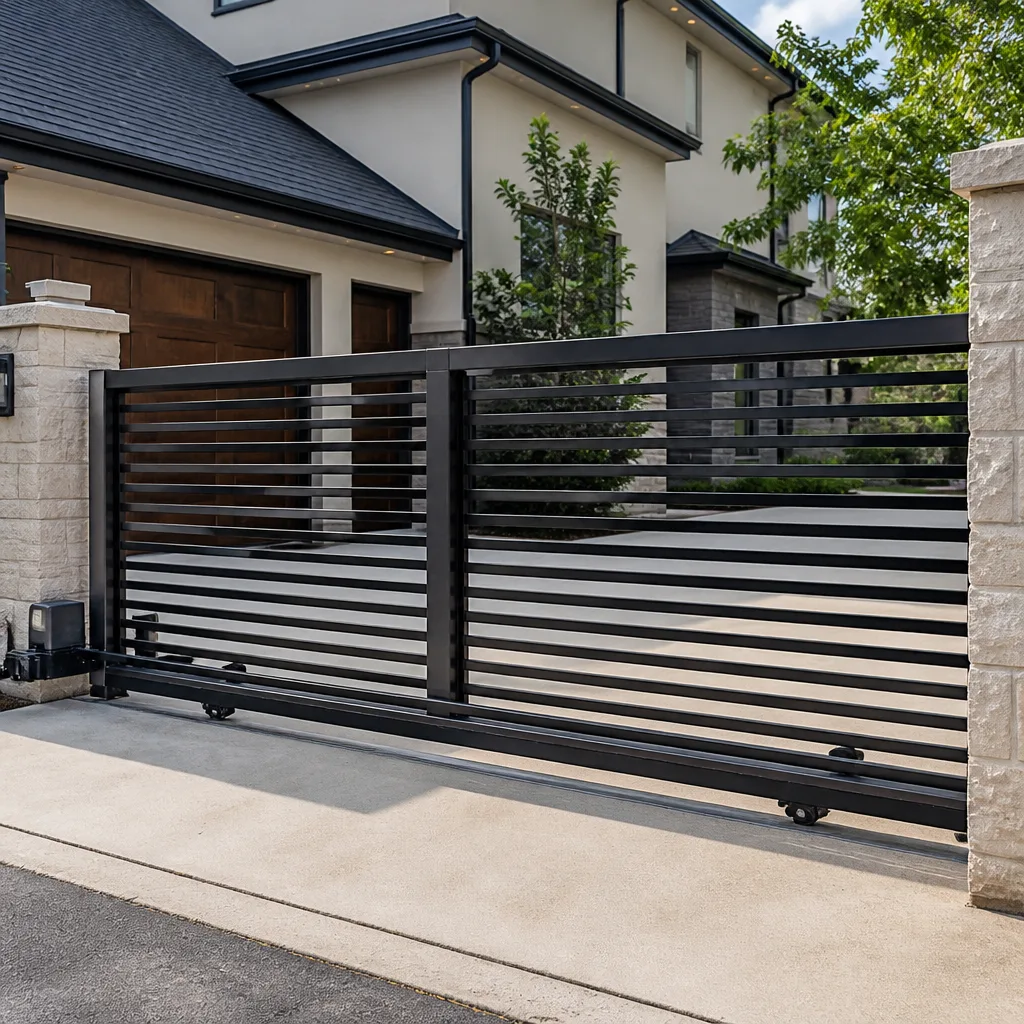 Sliding driveway gates
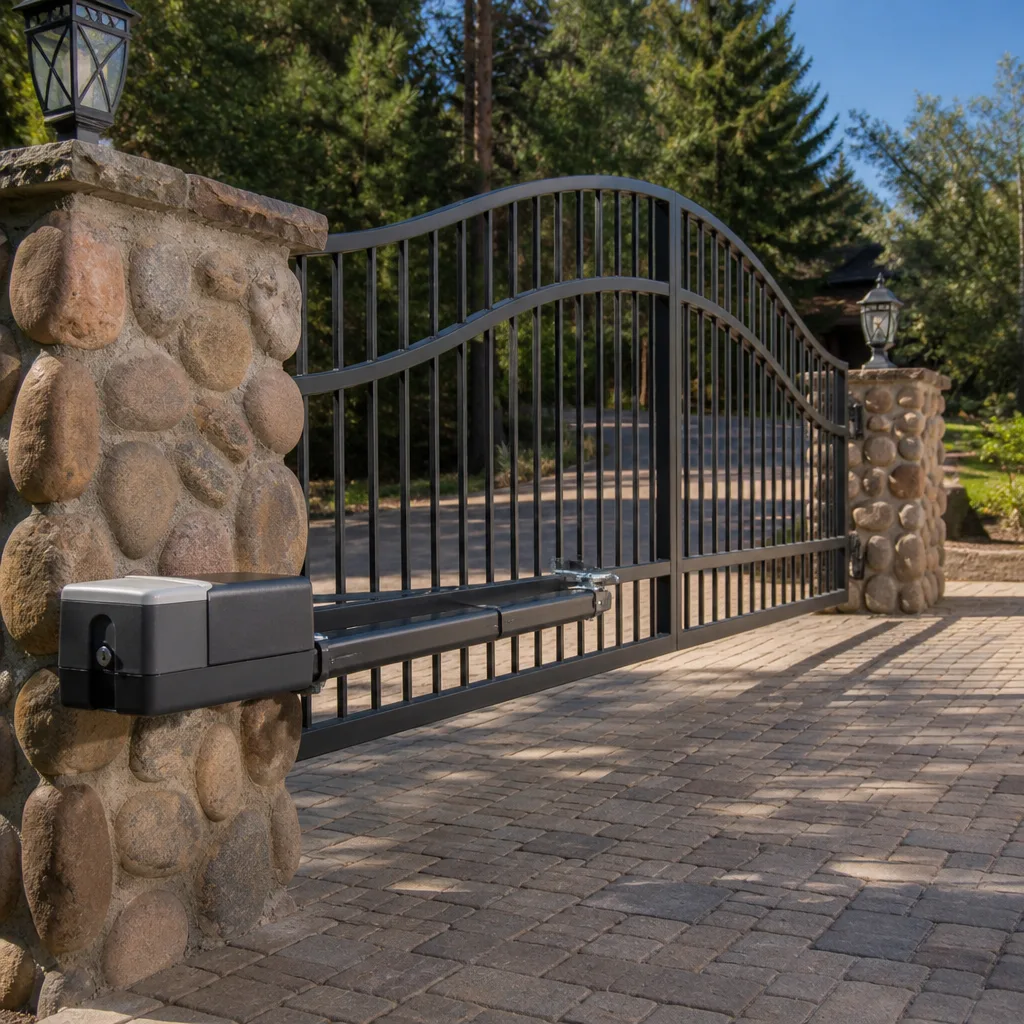 LiftMaster operators
Free on-site gate assessment - hinges, posts, and your LiftMaster or Nice gate operator checked before anything is quoted
The assessment is free and the quote is the invoice.
Get your free estimateHow to Hire a Gate Repair Contractor in Laredo: A Step-by-Step Guide
The most expensive gate repair call isn’t the emergency visit. It’s the second repair call you need because the first contractor didn’t carry the right parts for your brand and improvised. Gate operators aren’t interchangeable. A Mighty Mule control board doesn’t diagnose like a LiftMaster board, and knowing one doesn’t teach you the other. Most homeowners in Laredo find this out the hard way, after they’ve already paid for work that didn’t stick. This guide walks you through a vetting framework you can use before anyone touches your gate. It covers the five questions to ask any contractor, how to verify licensing in Texas, what a real diagnostic looks like, and how to compare quotes that use different line items for the same job.
Quick Answer
To hire a gate repair contractor in Laredo, ask five brand-specific questions before scheduling, verify their Texas electrical or trade credentials through the TDLR database, and confirm they’ll diagnose your actual gate before quoting. A legitimate contractor will name your specific brand, walk you through what they’ll test, and put the price in writing after they’ve seen the gate, not before.
Styles & brands we work with
- Wrought iron
- Wood & steel frame
- Farm & ranch
- Sliding driveway gates
- LiftMaster operators
Table of Contents
- The Five Brand-Specific Questions to Ask Before You Schedule
- How to Verify a Gate Contractor in Texas Without Taking Their Word for It
- What a Legitimate Diagnostic Process Actually Looks Like
- Red Flags Specific to the Laredo Market
- How to Compare Quotes When Contractors Use Different Line Items
- Repair vs. Replace: How to Tell Which Is Right
- What to Have Ready Before You Call
- Frequently Asked Questions
The Five Brand-Specific Questions to Ask Before You Schedule
A vague answer to any of these five questions tells you something specific: the person on the phone is a generalist hoping the job is simple. That’s not a knock on their character. It’s information about whether they’ll be able to finish the job the first time.
- “Do you recognize the brand on my gate?” Name your manufacturer out loud. If they say “we work on everything,” press for specifics. Ask them to describe how a LiftMaster board differs from a FAAC board in terms of the diagnostic path. A specialist will give you a real answer. A generalist will pivot to price.
- “Have you replaced a control board on this exact model series?” Brand familiarity isn’t enough. Model families within the same brand have different layouts, different sensor wire protocols, different board revisions. Ask for the model number on the label inside the operator housing and have them confirm familiarity with that specific series.
- “What’s the first thing you’ll test when you arrive?” A specialist answers in seconds: power at the panel, then the transformer, then the control board LEDs, then the sensor alignment, then the motor. A generalist says “we’ll see what’s going on.”
- “Do you carry or source parts for this brand, or do you swap the whole system?” The answer here reveals their business model. A contractor who only installs new systems will recommend replacement even when a control board swap would fix the problem. The right answer is that they’ll tell you what’s broken and let you decide.
- “Are you authorized by the manufacturer, in-house familiar, or both?” The honest answer from an independent specialist is “in-house familiar, not factory-authorized.” That’s fine. What you’re testing for is whether they’ll misrepresent themselves to sound more impressive, which is a preview of how they’ll behave on the invoice.
Those five questions filter out most of the contractors who will guess and bill you anyway. Gate Repair Laredo works on nine brands, from residential Mighty Mule and Ghost Controls to commercial-grade DoorKing and BFT, so if the answer to question one is “yes, we know it,” you can confirm the depth of that knowledge with the rest of the questions.
How to Verify a Gate Contractor in Texas Without Taking Their Word for It
Texas doesn’t have a single “gate contractor” license. What it does have is a set of overlapping credentials that apply depending on what part of your gate system the contractor will touch. Mechanically, most residential gate repair falls under general contractor rules. Electrically, anything involving line-voltage wiring, controls, and the operator side of the system is regulated work in Texas, and the person doing it should be licensed or working under a licensed electrician.
Here’s the verification path we recommend:
- Ask for the license number in writing. Not the company name. The license number. If they can’t produce one on request, move on.
- Look it up at TDLR. The Texas Department of Licensing and Regulation maintains public databases for electrical contractors, electricians, and many specialty trades. Go to the TDLR website, use the license search, and enter the number or name. The record will show the license type, expiration, and any disciplinary history.
- Cross-check the name on the license against the name on the quote. A licensed electrician working as a subcontractor for an unlicensed gate company is different from a licensed company. You want the contract to be with the entity that carries the license for the work being done.
- Ask for a certificate of insurance. General liability insurance protects your property if something gets damaged during the job. A certificate is a one-page document that lists the policy holder name, coverage limits, and expiration date. Ask your contractor to have their insurer email it to you directly so you know it’s current.
- Ask about workers’ compensation for anyone who will be on your property. If a technician is injured on your property and the contractor doesn’t carry workers’ comp, that exposure can come back to you as a homeowner. It’s a fair question to ask, and a professional won’t be offended by it.
None of this takes long. A legitimately credentialed contractor in Laredo will have the answer ready in ten minutes. A contractor who deflects on any of these five steps is telling you what the rest of the relationship will look like.
What a Legitimate Diagnostic Process Actually Looks Like
A real diagnostic happens on-site, at your gate, with the person who’ll do the repair. It takes at least thirty minutes for a simple problem and longer for anything involving the motor, control board, or sensor array. Anything faster is a guess dressed up as a diagnosis.
Here’s what to expect from a proper diagnostic on an automated gate:
- A physical inspection of the gate first. Before anyone opens the operator housing, a specialist checks the gate itself: hinges, rollers, tracks, sag, alignment. A gate that binds will burn out a healthy operator. If the mechanical problem isn’t diagnosed first, every electrical repair that follows is chasing a symptom.
- Voltage at the panel and the transformer. The technician will check incoming power at the electrical panel feeding the gate and confirm the transformer is delivering the correct voltage to the control board. This rules out a power problem before any parts are ordered.
- LED status check on the control board. Most modern operators, from LiftMaster to FAAC, have status LEDs that reveal fault conditions. A technician who can read those codes knows within minutes whether the problem is in the board, the sensors, or the motor circuit.
- Sensor and safety device testing. Photo-eye alignment, loop detector function, reversing edge operation. These get tested during the diagnostic, not after a repair.
- A written explanation of what’s broken and what it will take to fix it. This should come with a written price, not a verbal one. Any verbal price given verbally before the diagnostic is complete is not a real price.
If a contractor quotes you a number before they’ve walked your property and run these checks, you’re not getting a price. You’re getting a placeholder. The invoice at the end may not match it, and you’ll have no leverage to argue because nothing was in writing. For more on what electric gate repair involves on the diagnostic side, our own breakdown walks through the parts of the process you should expect.
Red Flags Specific to the Laredo Market
Laredo has a few conditions that shape the gate repair market in ways that homeowners should know about. The most important one is our storm season. When a major storm rolls through, out-of-town crews appear with truckloads of gates and openers and start knocking on doors. Some of them do good work. Many don’t, and the ones that don’t are hard to hold accountable after they’ve moved on to the next town.
Watch for these signals:
- Out-of-town crews with no local accountability. If the truck is marked with a city three hours away and the contractor has no local address or local references, ask how they plan to handle a callback if the repair fails. If the answer is “call us,” ask for a number that gets answered and a time frame for a return visit. If they can’t answer, you’re hiring a stranger who will leave.
- “Storm special” pricing on gates that weren’t storm-damaged. A gate that was working fine before the storm and still works fine after the storm doesn’t need a replacement. If someone shows up and offers a discount on a new system you didn’t ask for, walk.
- Quotes delivered before the inspection. A written quote is meaningful after the diagnostic. A quote before the diagnostic is a sales pitch, not a quote. In a market with storm-chasing crews, this is the single biggest warning sign.
- Pressure to sign a contract on the spot. Legitimate gate repair doesn’t require same-visit signing. A free estimate is meant to give you time to compare. If a contractor won’t leave without a signature, the reason isn’t urgency. It’s that they don’t want you calling anyone else.
- Parts swapping as a diagnostic method. Some contractors guess by replacing parts until the gate works again and charging you for every attempt. A real diagnostic tells you which part is bad before anything gets replaced. Ask, “If you replace this board and it doesn’t fix the problem, do I pay for the board?” The right answer is no.
- Cash-only with no written invoice. A written invoice protects you if the repair fails and you need to dispute it. Cash transactions with no paperwork are the hardest to enforce after the fact.
Homeowners in Laredo deal with storms, extreme summer heat, and gates that run every day of the year. Heat is hard on operator electronics, dust is hard on photo-eyes, and a gate that gets used by a household of five wears differently than one used by two people. A contractor who knows the local climate will test for heat-related board faults and sensor alignment drift rather than assuming the failure mode is universal. Our team covers both the gate repair side and the electrical side, so nothing gets handed off mid-job.
How to Compare Quotes When Contractors Use Different Line Items
Two contractors can quote the same repair with completely different line items and different totals. One breaks out labor, parts, and a service call. The other quotes a single flat number. A third quotes a much lower number that excludes wire, connectors, and any necessary hinge work. Comparing those three quotes at face value is how homeowners end up paying more than they expected. You need a translation guide.
Here’s how to compare apples to apples:
- Ask each contractor to quote the same scope. Before you call, write out exactly what you want fixed: “Repair gate that opens but won’t close.” Not “fix the gate.” Give every contractor the same problem statement so their quotes address the same issue.
- Ask each quote to break out labor and parts separately. Even if the contractor gives you a flat price, ask for the labor and parts split. That way you can see whether one quote is lower because labor is cheaper or because parts are cheaper.
- Check whether the parts are new, remanufactured, or pulled from another job. A used control board pulled from a donor gate is cheaper, but has an unknown service life. If a quote is dramatically lower than others, ask about part quality.
- Check whether the quote covers the same accessories. Sensor screws, wire nuts, weatherstripping, hinge lubrication, and post shims are small line items that add up. One quote may include these; another may not. Ask explicitly if all incidentals are covered.
- Ask what happens if the diagnostic reveals additional problems. A good contractor will tell you: they stop, call you, explain what changed and why, and get your approval before proceeding. A bad one will fix what they find and bill you for the surprise later.
- Check what warranty covers the labor versus the parts. These are often different. A ninety-day parts warranty from the manufacturer is not the same as a labor warranty from the contractor. Ask for both in writing.
- Look at the response time commitment, not just the price. A quote that’s $40 cheaper but comes with no clear callback promise is worth less than a slightly higher quote that comes from a contractor who actually answers the phone.
When you understand how to translate a quote, the lowest total is almost never the best choice. The right choice is the quote that covers the whole repair with no gaps, from a contractor who’s genuinely familiar with your brand and willing to put their terms in writing.
Repair vs. Replace: How to Tell Which Is Right
A gate is a mechanical system with a long service life. The gate itself can last decades with proper maintenance. The operator usually needs attention first. But how do you know whether it’s time to repair the operator or replace the whole system? The honest answer depends on three questions: how old is the operator, how many parts are failing at once, and whether the parts are still available for the model.
Here’s how we think through the decision:
- One component failing on a unit under eight years old? Repair it. A single control board, transformer, or sensor array going bad is a normal wear event. There’s no reason to replace a system that has most of its life ahead of it.
- Two or more major components failing within a year? The system is telling you something. The motor, board, and sensors working in sequence have a collective lifespan. When one fails this year and another fails next, you’re approaching the point where a new unit is the more economical choice.
- Parts no longer available for the model? Some operators get discontinued. If the manufacturer no longer makes the control board for your unit, repairs become workarounds. At that point replacement makes sense.
- Your needs have changed? If you’ve added vehicles, extended the driveway, or want smart-home integration and your current operator wasn’t built for it, replacement can be worth it even if the unit technically still works.
- The gate itself is failing, not the operator? A sagging gate, broken hinges, or rusted structure won’t be fixed by replacing the operator. Mechanically repair the gate first, then look at the operator.
The important rule: no one should recommend replacement without walking you through why. A brand-agnostic contractor will tell you what’s actually wrong and let you make the call. A contractor locked into one brand’s ecosystem will lean toward replacement because that’s the only path their business model supports. When a repair will do, it should be done.
What to Have Ready Before You Call
The more information you have when you call, the more useful the phone diagnosis will be. You don’t need to be a technician, but five minutes of prep saves time on the other end of the phone.
- The brand and model number of your operator. This is usually on a sticker inside the operator housing or on the underside of the cover. Take a photo of the label if you can’t read it easily.
- What the gate does and doesn’t do. “Won’t open” is vague. “Opens about a foot then reverses” tells the technician exactly where to look. Note the exact behavior, including any sounds, lights, or error codes.
- Whether the problem is intermittent or constant. Intermittent problems are worth flagging because they often point to loose wiring or a temperature-sensitive board, rather than a component that’s fully failed.
- When you last had it serviced. If it’s never been looked at, that’s useful context. If it was serviced within the year, that narrows what’s likely failing.
- Any changes to the site recently. New landscaping, a new fence, a new utility installation, or heavy equipment nearby can all shift a photo-eye or knock a wire loose.
- Your property type. Residential driveway, HOA entrance, or small commercial entry. Each has different operator classes and different access requirements.
When you call Gate Repair Laredo at Gate Repair Laredo, having those details ready moves the conversation forward quickly. We answer 24/7 and dispatch technicians from 7am to 7pm, Sunday through Friday.
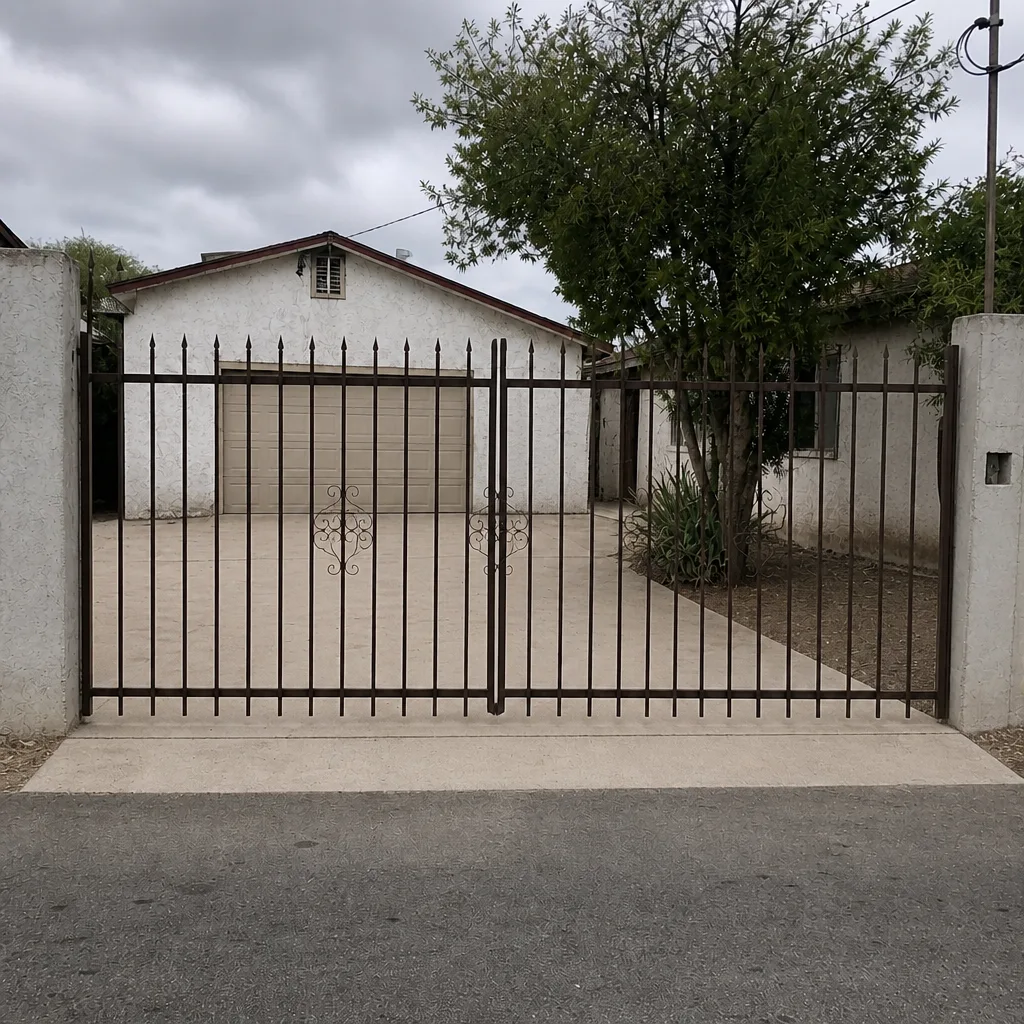
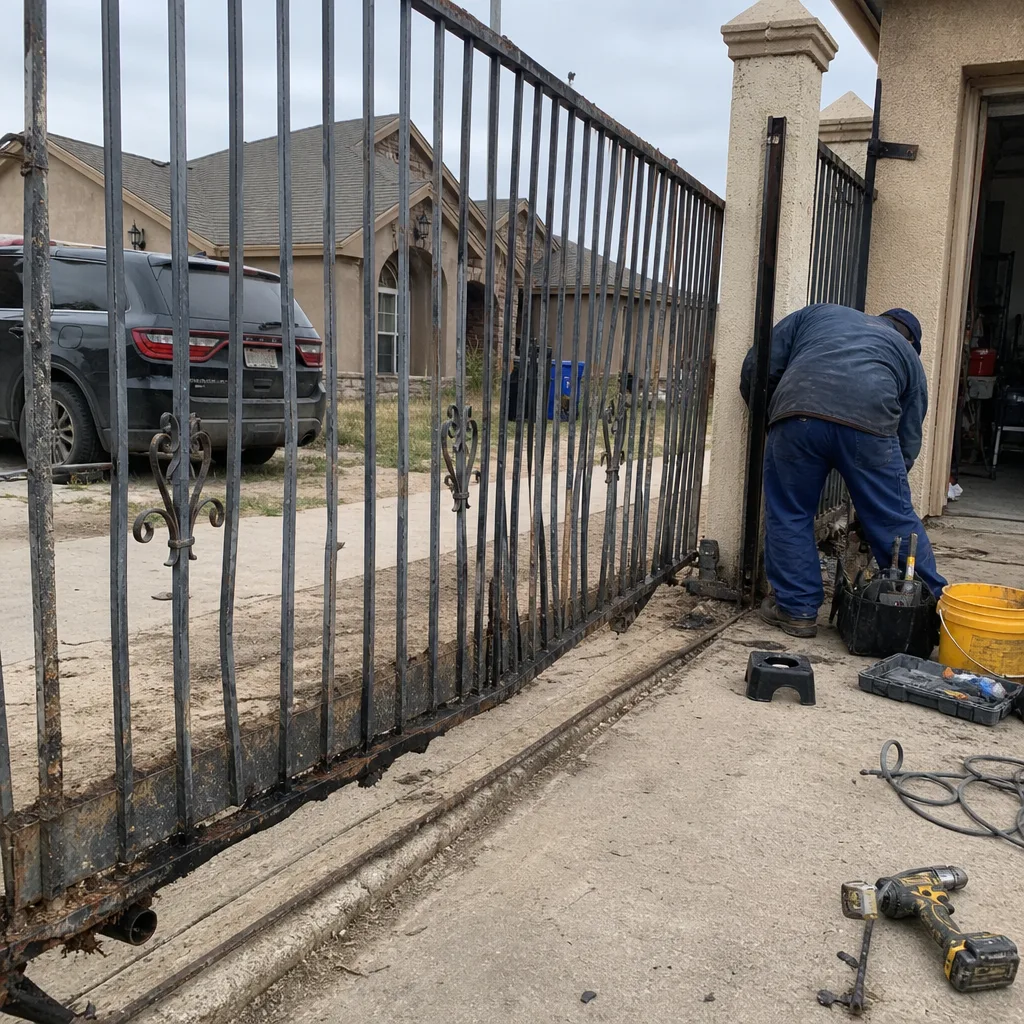
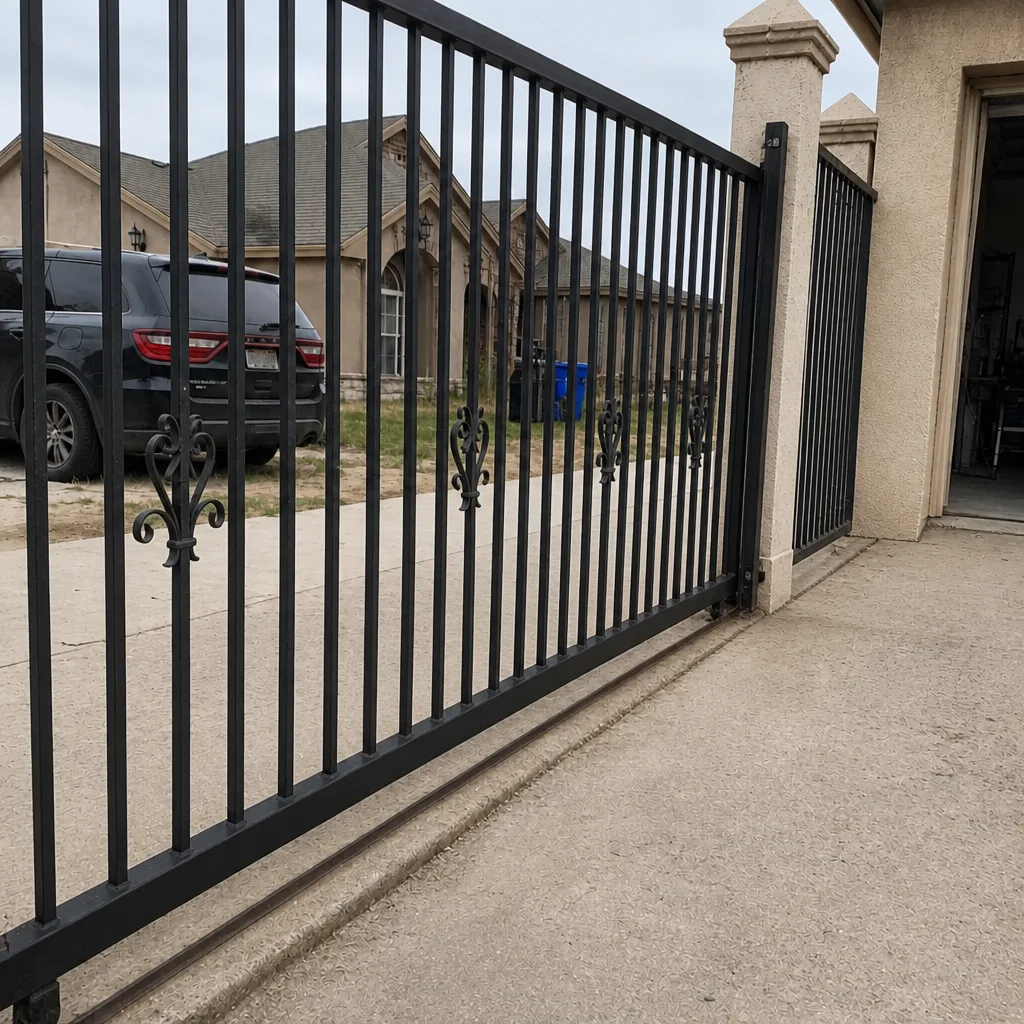
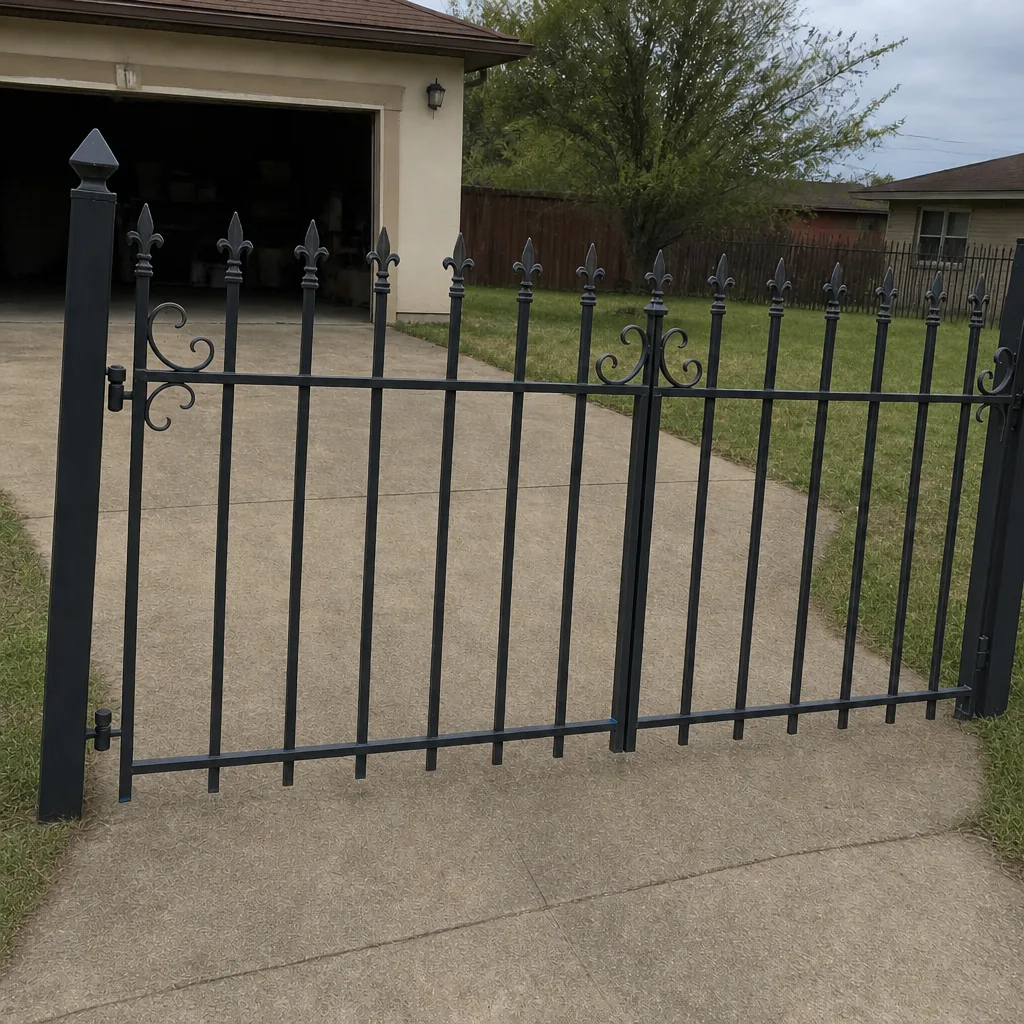
See the difference
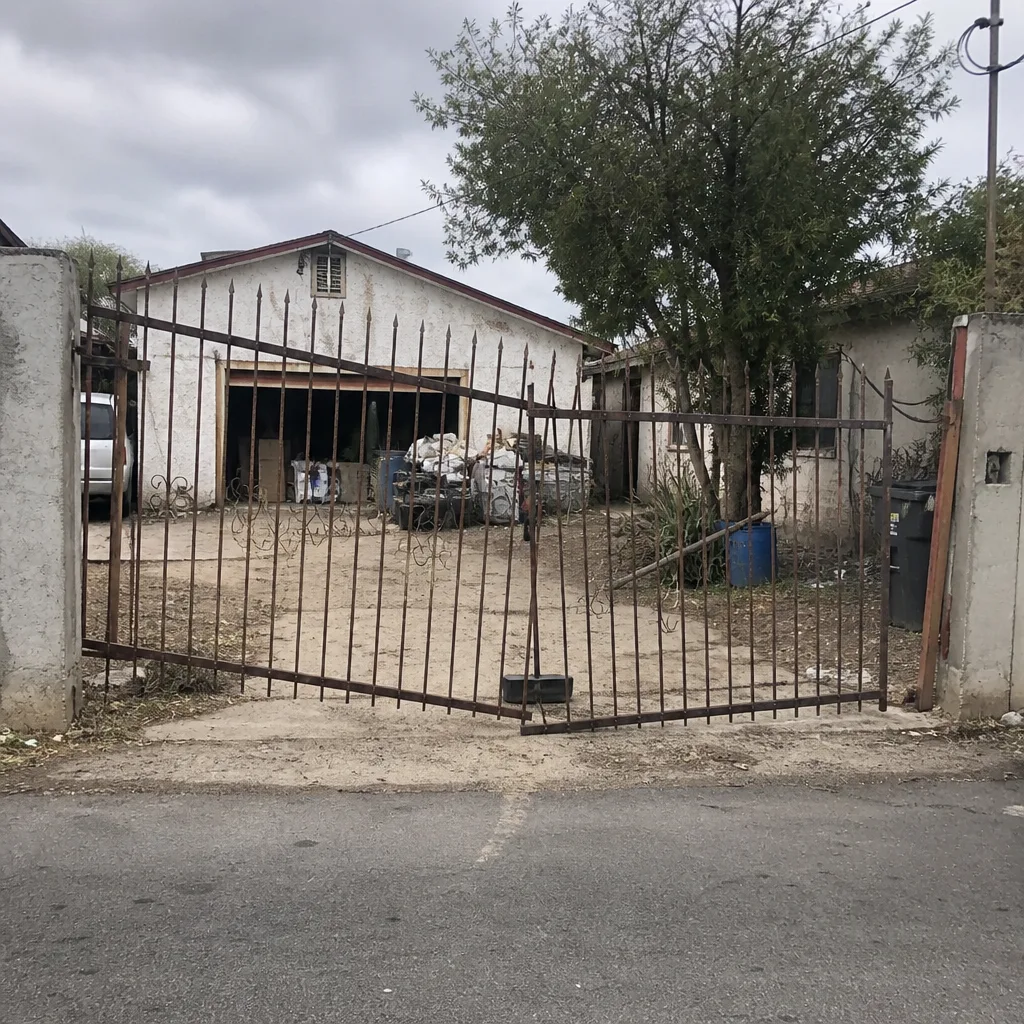 Before
 After
 Before
 After
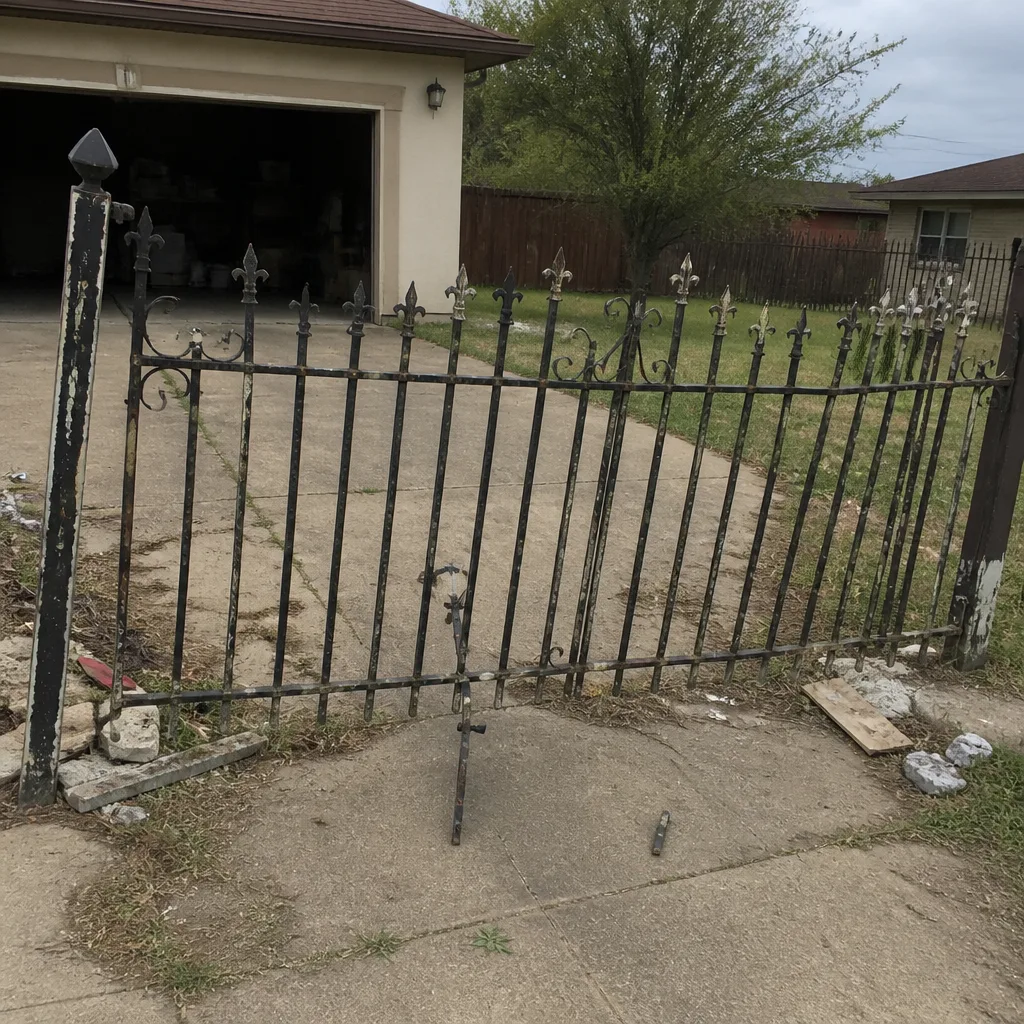 Before
 After
Common Mistakes to Avoid
- Hiring the first contractor who answers the phone. In Laredo, gate repair pickup times vary. The first contractor to answer isn’t necessarily the best equipped for your brand. Ask the brand questions before you schedule, even if it takes one more call.
- Accepting a verbal quote. Verbal quotes are the most common source of billing disputes. Every price should be in writing, itemized, and signed before any work begins.
- Skipping the TDLR check because the contractor “seems nice.” Licensure is a low bar to clear and a high bar to fake. If they won’t provide a license number, that’s the answer.
- Choosing the lowest quote without comparing scope. The lowest quote usually means the smallest scope. If it doesn’t cover wire, connectors, or incidental parts, you’ll pay more at the end than if you’d gone with the higher, complete quote.
- Letting a contractor swap parts as a diagnostic method. Replacement guesses get billed to you. Ask for a diagnosis before parts are ordered.
- Assuming the operator is the problem when the gate is actually binding. A gate that drags on its track will burn out a healthy operator. Diagnosis needs to start at the mechanical side, not the electrical side.
- Hiring a storm-chasing crew without asking about their callback process. If the truck leaves town after the repair, so does your leverage if the fix fails.
When to Call a Professional
Some gate problems are safe to look at yourself. A loose photo-eye bracket, a remote that needs a battery, a gate that’s obviously blocked by debris. Anything beyond that needs a trained technician on-site.
Call a professional when the gate won’t respond to a remote or keypad even after confirming the power is on. Call when the operator cycles but the gate doesn’t move. Call when the gate reverses partway through and then stops. Call when there’s a burning smell, a clicking relay that won’t stop, or visible damage to the operator housing. Call when the gate moves at a different speed than it used to, or when the motor runs louder than usual. And call when the safety sensors are being bypassed because you’ve been meaning to fix them and haven’t gotten around to it. Safety sensors exist for a reason, and bypassing them is how people get hurt.
Gate Repair Laredo offers free estimates in Laredo. Call (833) 946-7096. We answer 24/7. Fast dispatch from 7am to 7pm, Sunday through Friday.
Frequently Asked Questions
Gate repair in Laredo is priced per job after a technician inspects the gate, and the written estimate you receive sets the final price before any work begins. The cost depends on what’s actually broken, which brand and model operator you have, and whether parts need to be sourced. Estimates are free. Call (833) 946-7096 for an exact quote.
Yes, if it’s one of the nine brands we work on, which include LiftMaster, FAAC, BFT, Linear, Viking, Ghost Controls, DoorKing, Elite, and Mighty Mule. When you call, name your brand and the model number from the operator label and we’ll confirm before scheduling. If we don’t service your brand, we’ll tell you so rather than guessing.
Ask the contractor for their license number in writing, then look it up in the Texas Department of Licensing and Regulation (TDLR) public database. The TDLR record shows license type, status, and any disciplinary history. Cross-check that the name on the license matches the name on the quote, and ask for a current certificate of insurance emailed directly from their insurer.
First, check that the power at your electrical panel hasn’t tripped, and look inside the operator housing for any visible indicator lights or fault codes. If the power is fine and the gate still won’t move, stop there and call a technician. Don’t attempt to open the operator housing further or touch wiring yourself; the line-voltage side of a gate operator is not a safe DIY zone.
Same-day service is often possible for diagnostic visits and common repairs on automated gates. Call (833) 946-7096 to check availability for your address. We answer 24/7, and dispatch runs from 7am to 7pm, Sunday through Friday.
We handle the operator side of the system, including motors, control boards, safety sensors, wiring diagnostics, and photo-eye alignment. If your repair requires new line-voltage wiring pulled from a distant panel, we’ll tell you during the estimate so you can plan for the right licensed trade to handle that portion.
The Bottom Line
Hiring a gate repair contractor in Laredo comes down to two things: brand fit and follow-through. Ask the five brand-specific questions, verify licensure in Texas through TDLR, and refuse to accept a quote delivered before a diagnostic. Watch for the red flags that show up after storm season, and compare quotes by translating line items into the same scope before you decide. The contractor who can name your brand, describe your system’s likely failure mode, and put a written price in front of you is the one who’ll finish the job in a single visit. That’s the standard we hold ourselves to.
Written by the team at Gate Repair Laredo.