
Last updated November 15, 2026
 Wrought iron
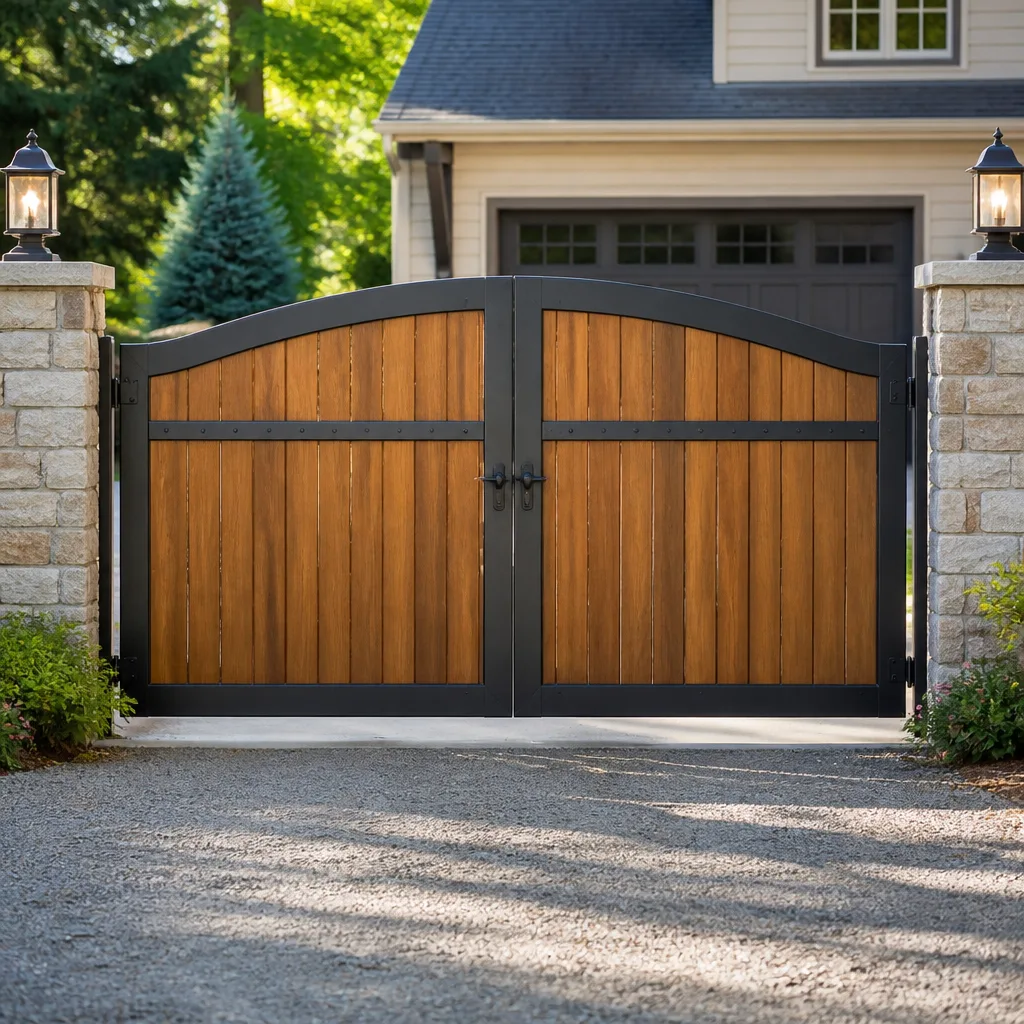 Wood & steel frame
 Farm & ranch
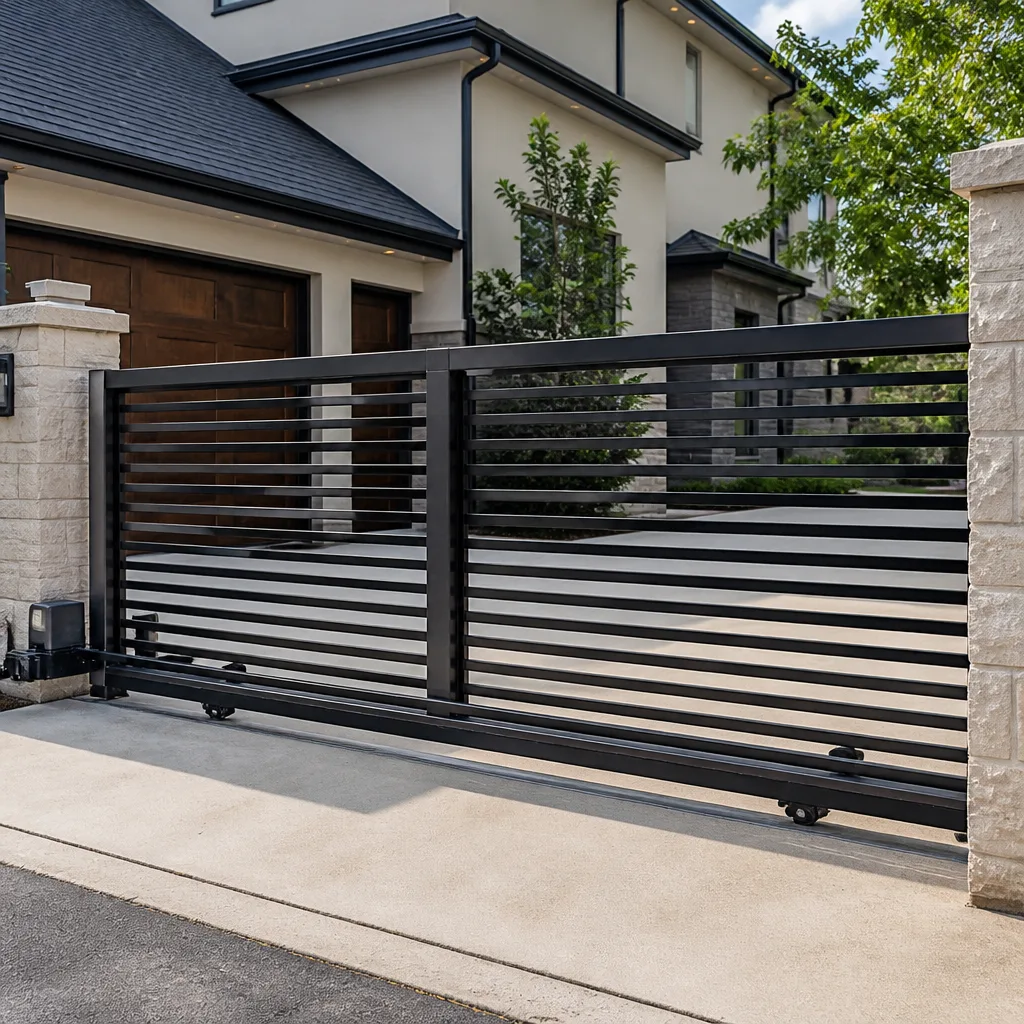 Sliding driveway gates
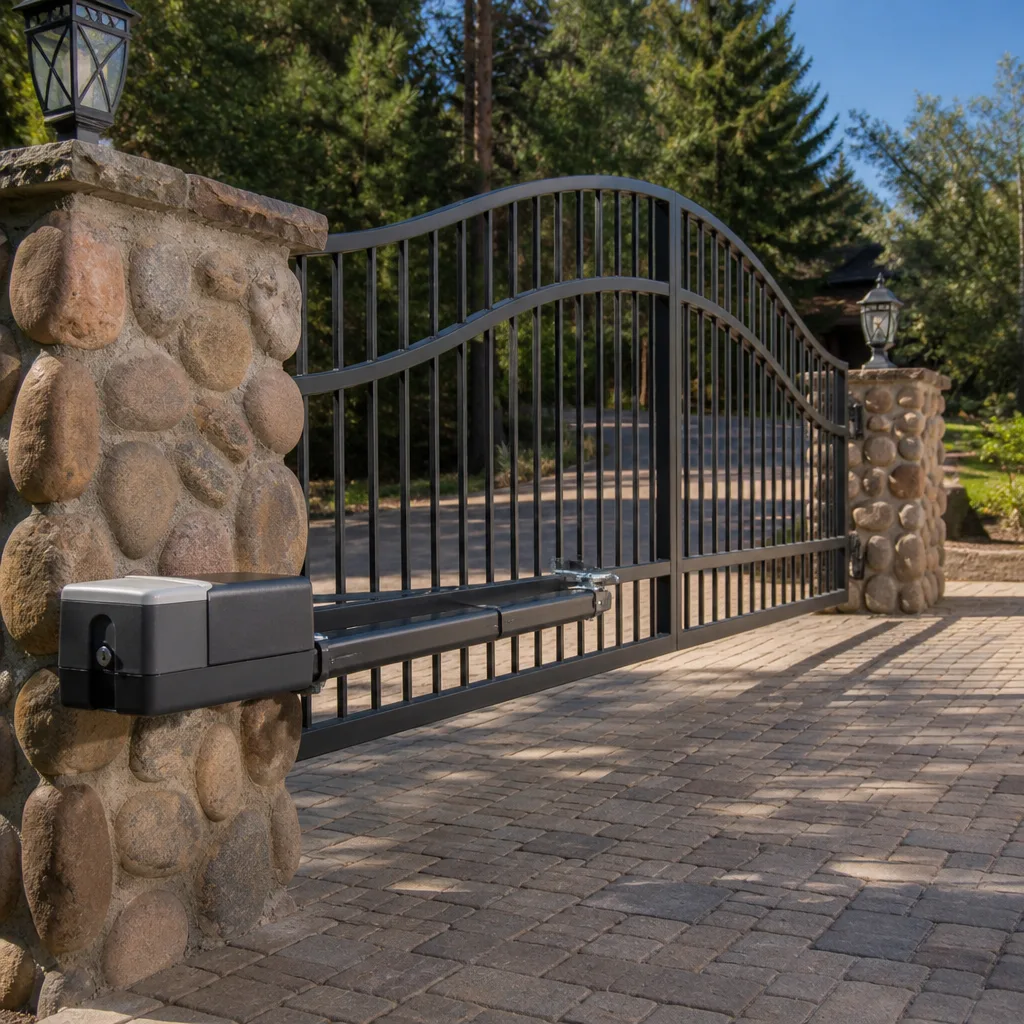 LiftMaster operators
Free on-site gate assessment - hinges, posts, and your LiftMaster or Nice gate operator checked before anything is quoted
The assessment is free and the quote is the invoice.
Get your free estimateGate Repair Emergency Preparedness Guide for Laredo Homes
Most gate emergencies we talk to homeowners about aren’t really about the gate. They’re about the twelve hours between the breakdown and the repair, and the fact that nobody had a plan for those hours. A gate that won’t close leaves your perimeter open. A gate that won’t open traps your car inside. Those are two entirely different problems, and they call for two different responses. This guide walks you through both before either happens to you. You’ll learn how to release the major operator brands manually, how to secure a stuck-open gate without damaging it, what to have ready when you call for help, and how Laredo’s storm season shapes the failures we see most often.
Quick Answer
If your gate fails in Laredo, the fastest path back to normal is this: confirm whether the gate is stuck open or stuck closed, check the power and the control board, then use the manual release specific to your operator brand to get the gate where you need it. Have your brand name, model, symptom and power status ready before you call (833) 946-7096. We answer 24/7, and fast dispatch runs from 7am to 7pm, Sunday through Friday.
Styles & brands we work with
- Wrought iron
- Wood & steel frame
- Farm & ranch
- Sliding driveway gates
- LiftMaster operators
Table of Contents
- The Two Failure Modes: Stuck Open vs. Stuck Closed
- Manual Release Procedures by Operator Brand
- How to Secure a Gate Stuck in the Open Position
- What to Have Ready Before You Call
- How Laredo Storm Season Creates Gate Emergencies
- Building Your Emergency Gate Kit
- When the Problem Is Power or Control Board
- Pre-Season Preparedness Checklist
The Two Failure Modes: Stuck Open vs. Stuck Closed
A gate emergency in Laredo is almost always one of two scenarios, and knowing which one you’re in determines everything you do next. Stuck open is a security failure. Your property line is exposed, your pets can get out, and your driveway is an open invitation. Stuck closed is an access failure. Your car is trapped, your family can’t get in or out normally, and if you’re already away from home, you’re locked out of your own driveway.
The response protocol splits immediately:
- Stuck open: Your priority is securing the perimeter. Get the gate physically closed or blocked, then decide whether the operator needs powering down while you wait for a technician.
- Stuck closed: Your priority is regaining access. Use the manual release, get your vehicles through, and then reset the gate so it isn’t left in a half-engaged state.
Most homeowners discover they have no plan for either scenario at the worst possible moment, usually at night or when they’re already late for something. The fix is to install the protocol now, while the gate is still working. Walk out to your operator this week, find the release mechanism, and confirm you can operate it. That single habit prevents the majority of lockout panics we hear about in Laredo.
It also helps to understand that a stuck gate is a symptom, not a diagnosis. A swing gate that won’t close on a windy afternoon may have a travel limit problem. A slide gate that stops halfway may have debris in the track. A gate that runs and then reverses may have a safety sensor issue. Each points to a different repair, which is why the diagnostic information you gather before calling matters so much. Our gate repair work starts with that diagnosis, not with a guess.
Manual Release Procedures by Operator Brand
Every automated gate operator sold for residential use has a manual release built into it. The mechanism differs by brand, but the purpose is the same: disengage the motor so you can move the gate by hand. Here’s how the release generally works across the brands we service, including the ones that tend to confuse homeowners most.
Ghost Controls and Mighty Mule residential operators typically use a keyed release handle or lever near the operator housing. Insert the key, turn it, and lift or pull the lever to disengage the drive. Then swing the gate manually.
LiftMaster and Elite models usually have a release handle on the operator arm or a release lever on the housing that you pull to disengage the drive gear. Some versions use a keyed cover over the release.
Viking and Linear swing operators generally have a manual release lever or a keyed release on the arm. Slide operators from these brands often use a hand crank or a release chain.
FAAC and BFT systems, which lean commercial, typically have a keyed manual release cylinder built into the operator. Unlock it, then use the release lever or crank to disengage.
DoorKing slide and swing operators usually have a release mechanism inside the housing or a keyed release that disengages the drive chain or gear. On commercial-grade DoorKing units, the release may require a specific key provided with the system.
- Locate the release before you need it. Do this now, while the gate works.
- Turn off power to the operator at the breaker or the dedicated switch before you touch the release.
- Insert the key or lift the release cover, then operate the lever, handle or crank.
- Move the gate by hand to the position you want it in.
- Leave the operator disengaged until a technician re-engages it.
One caution: never force a release mechanism that won’t budge. A seized release often means the operator needs service anyway, and forcing it can damage the drive gear. If the release won’t move, call (833) 946-7096 and we’ll walk you through your options.
How to Secure a Gate Stuck in the Open Position
When your gate is stuck open, the goal is a temporary barrier that holds the perimeter without damaging the gate or the operator. You want the gate closed, or at least blocked, and you want it done in a way you can undo cleanly once the repair is finished.
The safest interim method depends on your gate type:
- Swing gates: Use the manual release to disengage the operator and physically swing the gate closed. Once closed, lash or brace it in position with a strap rated for the load, or wedge a brace against the gate leaf. Don’t rely on the operator to hold it, since the operator is the thing that failed.
- Slide gates: Release the operator and slide the gate to the closed position by hand. If the track is obstructed, clear debris first. Then chock or brace the gate so it can’t roll back. A slide gate has no drive holding it when it’s disengaged, so a chock is essential.
- If the gate won’t close manually: Use a temporary barrier in the opening, such as a portable fence panel or a properly anchored barrier, so the opening is visibly and physically blocked. This is a stopgap, not a repair, and it should be replaced with a working gate as soon as possible.
Do not chain a gate to a fixed post in a way that forces a bent gate to close, and don’t bend panels to make them fit. That turns a repair into a replacement. If the gate has come off the track or the hinges are failing, leave it in place and secure the opening another way. We’ve seen plenty of gates in Laredo where a hasty chain-up caused more damage than the original fault.
A note on security: a stuck-open gate on a property with valuable equipment or vehicles deserves an interim measure that actually deters entry, not just one that looks closed. If you’re unsure whether the gate is structurally sound enough to close manually, call us before you try. We can advise over the phone.
What to Have Ready Before You Call
The single biggest time-saver in an emergency gate repair in Laredo is having four pieces of information ready before you dial. A technician who knows your brand and symptom before arriving can bring the right parts and plan the right diagnosis. Get these together:
- Brand: LiftMaster, FAAC, BFT, Linear, Viking, Ghost Controls, DoorKing, Elite or Mighty Mule. It’s on the operator housing, sometimes under a cover.
- Model: A model number or label plate on the operator, if visible. If not, a clear photo of the housing works.
- Symptom: What exactly happens? Does the gate not move at all? Run and reverse? Open partway? Make a noise without moving?
- Power status: Is the operator getting power? Check the breaker. Is there a battery backup, and is it charged? Any recent storm or outage?
Add three more details if you can: gate type (swing or slide), what changed recently (new install, storm, power surge, impact), and whether the release mechanism works. Our technicians have up to 10 years of experience, and even so, the homeowner’s description of the symptom often points straight at the fault before we arrive. That’s diagnostic time saved, and it’s the difference between a single visit and a return trip.
Have your phone charged, be ready to send a photo of the operator and the gate, and know your address and gate location so the dispatch goes to the right place. If the gate is on a shared HOA entrance, have the HOA contact and access instructions ready too. For more on what to expect from an on-site call, see our Gate Repair Laredo service overview.
How Laredo Storm Season Creates Gate Emergencies
Laredo’s storm season drives a distinct set of gate failures, and the pattern is predictable once you know it. Three culprits show up again and again:
- Power surges from thunderstorms: A surge can take out a control board or a motor winding. After a storm, a gate that won’t respond at all may have a fried control board rather than a mechanical fault. Check the breaker first, then the control board indicator lights.
- Debris impact on sliding gate tracks: Wind-blown debris lands in the track of a slide gate, and the operator either stalls or forces and bends the guide rollers. After a storm, clear the track and check the rollers before running the gate.
- Wind-load failures on swing gates: A swing gate is a sail in high wind. A gust can bend an arm, strip a gear, or push a gate past its travel limit. Swing gate failures after a windy day often trace back to wind load, not a defective operator.
The heat matters too, in its own way. Laredo summers work control boards and motors hard, and a component that’s already marginal tends to fail during a hot stretch. Motor overload protection kicks in, the gate stops, and the homeowner assumes the operator is dead when it’s actually protecting itself.
What you can do before the next storm:
- Check the breaker and the operator’s battery backup before storm season.
- Clear the slide gate track of debris after any high-wind event.
- Inspect swing gate arms and hinges for bends or looseness.
- Know where your operator’s surge protection sits, if you have it, and confirm it’s intact.
- Run the gate through a full cycle to spot problems before a storm exposes them.
If a surge has damaged your control board, that’s electric gate repair territory, not a mechanical fix. Our electric gate repair service covers motor, control board, sensor and wiring diagnostics, so we don’t default to replacing the whole operator when a board will do.
Building Your Emergency Gate Kit
A small kit kept near the gate turns most after-hours failures from a crisis into a five-minute fix. The parts that earn their place in that kit are the ones tied to the most common failures for the brands we service:
- Operator keys: The release key for your brand. A Ghost Controls, Viking or DoorKing operator may have a specific key, and losing it is a problem when you need it most.
- A release tool or crank: Whatever the manual release needs, kept where you can find it in the dark.
- A flashlight or headlamp: Gate operators are often in shaded or dark spots.
- Spare batteries: Remote batteries and any operator backup batteries that use standard cells.
- Basic hand tools: A screwdriver set, adjustable wrench and pliers for removing covers and clearing obstructions.
- Rated straps or a brace: For temporarily holding a disengaged gate closed.
- Your brand’s manual: Digital or printed, so you can find the release procedure for your specific model.
Not every kit item fixes the gate. Some fix access. A spare remote battery, for example, won’t do anything for a gate that won’t move, but it will get you in the gate when the problem is a dead remote and not the operator. Distinguish between “I can’t get through” and “the gate doesn’t work,” because the two failures have different fixes and different urgency.
Keep the kit in a waterproof container near the gate, not in a drawer inside the house you can’t reach because the gate is stuck closed. That sounds obvious, and it’s the most common mistake we hear about. A second release key or a key hidden outside helps too. If a brand-specific key is missing, that’s a genuine reason to call; some release keys can be replaced, others need a technician on site.
When the Problem Is Power or Control Board
Some gate failures are genuinely an electrical problem, and those deserve a specific caution. Gate operator wiring carries low voltage in many systems, but the supply voltage feeding the operator can be far higher, and a control board or motor that’s been surged, water-damaged or badly installed presents a real shock hazard. Do not open the operator housing and probe the wiring unless you’re trained to do it.
What you can safely do:
- Check the breaker that feeds the operator.
- Check whether the operator has a battery backup and whether it’s holding a charge.
- Look at the control board indicator lights through a clear cover, if your model has one.
- Test the remote and any keypad, in case the fault is in a control rather than the operator.
What you should not do: bypass a safety sensor to make the gate close, rewire a control board, or open a motor housing. Safety sensors exist because a gate can crush. A slide gate that’s been tampered with to close can hurt someone, and a swing gate with a defective reversing sensor is a hazard to anyone in its path. If the gate is moving unpredictably, stop operating it until a technician has checked it.
The same applies to a slide gate that has come off its track. That panel is heavy and can crush or pin. Don’t try to lift it back on alone; secure the opening and call. Our technicians work on gate systems only, so electric gate diagnostics and safety edge checks are part of the normal visit, not an add-on.
Pre-Season Preparedness Checklist
The best way to handle a gate emergency in Laredo is to make one less likely. Run through this checklist once before storm season, and again after any major weather event:
- Locate the manual release and confirm you can operate it. If you can’t, service is overdue.
- Test the gate through a full open and close cycle and watch for hesitations, noises or reversals.
- Clear the slide gate track and check the guide rollers for wear.
- Inspect swing gate arms, hinges and brackets for bends, looseness or rust.
- Check the operator’s battery backup and replace if it’s aging.
- Confirm the breaker and any surge protection are intact.
- Have the operator model and manual accessible, and keep your emergency kit stocked.
- Test every remote and keypad, and replace remote batteries.
If any step fails, don’t wait for a breakdown. A small fault caught now is a repair; the same fault caught after a storm is an emergency. We service nine major brands, from a Mighty Mule on a residential driveway to a DoorKing system at a commercial entry, so we can look at your existing equipment rather than push you toward a new one. For homes and HOAs across Laredo, a pre-season check is the cheapest gate service you’ll ever buy.
Common Mistakes to Avoid
- Forcing a manual release that won’t move. A seized release usually means the operator needs service, and forcing it can strip the drive gear. Stop and call if it won’t budge.
- Bypassing a safety sensor to close a gate. It’s tempting when a gate won’t close, and it’s genuinely dangerous. A gate with a disabled reversing sensor can injure someone.
- Chaining a bent gate shut. Forcing a damaged swing gate closed can bend the panels and hinges further. Secure the opening another way instead.
- Leaving a slide gate unbraced after the manual release. With the operator disengaged, nothing holds a slide gate in place. A chock or brace is essential.
- Opening the operator housing after a storm. A surged control board or water-damaged wiring is a shock hazard. Check the breaker, not the board.
- Calling without brand and symptom details. A vague call means the technician arrives without the right parts and has to diagnose from scratch. Have brand, model, symptom and power status ready.
- Ignoring small warnings before storm season. A gate that hesitates or runs and reverses is telling you something. Waiting for a breakdown turns a repair into an emergency in the middle of a Laredo thunderstorm.
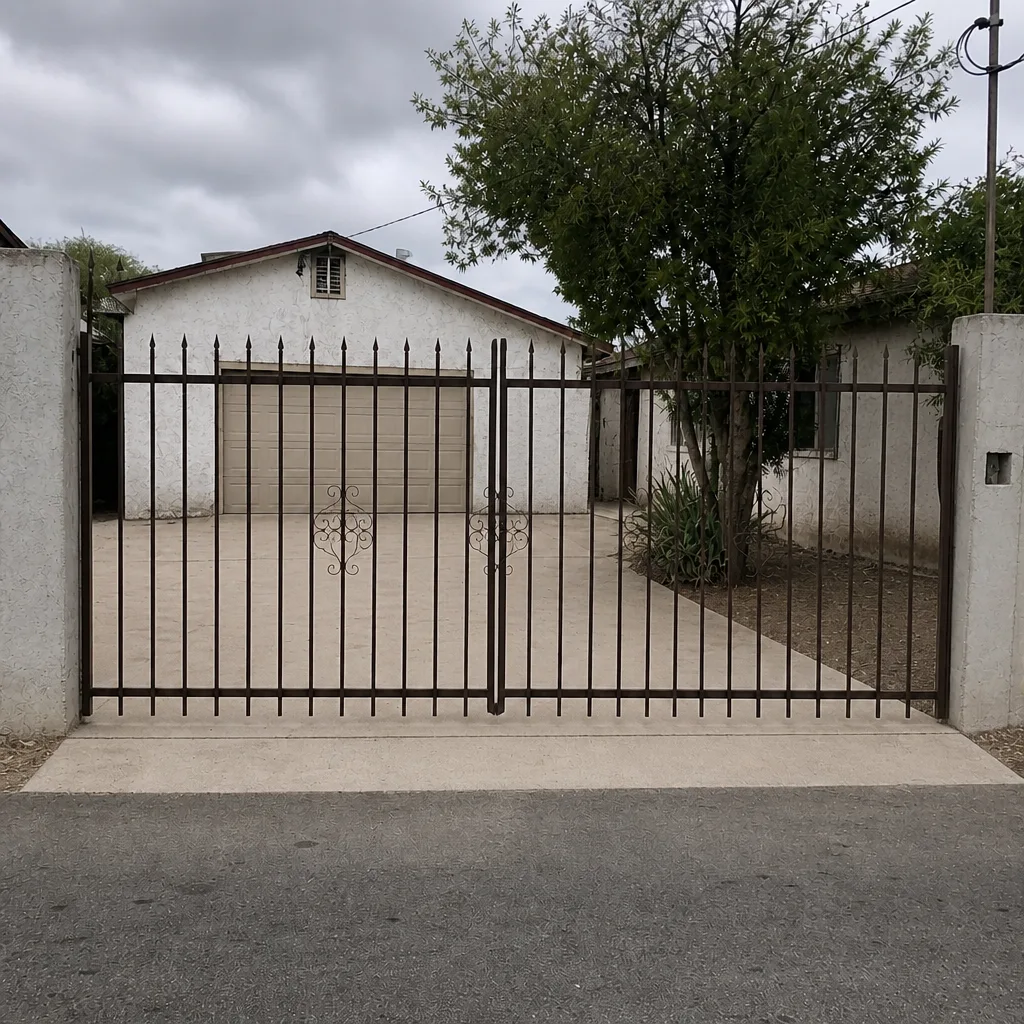
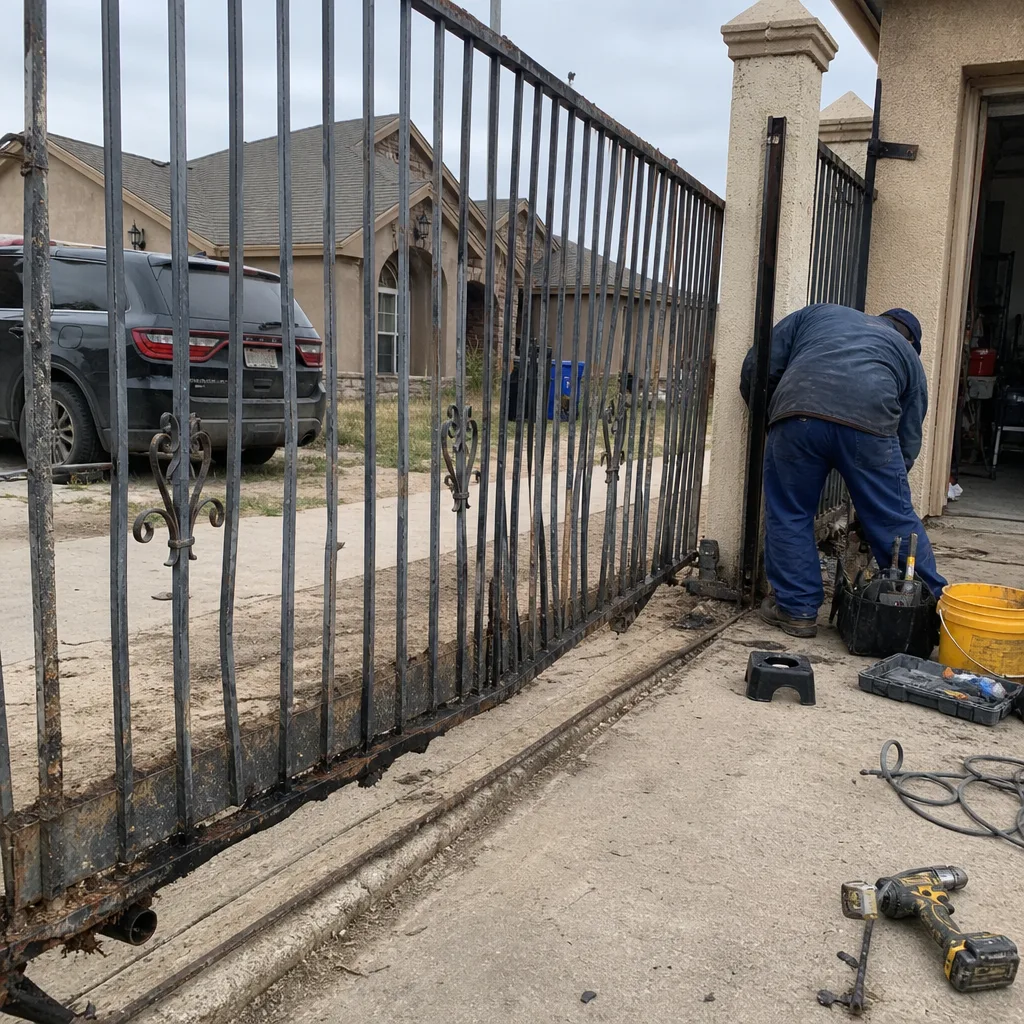
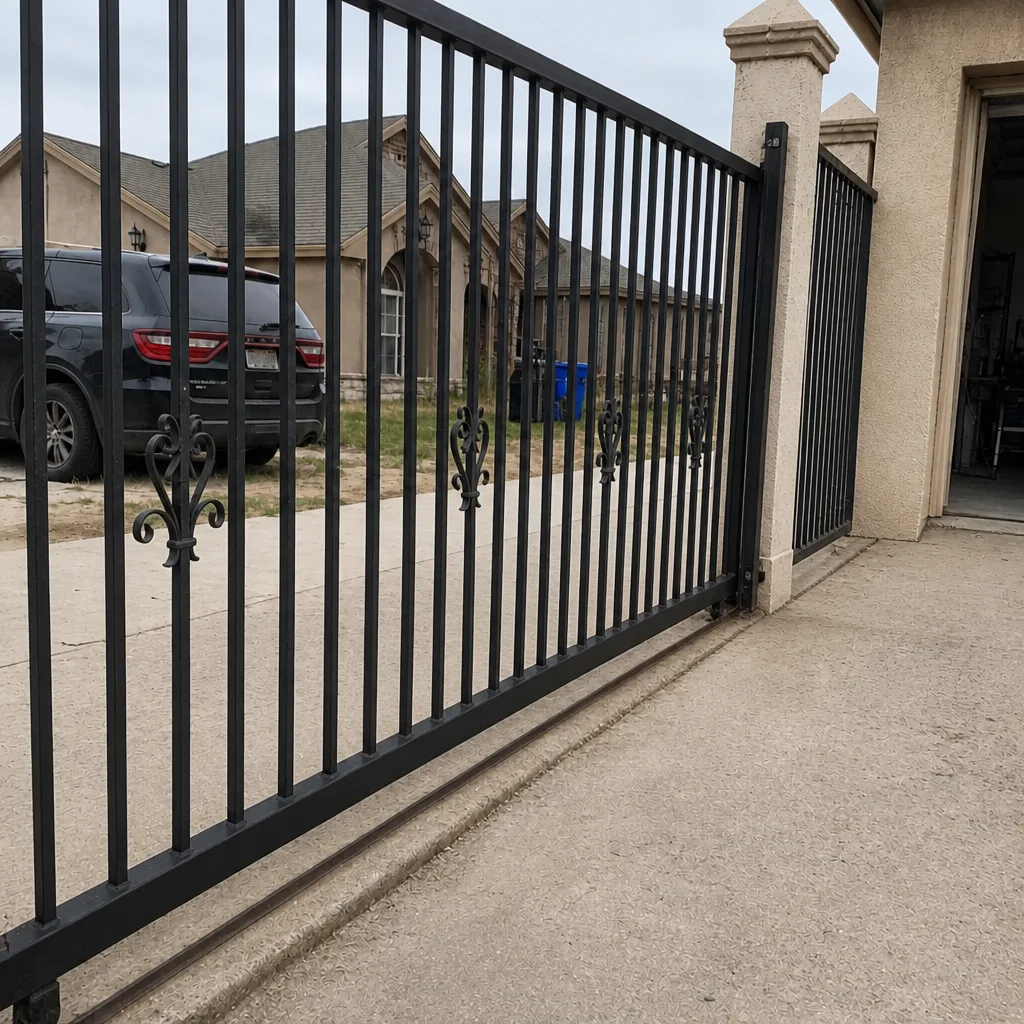
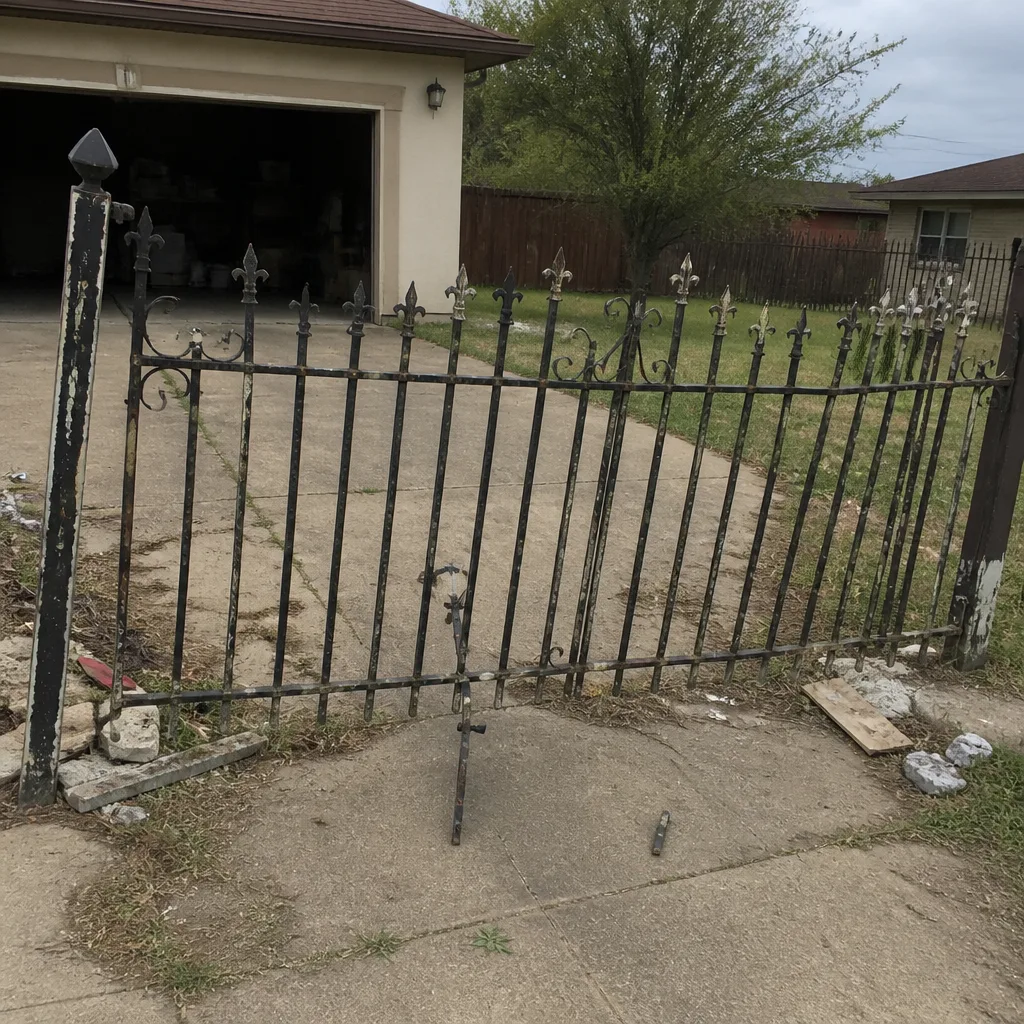
See the difference
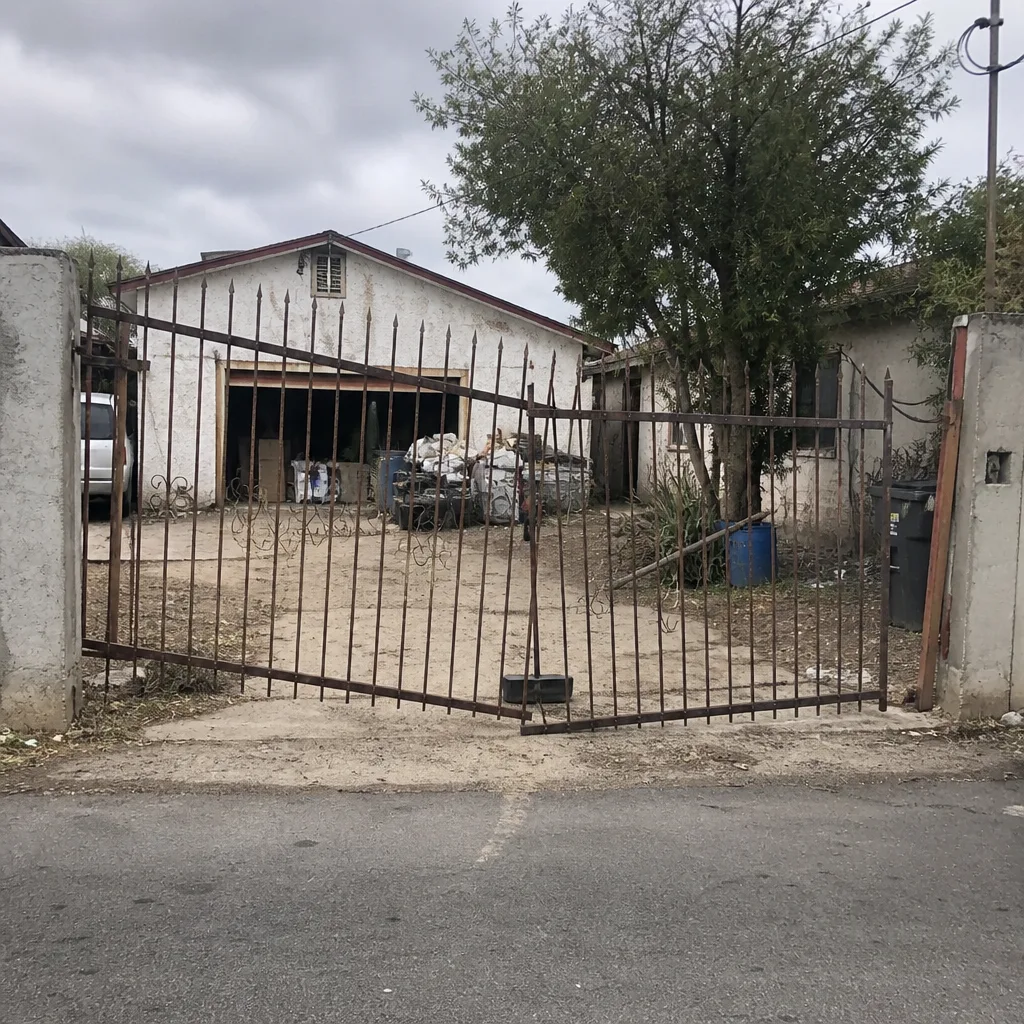 Before
 After
 Before
 After
 Before
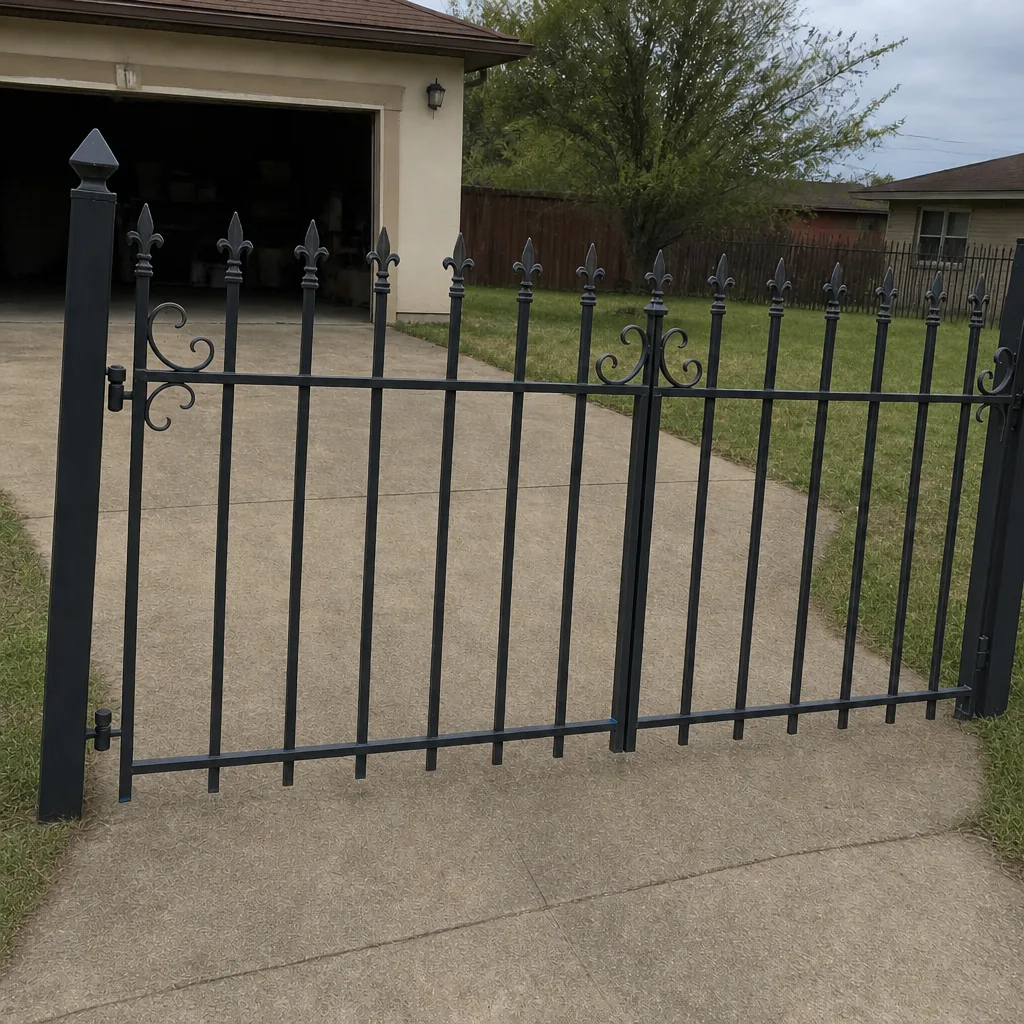 After
When to Call a Professional
Call a professional when the gate won’t respond to the manual release, when you suspect a control board or motor fault, when a slide gate has come off its track, when safety sensors are failing, or when the gate is moving unpredictably. Call immediately if the gate is stuck open on a property you can’t leave unsecured, or if you’re locked out of your own driveway. Those are the scenarios where a fast, trained diagnosis saves time, property and risk. Gate Repair Laredo offers free estimates in Laredo, and our technicians are experienced across all nine brands we service. Call (833) 946-7096. We answer 24/7. Fast dispatch from 7am to 7pm, Sunday through Friday.
Frequently Asked Questions
Same-day service is often available for gate emergencies in Laredo, and we answer 24/7 to book it. Fast dispatch runs from 7am to 7pm, Sunday through Friday. Call (833) 946-7096 for a free estimate – the written price is agreed before any work starts.
Secure the perimeter first, then worry about the repair. Use the manual release to disengage the operator, close the gate by hand if it will move safely, and brace or chock it so it stays closed. If it won’t close safely, block the opening with a temporary barrier. Then call (833) 946-7096 and describe the symptom.
Use your operator’s manual release to disengage the drive, then move the gate by hand. On Ghost Controls and Mighty Mule units this is typically a keyed release handle or lever; on LiftMaster and Elite it’s usually a release handle on the arm or housing. If the release won’t move, call (833) 946-7096 and we’ll help you troubleshoot.
Have four things ready: the operator brand, the model if visible, the exact symptom (won’t move, runs and reverses, opens partway), and the power status (breaker, battery backup, recent storm or outage). Add the gate type and any recent change on the property. That short list cuts diagnosis time significantly.
Yes, power surges from thunderstorms are a common cause of control board and motor failures in Laredo. After a storm, check the breaker first; if the gate is unresponsive and the breaker is fine, the control board is a likely suspect. Don’t open the housing yourself. Call (833) 946-7096 for a diagnostic visit.
No. Never bypass a gate safety sensor. The sensor exists to stop the gate from crushing a person or object, and a disabled reversing sensor is a genuine hazard. If the sensor is failing, that’s a repair, and our electric gate repair service covers sensor and wiring diagnostics. Call (833) 946-7096.
The Bottom Line
Gate emergencies split into two protocols, and knowing them in advance is the whole game. Stuck open means secure the perimeter: release the operator, close and brace the gate, then call. Stuck closed means regain access: use the manual release, get through, then call. Have your brand, model, symptom and power status ready, build a small kit near the gate, and run the pre-season checklist so storms and heat find you prepared. When it’s time for a professional, we service nine brands, work on your existing equipment, and agree the price before any work starts. Call (833) 946-7096 for a free estimate.
Written by the team at Gate Repair Laredo.