
Last updated November 15, 2026
 Wrought iron
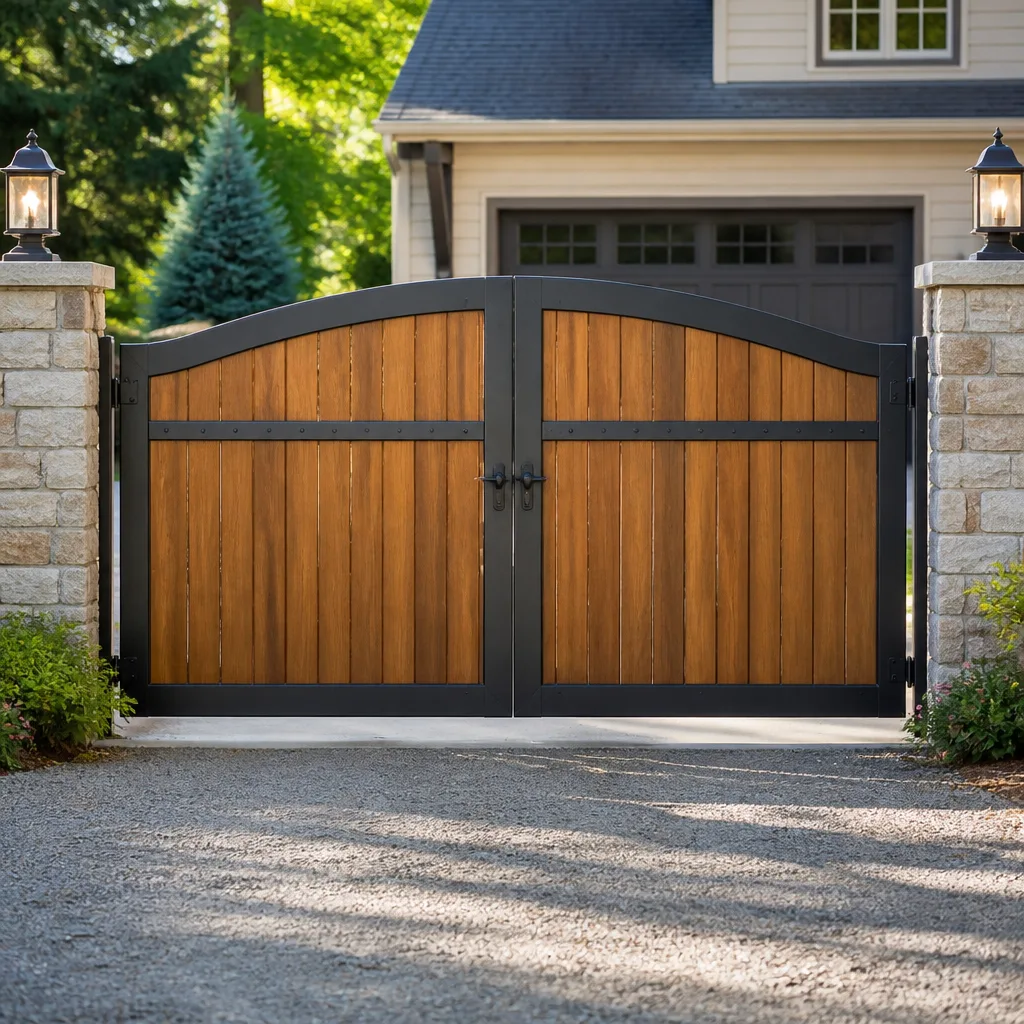 Wood & steel frame
 Farm & ranch
 Sliding driveway gates
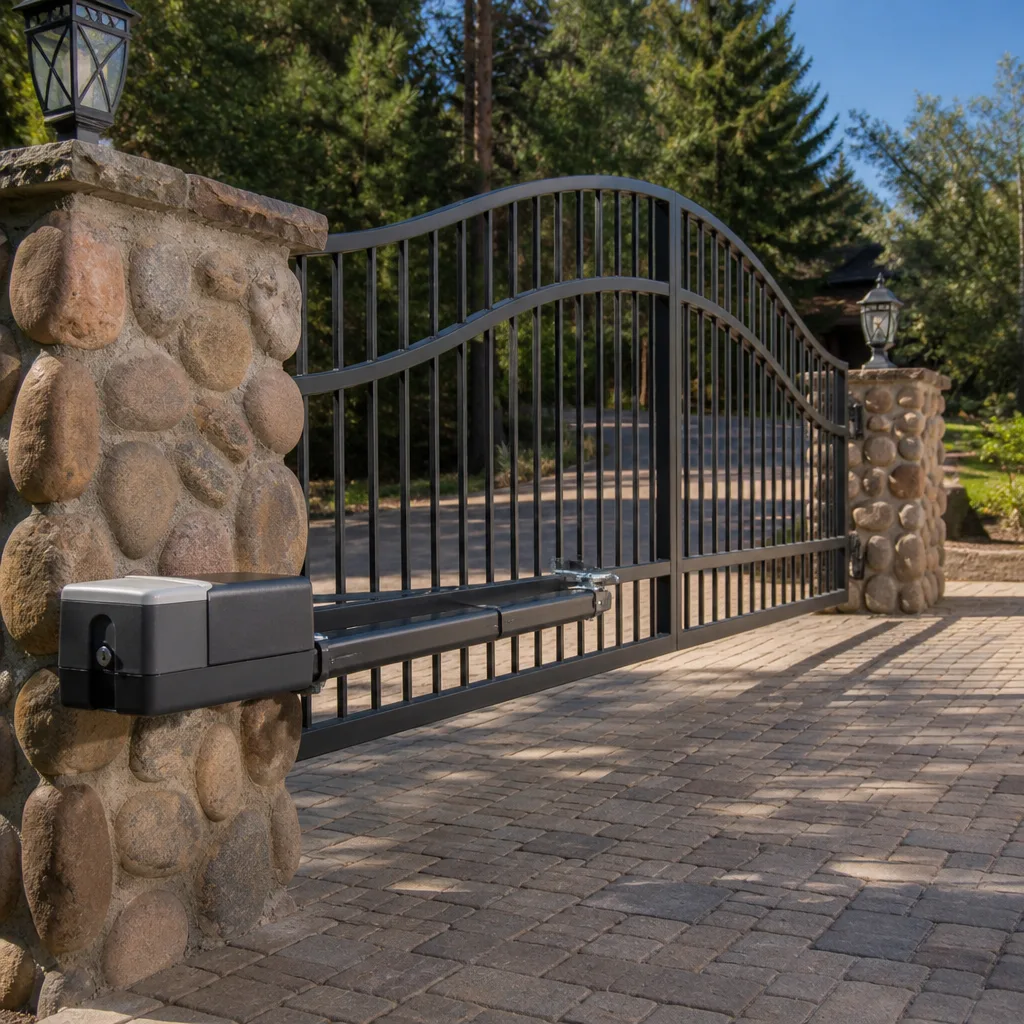 LiftMaster operators
Free on-site gate assessment - hinges, posts, and your LiftMaster or Nice gate operator checked before anything is quoted
The assessment is free and the quote is the invoice.
Get your free estimateSeasonal Gate Repair Care for Laredo: Year-Round Homeowner’s Guide
The smartest months to service an automatic gate in Laredo aren’t the ones most maintenance calendars suggest. They’re March and October. March is the last real window before months of 100°F-plus heat start stressing every motor, board, and hinge on your property. October is the last window before the occasional hard freeze that catches South Texas homeowners off guard. A gate that seems fine in comfortable weather can fail the week you need it most, and the fix usually costs more once a small problem has had a season to grow. This guide walks through what actually happens to a gate across a Laredo year, what to check and when, and how to structure care around the climate you live in rather than a generic four-season checklist that doesn’t fit.
Quick Answer
In Laredo, the highest-value gate maintenance happens twice a year: a March service before extreme summer heat and an October service before the rare winter freeze. Summer care focuses on heat stress, lubrication, and photo-eye alignment; winter prep targets freeze-vulnerable hardware and hydraulic operators. Spring and fall wind seasons also drive dust into motor housings, so cleaning and inspection intervals should follow the wind, not a fixed calendar.
Styles & brands we work with
- Wrought iron
- Wood & steel frame
- Farm & ranch
- Sliding driveway gates
- LiftMaster operators
Table of Contents
- Why Laredo’s Climate Doesn’t Match a Standard Maintenance Calendar
- Summer Prep: Heat, Thermal Protection, and Photo-Eye Drift
- Winter Readiness in a Mild Climate
- Spring Inspection Priorities After a Brutal Summer
- Fall Maintenance: The Highest-ROI Window of the Year
- How South Texas Wind Seasons Affect Your Motor
- What to Check Each Season: A Simple Walkthrough
- Brand Notes for Laredo Systems
Why Laredo’s Climate Doesn’t Match a Standard Maintenance Calendar
Most gate maintenance advice is written for a place with four roughly equal seasons. Laredo doesn’t work that way. What you get is a long, punishing summer, a short and mild winter, and two brief shoulder seasons in between. Those shoulder seasons, spring and fall, are the real maintenance windows, and the calendar most homeowners follow puts them in the wrong place.
Think about what a Laredo year actually does to a gate operator. From late spring through early fall, the motor and control board run in sustained triple-digit heat, often across a metal housing that gets hotter still in direct sun. The lubricant on the chain or screw drive thins and migrates. Plastic and rubber components on the hardware soften. The soil around the gate posts expands and contracts with moisture swings, and that movement nudges the photo-eye alignment a fraction of an inch. None of this announces itself. It accumulates quietly until the gate stops one morning and the homeowner assumes the motor died.
Then the pattern flips. Laredo winters are mild, which is exactly why freeze events get underestimated. A single hard freeze can hit a hydraulic operator’s fluid, seize a water-exposed latch, or crack a fitting that’s been quietly degrading for years. It happens rarely enough that people don’t plan for it, and that rarity is what makes the damage expensive when it comes.
The practical takeaway is blunt: build your gate care around March and October, not January and July. If you want a single point of contact for Gate Repair Laredo service across those windows, a dedicated gate specialist will already know how a given brand and model behaves in this climate.
Our technicians have up to 10 years of experience, and in our experience the gates that fail in July are usually the ones nobody touched in March. The season you service is almost always a season ahead of the one that tests your system.
Quick Answer: Laredo has two short maintenance windows, spring before extreme heat and fall before rare freezes. Servicing in those windows prevents far more failures than care built around a calendar that doesn’t match South Texas weather.
Summer Prep: Heat, Thermal Protection, and Photo-Eye Drift
Summer prep in Laredo means getting your gate through months of sustained 100°F-plus conditions with as little stress on the operator as possible. Three areas matter most: thermal protection in the operator itself, lubrication that holds up to heat, and photo-eye alignment that can drift as the ground moves.
Thermal protection
Modern gate operators from brands like Linear, Viking, and Ghost Controls build in thermal protection. When the motor runs too hot, usually because of repeated cycles, resistance, or ambient heat, the board shuts the operator down until it cools. That’s a safety feature, not a fault. But if your gate stops during the hottest part of the day and works again later, that’s a signal the operator is working harder than it should. Binding hinges, worn rollers, or a drive that needs lubrication will push a motor into thermal shutdown long before it would fail in cooler weather. Before summer, have the mechanical side checked so the motor isn’t fighting the gate.
Lubrication for extreme heat
The lubricant that’s fine in spring thins in a Laredo summer. On a chain drive, that means the chain runs drier and wears faster; on a screw or swing arm, it means metal-on-metal contact without a film to protect it. The right approach is a lubricant chosen for high ambient temperatures and a schedule that doesn’t stretch across the whole summer. Lubrication is a small, cheap task that directly reduces motor strain.
Photo-eye alignment drift
Photo-eyes on an automatic gate are a safety system, and if they drift out of alignment the gate won’t close reliably or will reverse mid-travel. In Laredo, the repeated wetting and drying of the soil around a gate post, combined with heat expansion, can move a photo-eye just enough to break the beam. If your gate stops short or reverses for no apparent reason in summer, misaligned photo-eyes are one of the first things to check. Then the diagnosis moves to the board and wiring, which is exactly the kind of work electric gate repair covers.
Safety note: Photo-eyes and gate operators are a moving-machinery system that can crush. Never disable or bypass a safety sensor to force a gate to close. If the gate won’t close because of a sensor, that’s the sensor doing its job, and it needs a trained technician, not a workaround.
Before summer settles in, the goal is simple: a mechanical gate that moves freely, a motor that isn’t straining, and a safety system that works exactly as designed. That’s the combination that carries a Laredo gate through July and August.
Winter Readiness in a Mild Climate
Laredo winters are mild, which is precisely why freeze risk gets underestimated. A single hard freeze in a climate that rarely sees one can do more damage than a whole winter in a colder city, because the hardware, fittings, and fluids on your gate were never designed around repeated freezing. Winter prep is less about heavy weather and more about being ready for the one cold event that matters.
What a hard freeze actually does
- Hydraulic operators: Fluid in a hydraulic system can change viscosity in cold, and fittings that have degraded quietly over years are more likely to crack under freeze stress. A hydraulic operator that’s been weeping a little oil all summer is a genuine freeze-season risk.
- Water-exposed hardware: Latches, hinges, and any component that holds or traps moisture can seize or crack when that moisture freezes. In Laredo, hardware that’s fine in October can be frozen tight by a December cold snap.
- Control boards and connections: Extreme cold combined with the condensation that follows warming can stress electrical connections. A board that’s been damp or loosely connected is more likely to fault in a cold event.
What to do before winter
Fall prep for winter in Laredo is mostly about inspecting the things that would fail under freeze stress. Check hydraulic operators for fluid condition and signs of leaking. Check latches and hinges for rust or binding that would tighten in cold. Check the housing and connections for moisture intrusion. The point isn’t to winterize in the northern sense; it’s to catch the weak point before the rare cold event exposes it.
It’s also worth understanding that a freeze-vulnerable gate is usually a gate that’s been aging for a while. A water-exposed latch doesn’t go bad in one night. It goes bad slowly, season after season, until the freeze is the final stress it can’t take. That’s why the spring and fall service windows exist, and why our technicians look at the same hardware in fall that they look at in spring. Fall catches what the previous summer loosened; spring catches what winter left behind.
Spring Inspection Priorities After a Brutal Summer
Spring inspection in Laredo is really a look back at what the previous summer did, plus a look ahead at the one coming. By the time cool weather returns, a full season of UV exposure and triple-digit heat has already worked on the gate. Spring is when you inventory the damage and fix it before the next hot season loads the system again.
Here’s what to prioritize, in order:
- Check the operator for heat fatigue. Look for signs the motor or board has been stressed: discoloration, cracked plastic, a board that shows heat marks. If the gate shut down on hot days last summer, it needs attention now.
- Inspect all rubber and plastic parts. UV in Laredo is relentless. Belts, seals, gaskets, plastic covers, and any weather-stripping on the housing degrade in strong summer sun. Replace what’s cracking before it fails.
- Test the safety system end to end. Photo-eyes, edges, and safety loops should be tested for correct operation, not just “it seemed to work.” Safety equipment is not optional on an automatic gate.
- Look at lubrication and the drive chain or screw. A summer of heat means the lubricant has migrated. Re-lubricate with the right product and check the drive for wear.
- Check hinges, rollers, and alignment. Gates that bind cause motors to work harder all summer. A free-moving gate is a cooler motor.
- Clear and clean the housing. Dust from the wind seasons, discussed below, accumulates inside motor housings. A clean housing runs cooler.
In our experience, the most common spring finding on a Laredo gate is a safety system that’s technically working but has drifted or degraded enough that it’s unreliable. That’s not a cosmetic issue. If you’re unsure whether your gate passed inspection, an on-site estimate from a gate specialist is a safer move than guessing. A site visit tells you exactly what your system needs.
Fall Maintenance: The Highest-ROI Window of the Year
Fall is the single best time to service a gate in Laredo, and the reason is timing. Do it in October and you catch problems before they become emergency calls in the cold snaps that occasionally hit South Texas. Do it in December and you’re already reacting.
The logic is straightforward once you see it clearly. Your gate has just come through the hardest part of its year, months of extreme heat. Fall is the first chance to look at everything that took that stress. Simultaneously, it’s the last chance to prepare for the rare freeze that can hit hardware that’s weakened over the summer. Fall sits between the two hazards, which is the best position a maintenance window can occupy.
Why October beats December
- You still have time to order parts. A worn operator component or a cracked fitting identified in October can be sourced before cold weather. The same finding in December is an urgent repair.
- You catch summer damage before it compounds. A chain that ran dry all summer is worn in October. Left another season, it may fail and take a motor with it. A motor is a more expensive fix than a chain.
- You get ahead of the freeze. Weak fittings, water-exposed hardware, and vulnerable hydraulic components identified in fall can be addressed before a freeze stress event.
- You avoid emergency-call pricing pressure. A planned fall maintenance visit is a routine job. The same component failing during a cold snap is an emergency, and the fix is more disruptive because it’s timed to when you’re least prepared.
The fall window is also when a lot of Laredo systems benefit from a genuine inspection, not just a quick glance. If your gate is a Ghost Controls residential system or a heavier Linear operator, a dedicated gate technician will know what those specific components look like after a summer and what needs attention before the next window.
Treating October maintenance as the priority rather than the afterthought is the single change that most protects a gate in the Laredo climate. Everything else in this guide supports that one habit.
How South Texas Wind Seasons Affect Your Motor
Laredo has two wind seasons that most gate maintenance advice ignores: spring and fall. They matter because wind carries fine dust, and dust finds its way into places a gate operator doesn’t want it, most importantly the motor housing.
What dust does to a gate operator
Dust that infiltrates a motor housing and settles on internal components gets pulled into bearings, mixed into lubricant, and deposited on the control board. Over a season it acts like an abrasive and a thermal insulator at the same time. The bearings wear faster, the lubricant loses its effectiveness, and a board buried in dust runs hotter. A dusty board in a hot Laredo summer is a board that’s more likely to fault. The combination of heat stress and dust infiltration is a real driver of summer gate failures.
What this means for cleaning intervals
Cleaning and inspection intervals should follow wind, not just a fixed calendar. The practical version for a Laredo gate:
- Clean housing and vents after each wind season. Start of spring and end of fall are the natural checkpoints.
- Inspect the control board area for dust buildup. Look for visible dust and check that vents and openings aren’t clogged.
- Check lubricant condition rather than just topping it up. Dust contaminates old lubricant, so sometimes the right move is to clean and replace rather than add.
- Test the motor’s operating temperature. A gate that runs noticeably hotter than before may be suffering from both dust and strain.
Why brand-agnostic service matters here
Different operators handle dust differently. A commercial-grade system like a DoorKing handles heavy use but still needs its housing cleaned and its connections checked. A residential operator may have less sealed internals and benefit more from dust-oriented cleaning. A brand-agnostic gate specialist works on the system you have, whether that’s Linear, Viking, Ghost Controls, or any other, rather than steering you toward a replacement or a different brand. The diagnosis follows the actual condition of the gate, not the sales margin.
What to Check Each Season: A Simple Walkthrough
If you want to structure gate care around the Laredo climate, break the year into the two real windows and check the same short list each time. Here’s the walkthrough we recommend.
March check (before the heat)
- Verify the operator’s heat exposure. Is the housing in full sun? If the motor runs hot or has shut down in past summers, that’s the first thing to look at.
- Lubricate the drive. Chain, screw, or arm, whichever applies, with a product rated for high heat.
- Check photo-eyes and safety edges. Test correctly, not casually, and align if the ground has shifted the beam.
- Inspect hinges and rollers. Any binding means the motor is working harder than it should all summer.
- Clear the housing of dust before the season’s hot operation and check that vents are open.
- Test manual release. You should be able to open the gate by hand if power is out. If not, that’s a safety problem to fix before summer.
October check (before the freeze)
- Inspect hydraulic operators for fluid condition and leaks, if you have one. This is your biggest freeze risk.
- Check water-exposed hardware, latches and hinges, for rust or binding that would tighten in cold.
- Look at the control board and connections for moisture and dust.
- Re-check the safety system after a full season of use.
- Inventory what summer wore down and replace worn parts while parts can still be sourced calmly.
- Clean the housing again after the fall wind season and inspect for cracks that would let in cold and moisture.
Those two checklists, run on the right schedule, are the entire seasonal program condensed. Everything else in this guide is context for why they work.
Brand Notes for Laredo Systems
The same seasonal logic applies to every gate, but the specific components that matter differ by brand and by whether you’re running a residential or commercial-grade system. We work on nine major brands, and a few patterns are worth knowing if you own one of them.
Residential systems
Mighty Mule and Ghost Controls are common on residential driveways. These tend to be lighter operators, which makes dust infiltration and heat exposure relatively more impactful because the motor has less headroom. Seasonal cleaning and lubrication on a residential operator in Laredo goes a long way.
Mid-range and heavier residential
Linear and Viking systems sit in a broad middle range, and on these the driver of summer failure is often the mechanical gate itself binding and pushing the motor. Checking hinge freedom and drive lubrication ahead of summer is the highest-value prep.
Commercial-grade
FAAC, BFT, and DoorKing appear on commercial entries and heavier residential gates. These systems handle more cycles and heavier gates, and the seasonal risks are more about stress and load than about fragility. Freeze-season prep on a hydraulic FAAC or BFT operator is worth attention, and a commercial entry benefits from a genuine inspection every season. If you’re not sure what your system needs, a free measure and a written estimate from gate repair service is the safest way to find out.
What ties all of these together is that we work on your system rather than steering you toward a different brand. A dedicated gate specialist diagnoses the actual gate in front of them. If you’re a Laredo homeowner who wants a straight answer about your specific setup, that diagnosis is the starting point.
Common Mistakes to Avoid
- Following a four-season calendar in a two-season climate. Generic gate maintenance advice assumes equal seasons. In Laredo, the March and October windows matter far more than a January checklist, and treating summer as the maintenance season wastes the best window.
- Assuming thermal shutdown means the motor is dead. If a gate stops in summer heat and works later, it’s often thermal protection kicking in. The motor isn’t failing; it’s signaling that the gate is straining. Bypassing that protection or replacing the motor without checking the mechanical side wastes money.
- Bypassing a safety sensor to force the gate closed. A gate that won’t close because of a photo-eye is asking to be looked at, not overridden. Never disable a safety system to get the gate moving; that defeats the sensor that prevents injury.
- Ignoring freeze risk because winters are mild. The rare freeze is exactly what catches Laredo homeowners off guard. Weak fittings and water-exposed hardware that seem fine all year are the ones that crack in a single cold snap.
- Ignoring dust because it doesn’t fail the gate immediately. Dust that infiltrates a motor housing and control board quietly accelerates wear and heat stress all year. Cleaning only when the gate stops is cleaning after the damage is done.
- Topping up lubricant without checking for dust contamination. Adding fresh lubricant over dust-contaminated old lubricant traps the grit instead of removing it. Seasonal cleaning is as important as the lubricant itself.
- Treating December as the maintenance month. By December, the problems summer created have had months to compound, and you’ve missed the fall window for catching them calmly. Fall, not winter, is the right time.
See the difference
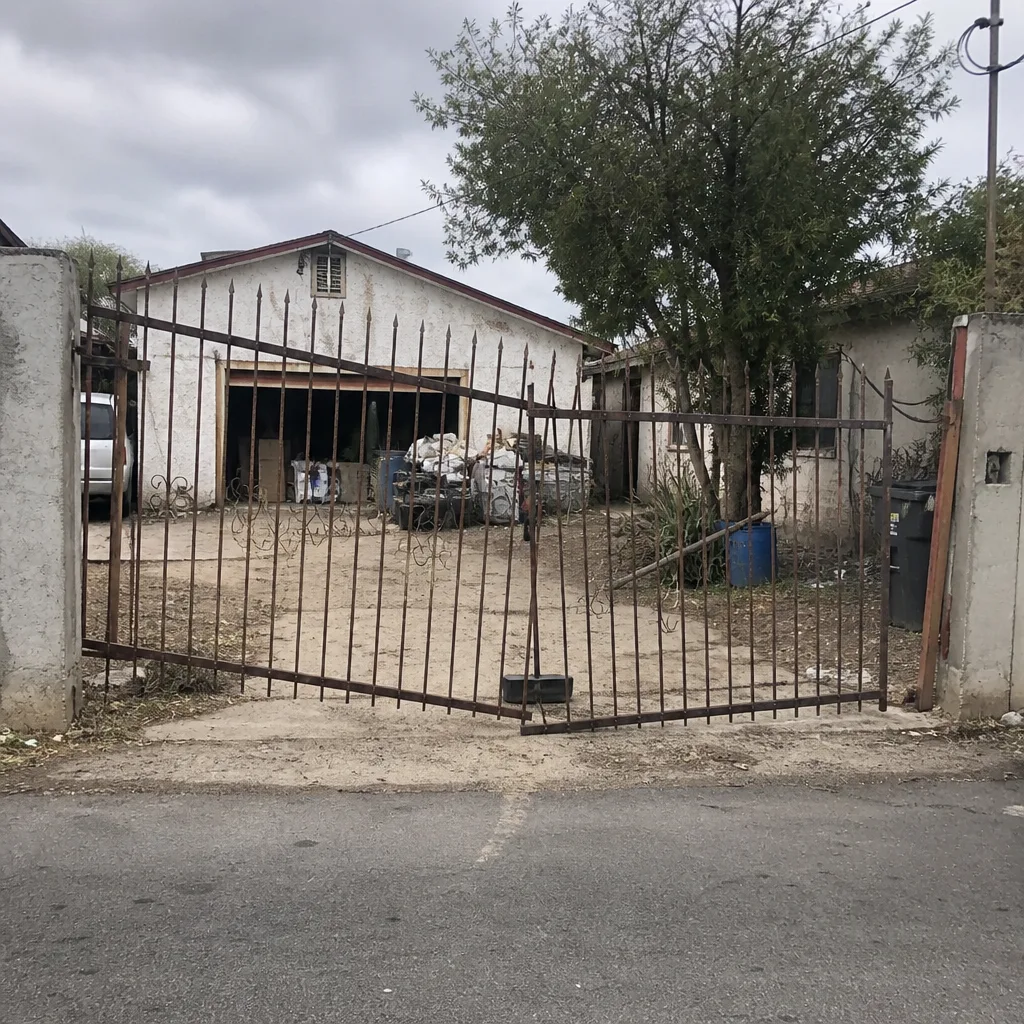 Before
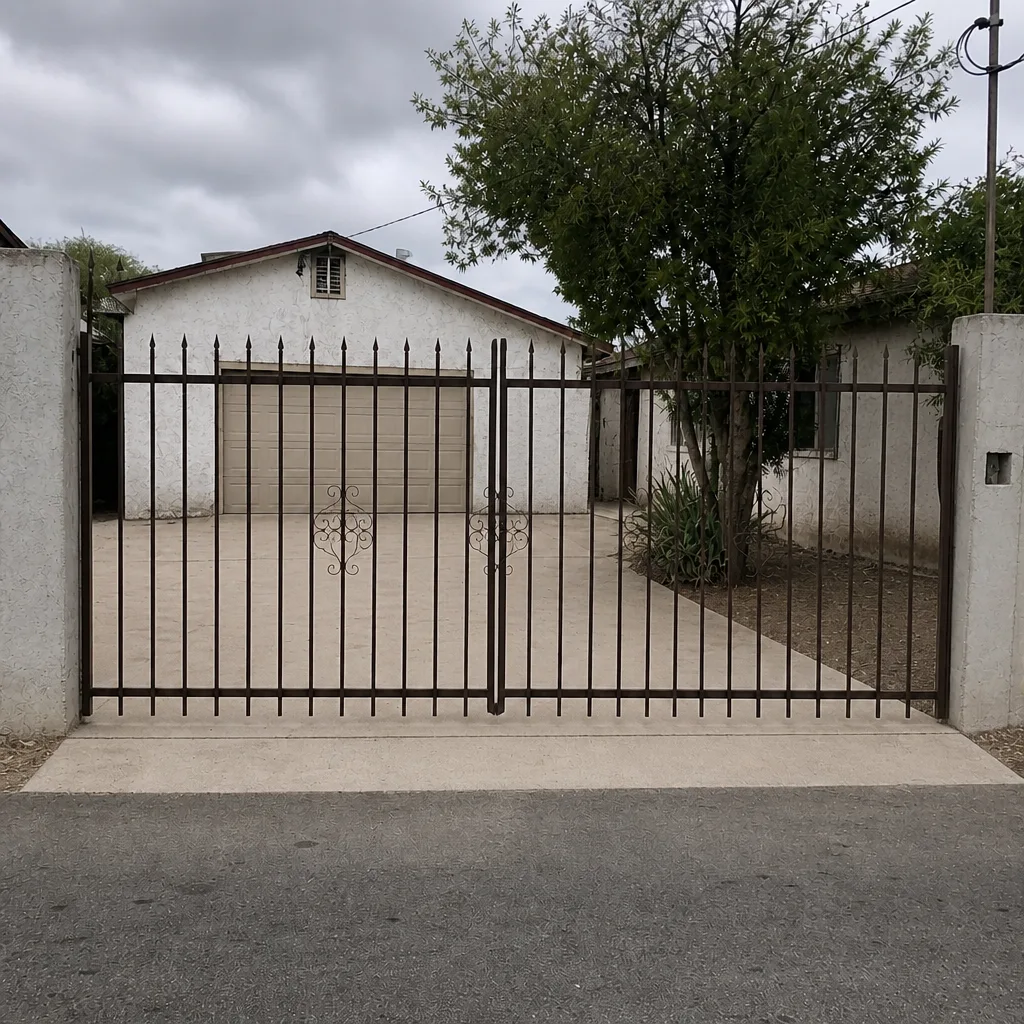 After
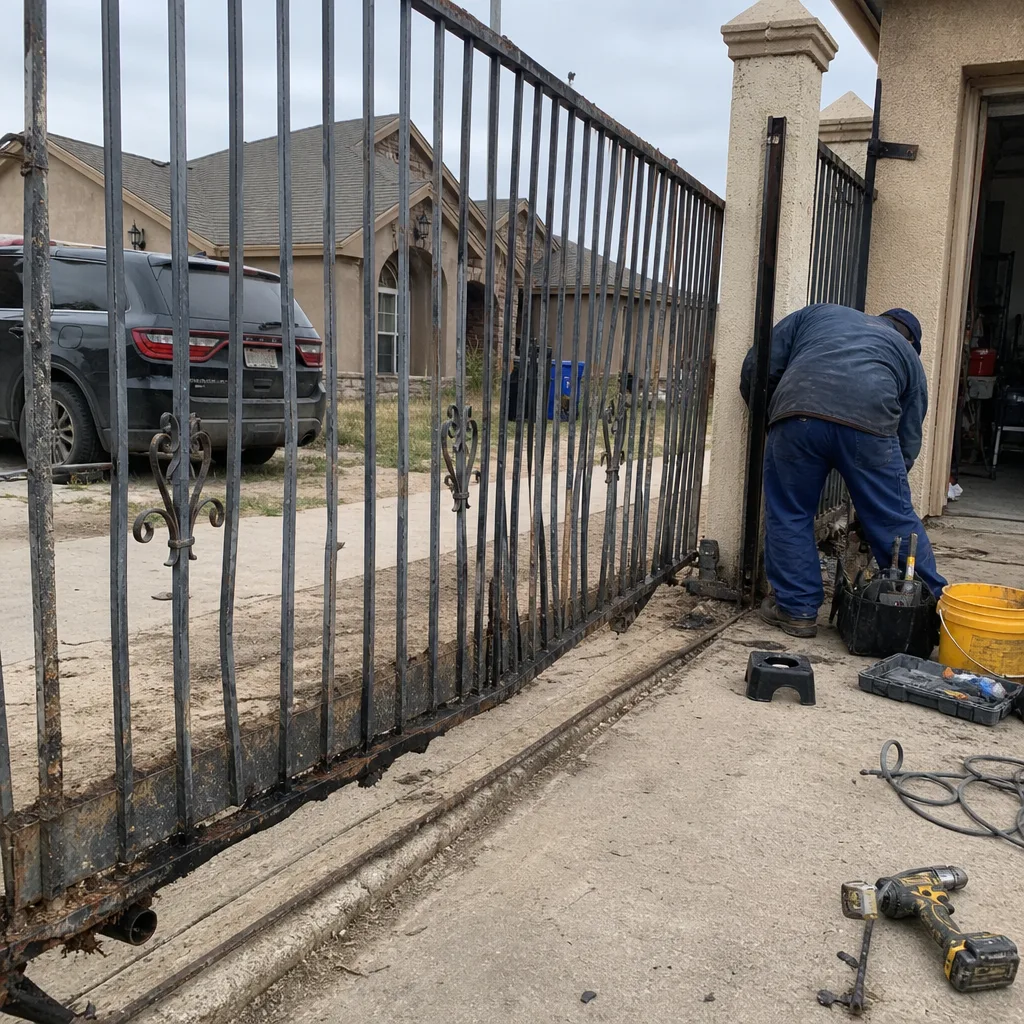 Before
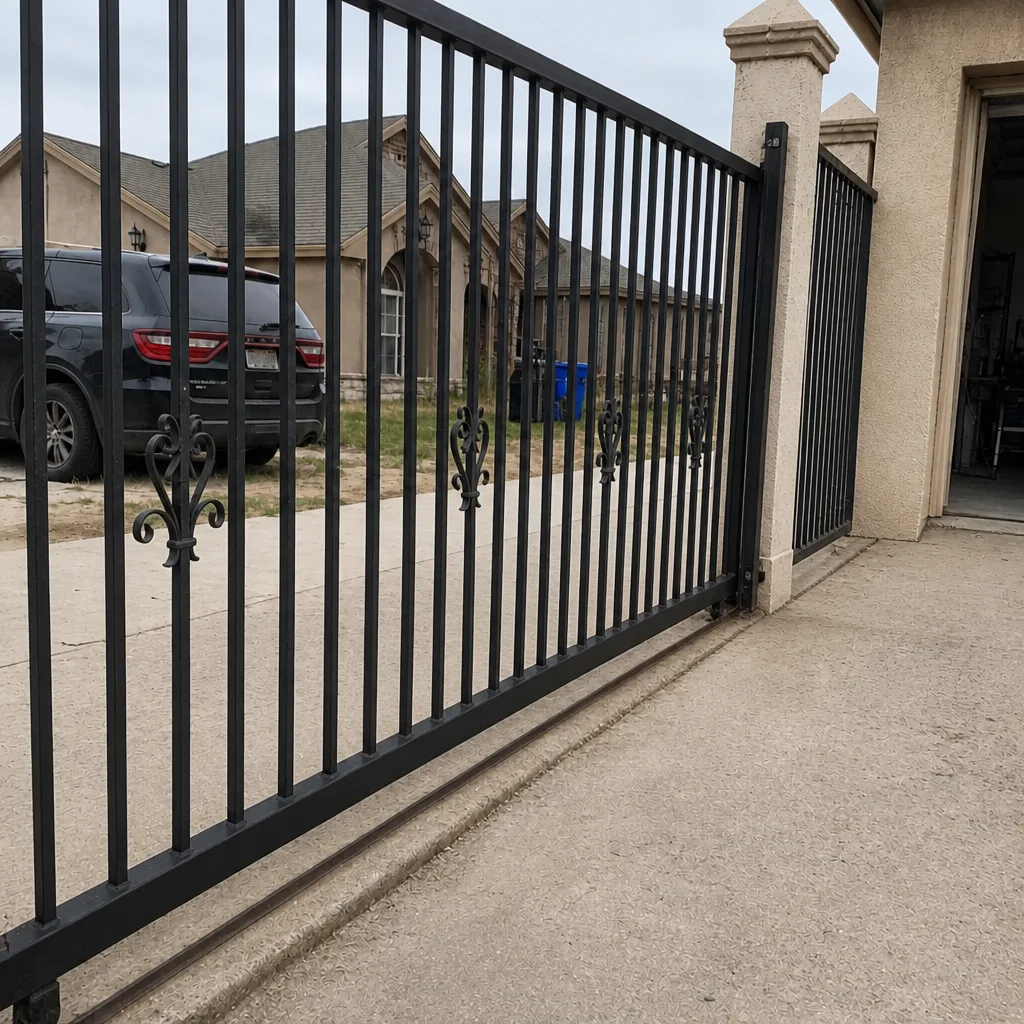 After
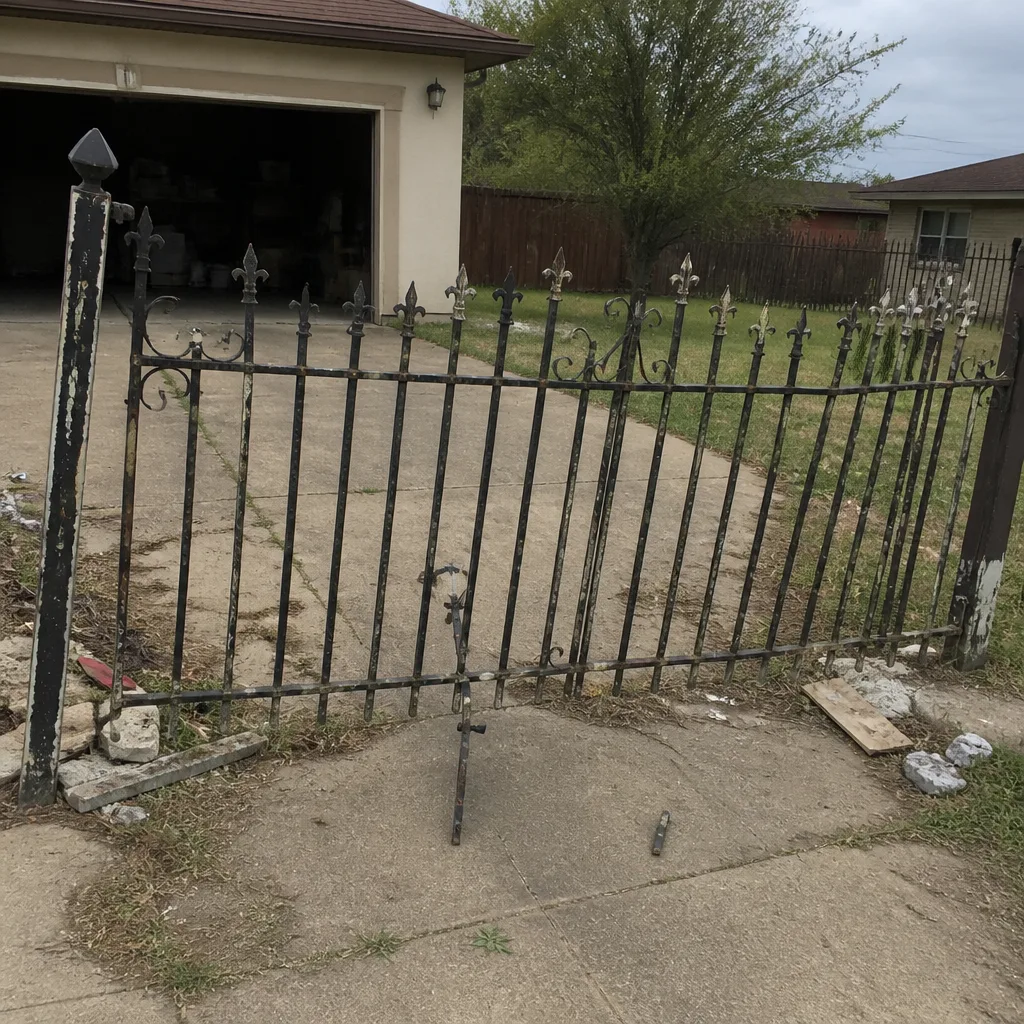 Before
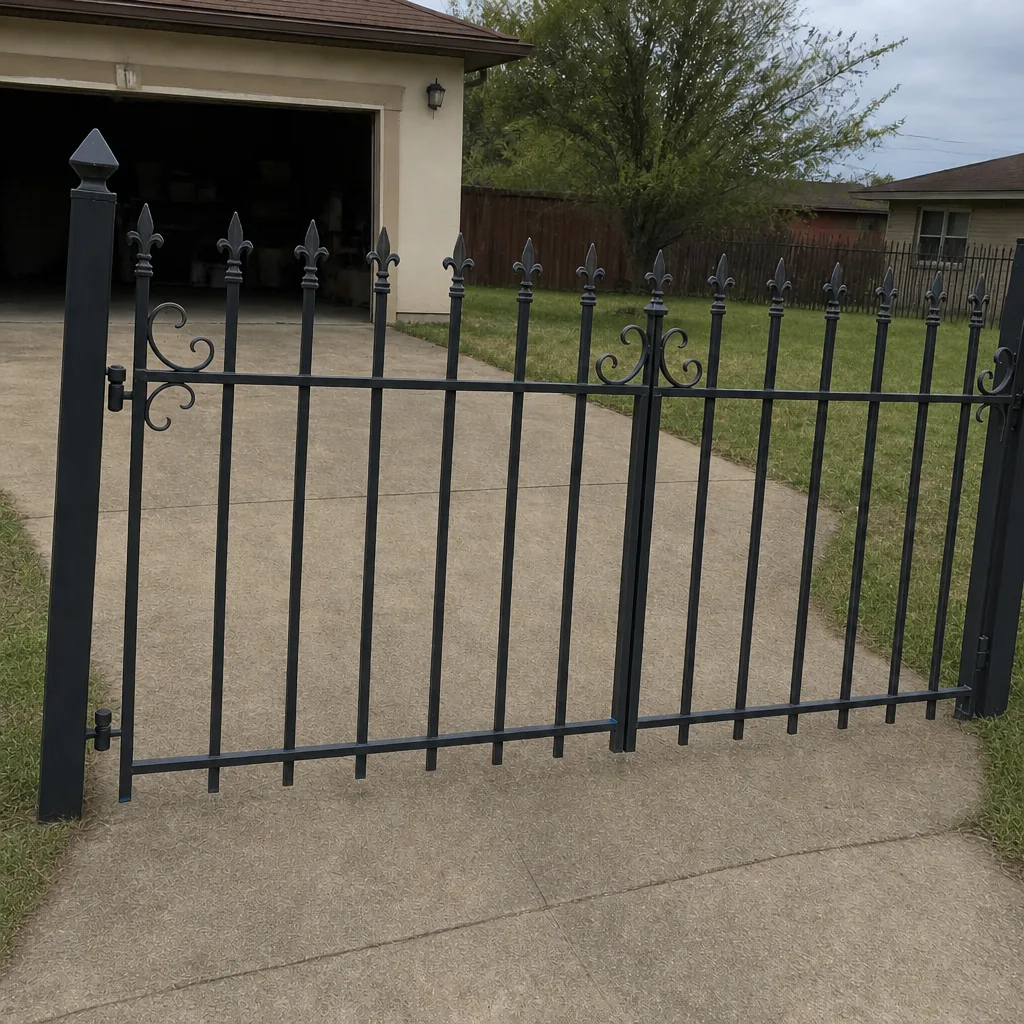 After
When to Call a Professional
Some gate issues are routine maintenance; others are genuinely unsafe to handle yourself. Call a professional if the operator runs hot and shuts down repeatedly, if the safety system won’t test correctly, if you see fluid leaking from a hydraulic operator, if the gate binds or sticks when you open it by hand, if the control board shows heat damage or moisture, or if the gate’s wiring or power run needs any attention at all. Electrical and moving-machinery systems are dangerous, and a gate that can crush or trap is not a DIY project. Seasonal inspection for any of these is also a good reason to bring in a specialist, especially in Laredo where the climate works on a gate year-round. Gate Repair Laredo offers free estimates in Laredo; call (833) 946-7096 and a gate specialist will look at your system and tell you exactly what it needs before the next season loads it.
Frequently Asked Questions
Twice a year is the right baseline for Laredo: a spring service before summer heat and a fall service before rare winter freezes. These two windows catch the problems this climate creates before they compound. If your gate is heavily used or commercial-grade, a thorough seasonal inspection at both windows is worth it.
That pattern is often thermal protection in the operator. When the motor runs too hot from ambient heat or from strain, the board shuts it down until it cools. That’s a signal the gate is working harder than it should, usually because of binding, worn parts, or a dry drive. Have the mechanical side checked so the motor isn’t straining. Call (833) 946-7096 to schedule an on-site look.
You need to prepare for freeze risk, not “winterize” in the northern sense. A single hard freeze can crack water-exposed hardware, stress a hydraulic operator, and expose weak electrical connections. A fall inspection focuses on the components that would fail under freeze stress. That prep is cheap compared with the repair after a cold event.
Dust that gets into a motor housing acts like an abrasive and a thermal insulator. It wears bearings faster and makes the board and motor run hotter, which matters even more in Laredo summer heat. Cleaning intervals should follow the spring and fall wind seasons, not just an annual schedule. Along with a sealed, clean housing, that keeps the operator cooler.
A brand-agnostic gate specialist should be able to work on whatever system you have. We work on nine major brands, including Linear, Viking, Ghost Controls, and DoorKing, covering both residential operators and commercial-grade systems. The diagnosis follows your gate, and there’s no push toward a brand switch or a replacement when a repair will do. Call for a free estimate and we’ll tell you exactly what your system needs.
Yes, photo-eyes and safety edges can drift out of alignment over time. Ground movement from wetting and drying, heat expansion, and general vibration can all shift a sensor a fraction of an inch, enough to break the beam. That’s a routine seasonal check, not a failure. What’s not routine is a safety sensor that won’t work at all: never bypass a safety sensor to force a gate to close.
The Bottom Line
Laredo’s climate doesn’t reward a generic four-season maintenance calendar. What works here is recognizing a brutal summer and a mild winter with two short, high-value windows in between: March before the heat and October before the rare freeze. Summer service protects hydraulic and mechanical parts from extreme heat, lubrication and thermal stress; fall service catches the damage that summer created and fronts the freeze risk. Add dust cleaning to the wind seasons, run the same short checklist twice a year, and your gate handles the Laredo year with far fewer surprises. If you’d rather have a gate specialist just tell you what your system needs, we’re a gate-only service company, we work on your brand, and the estimate is free. Call (833) 946-7096. We answer 24/7. Fast dispatch from 7am to 7pm, Sunday through Friday.
Written by the team at Gate Repair Laredo.